Pelvic-spot Wrasse
Pseudocheilinops ataenia
A tiny, secretive reef wrasse that vanishes into the coral the moment you look away.

About
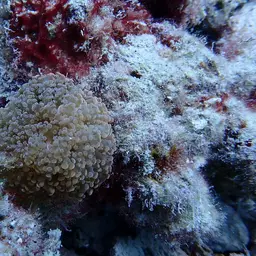
The pelvic-spot wrasse (Pseudocheilinops ataenia) is one of those fish that most hobbyists walk right past at the store. If they ever see one at all. Rarely collected and seldom available in the trade, it hails from still coastal waters in the Philippines, Indonesia, and Palau, where it picks through the lower and dead sections of brittle coral colonies, often covered in coralline algae. It spends its time in small, loosely associated groups, feeding on amphipods and other tiny invertebrates among the rubble and base growth. Despite a maximum length around two and a half inches, most individuals you encounter will be noticeably smaller, and their naturally shy disposition makes them easy to overlook even when they are right in front of you. This is a fish that wants cover nearby at all times. It darts for shelter at the first sign of anything unfamiliar. In the aquarium, that means a well-structured reef with plenty of nooks and hiding spots is non-negotiable. It is entirely peaceful and poses no threat to tankmates, but its timid nature means it can easily be outcompeted for food by bolder species. Best suited to a calm, low-traffic system where it can settle in on its own terms.
Similar species
Other fish you might consider
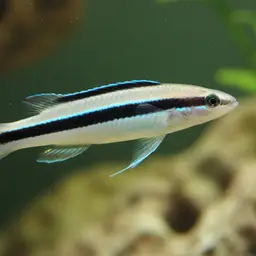
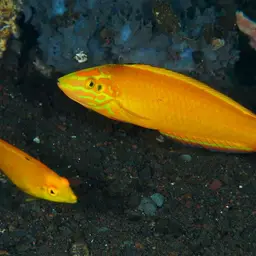
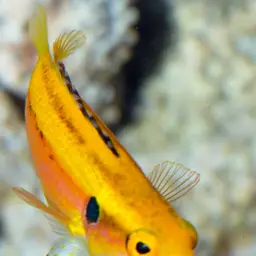
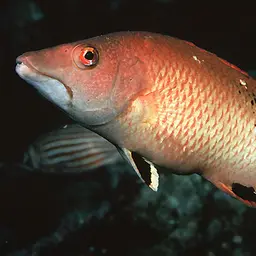
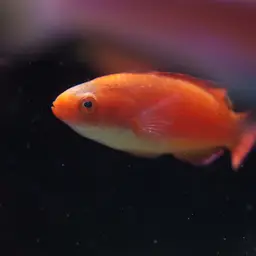
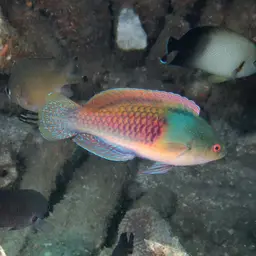
Good tank mates
Species that tend to coexist peacefully with Pelvic-spot Wrasse
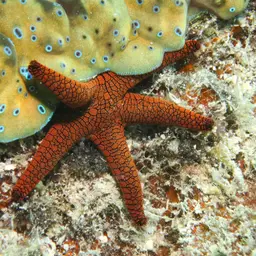
From the same region
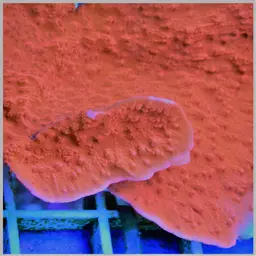
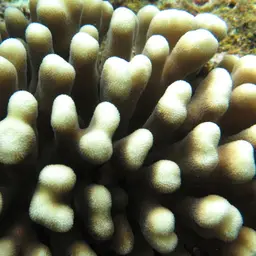
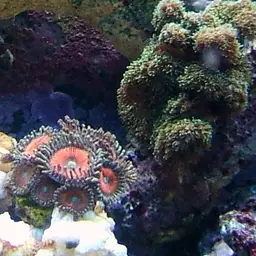
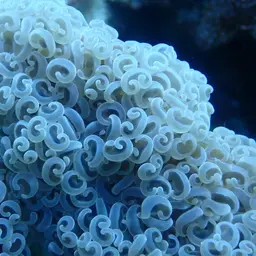
Share the same natural habitat. Great for a biotope-themed tank
Frequently asked questions
- How big does the Pelvic-spot Wrasse get?
- The Pelvic-spot Wrasse reaches about 1.5–2.5" as an adult.
- What size tank does the Pelvic-spot Wrasse need?
- A minimum of 15 gallons is recommended for the Pelvic-spot Wrasse.
- What water parameters does the Pelvic-spot Wrasse need?
- The Pelvic-spot Wrasse does best with a temperature of 72–82°F, a pH of 8–8.4.
- Is the Pelvic-spot Wrasse aggressive?
- The Pelvic-spot Wrasse is generally peaceful and suits a community tank with similarly calm tankmates.
- What does the Pelvic-spot Wrasse eat?
- The Pelvic-spot Wrasse is a carnivore. It needs a meaty, protein-rich diet of frozen or live foods.
- How long does the Pelvic-spot Wrasse live?
- With good care, the Pelvic-spot Wrasse typically lives 2-3 years.
- Is the Pelvic-spot Wrasse reef safe?
- The Pelvic-spot Wrasse is generally considered reef safe.