Utaka
Copadichromis ilesi
A peaceful Utaka cichlid from Lake Malawi with fascinating mouthbrooding behavior.

About
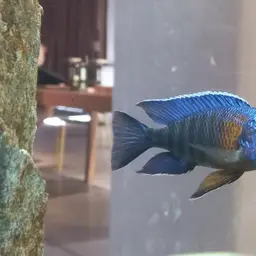
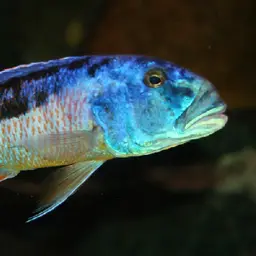
Found around rocky underwater reefs and open water in Lake Malawi, Copadichromis ilesi belongs to the group of cichlids collectively known as Utaka. A cluster of pelagic specialists that gather in large numbers throughout the lake. Described in 1999, it was previously circulated in the hobby under the name Copadichromis "virginalis kajose" and is closely related to C. virginalis, with which it can actually be found shoaling near Gome Rock, its type locality. The two species are told apart by female coloration, females of this species tend toward sandy brown rather than silver, and by the males, which grow larger and lack the red dorsal stripe seen in C. virginalis. In the wild, males construct spawning sites at considerable depth, while females, especially mouthbrooding ones, move into somewhat shallower water. Like other Utaka, C. ilesi uses a highly extendable upper jaw to snatch planktonic prey from the water column. In the aquarium it is a schooling species by nature, and is best kept as a single male with several females to spread the male's attention during breeding. Despite being listed as aggressive in some references, it is actually a relatively calm cichlid. Just avoid pairing it with boisterous Mbuna or similarly colored fish that might trigger territorial disputes.
Similar species
Other fish you might consider
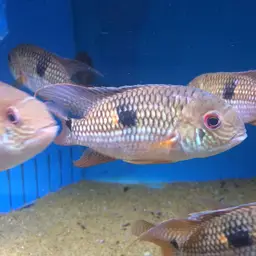
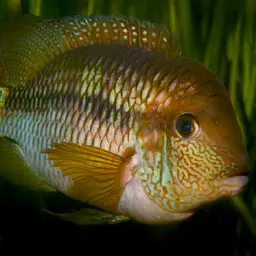
Good tank mates
Species that tend to coexist peacefully with Utaka
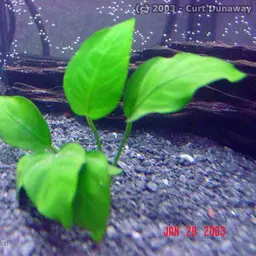

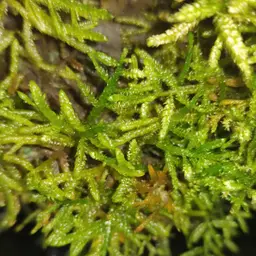

From the same region
Share the same natural habitat. Great for a biotope-themed tank
Frequently asked questions
- How big does the Utaka get?
- The Utaka reaches about 2.5–4.5" as an adult.
- What size tank does the Utaka need?
- A minimum of 20 gallons is recommended for the Utaka.
- What water parameters does the Utaka need?
- The Utaka does best with a temperature of 72–82°F, a pH of 7.5–8.5, hardness around 10–25 dGH.
- Is the Utaka aggressive?
- The Utaka is aggressive and is best kept alone or with robust tankmates that can hold their own.
- What does the Utaka eat?
- The Utaka is a carnivore. It needs a meaty, protein-rich diet of frozen or live foods.