Eight-lined wrasse
Pseudocheilinus octotaenia
Also known as: Eightline Pigmy Wrasse, Eight-lined wrasse, Eightstripe wrasse
A bold, secretive reef wrasse that earns its stripes in more ways than one.

About
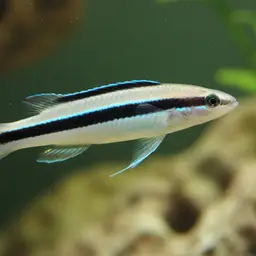
The eight-lined wrasse (Pseudocheilinus octotaenia) is one of those fish that rewards patient observers. Native to Indo-Pacific reefs, it belongs to a genus known for being feisty and somewhat secretive, spending much of its time darting through coral rubble and reef crevices rather than cruising open water. True to its name, the body is decorated with a series of horizontal stripes, giving it a crisp, patterned look that stands out against live rock. What makes this fish interesting beyond its appearance is its personality. It is notably territorial and can be aggressive toward smaller or more passive tankmates, so choosing companions carefully matters. It also has a reputation as a hunter of small invertebrates, including tiny bristleworms, amphipods, and similar microfauna, which can be a genuine asset in some reef setups but a drawback if you are keeping small ornamental invertebrates. It tends to do best in a well-established reef aquarium with plenty of rockwork and hiding spots, and that territorial nature means it is generally a one-per-tank fish. Intermediate-level experience is a fair assessment. It is not especially delicate, but its attitude toward tankmates means it is not quite a beginner's fish either.
Similar species
Other fish you might consider
Frequently asked questions
- What water parameters does the Eight-lined wrasse need?
- The Eight-lined wrasse does best with a temperature of 72–82°F, a pH of 8–8.4.
- Is the Eight-lined wrasse aggressive?
- The Eight-lined wrasse is semi-aggressive. It can work in a community with careful tankmate choices and enough space.
- What does the Eight-lined wrasse eat?
- The Eight-lined wrasse is a carnivore. It needs a meaty, protein-rich diet of frozen or live foods.
- Is the Eight-lined wrasse reef safe?
- The Eight-lined wrasse is not considered reliably reef safe and may harm corals or invertebrates.