Eightline Flasher Wrasse
Paracheilinus octotaenia
Also known as: eightline wrasse, Red Sea eightline flasher, Red Sea Eightline Flasher
A Red Sea gem whose dazzling courtship displays have to be seen to be believed.

About
The Red Sea eightline flasher (Paracheilinus octotaenia) is one of those wrasses that makes you stop and stare the moment a male goes into full display mode. As the name suggests, males are marked with eight horizontal lines running along the body, and during courtship they erupt into rapid, fin-flaring dashes through the water column. An almost electric burst of color and movement that happens in a blink. Females are more subdued in pattern, as is typical across the flasher wrasse group. In the wild this species is found in the Red Sea, where it inhabits rubble and coral reef areas, usually in loose groups with a dominant male presiding over several females. Like all flasher wrasses, it is a protogynous hermaphrodite, meaning females can transition to males if the dominant male is lost. In the aquarium it does best with plenty of open swimming space, some rockwork for cover, and a tightly fitting lid. Flasher wrasses are notorious jumpers, especially when first introduced. This is a peaceful fish that works well in reef tanks with non-aggressive tankmates. A little experience with marine setups goes a long way with this species, though it is not especially demanding once settled.
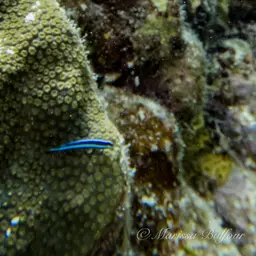
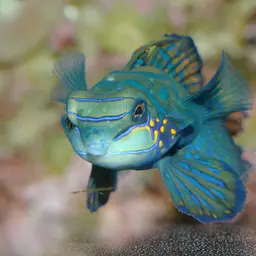
Similar species
Other fish you might consider
Good tank mates
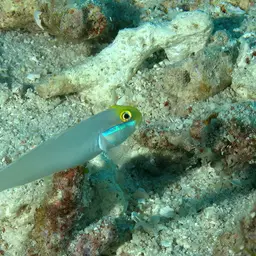
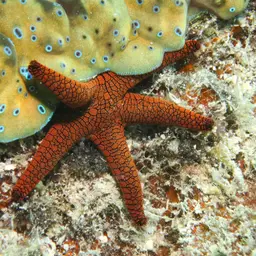
Species that tend to coexist peacefully with Eightline Flasher Wrasse
Frequently asked questions
- How big does the Eightline Flasher Wrasse get?
- The Eightline Flasher Wrasse reaches about 3–3.5" as an adult.
- What water parameters does the Eightline Flasher Wrasse need?
- The Eightline Flasher Wrasse does best with a temperature of 72–82°F, a pH of 8–8.4.
- Is the Eightline Flasher Wrasse aggressive?
- The Eightline Flasher Wrasse is generally peaceful and suits a community tank with similarly calm tankmates.
- Is the Eightline Flasher Wrasse reef safe?
- The Eightline Flasher Wrasse is generally considered reef safe.