Aquariumpro
πŸ”
← Back to species
FishSaltwaterIntermediateSemi aggressive

True Percula Clownfish

Amphiprion percula

Also known as: blackfinned clownfish, clown anemonefish, clown fish, Eastern clownfish, orange clown fish

The fish that launched a thousand reef tanks, with personality to match.

True Percula Clownfish
1 / 15
Β© (c) Bird Explorers, some rights reserved (CC BY-NC) Β· CC-BY NC

About

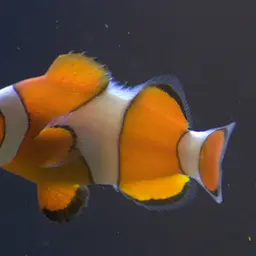
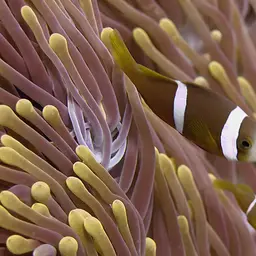
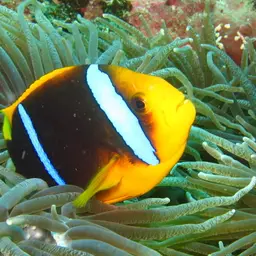
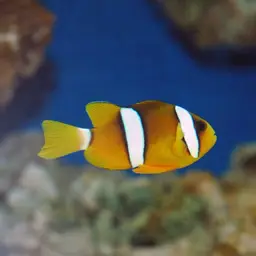
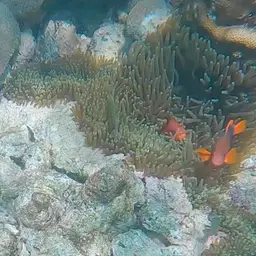
The true percula clownfish (Amphiprion percula) is one of the most recognizable fish in the hobby, though it's frequently confused with its close relative A. ocellaris. The easiest way to tell them apart is by the black outlines on the fins. In percula, these are noticeably thicker and bolder. This species comes from the western Pacific, ranging through Queensland, New Guinea, New Britain, the Solomon Islands, and Vanuatu, where it lives among the tentacles of a handful of specific anemone species on lagoon and seaward reefs. In the wild, it lives in small social groups with a strict size-based pecking order. The female is the largest fish, the male second, and any non-breeders below that. If the female disappears, the male changes sex and steps into her role. This sequential hermaphroditism is one of the more fascinating aspects of clownfish biology. In the aquarium, percula can be territorial and snippy, particularly toward other clownfish, so keep that in mind if you're planning a community reef. They pair well with a compatible host anemone, though keeping one successfully does add complexity. Thankfully, captive-bred specimens are widely available, which makes them hardier and better adjusted to aquarium life than wild-caught fish.

Varieties & strains

9 recognized strains of True Percula Clownfish.

Platinum PerculaSolid, near-white fish with little to no orange pigmentation and reduced or absent black barring β€” at its best, a Platinum looks like a ghost percula with just a faint cream-to-white body. The degree of white coverage varies; top-grade specimens show complete white-out from head to tail with minimal patterning. Select fish where the white is uniform and clean, not patchy or yellowed. Captive-bred stock from reputable breeders is essential since the trait isn't stable enough to guarantee from wild-caught lines. Pairs well visually with darker anemones and makes a striking display fish. Care requirements are identical to standard percula.Onyx PerculaThe Onyx stands out for dramatically expanded black pigmentation that floods the body between the white bars, often leaving only narrow orange accents at the face and fin edges. The contrast between the inky black and crisp white stripes is striking and unmistakable. Expression varies β€” some fish show just heavy black edging on the stripes, while true show-grade Onyxes are predominantly black with orange restricted to small patches. Coloration tends to intensify as fish mature, so juveniles can look underwhelming at first. Pair selection matters: breeding two strong Onyx individuals produces more consistent offspring. Standard percula care applies.Picasso PerculaNamed for the cubist painter, Picasso Perculas have wildly misshapen, asymmetrical white bars β€” stripes that blob out, fork, merge, or break into isolated white patches in ways that look almost hand-painted. No two fish are identical, which is half the appeal. The base orange color is normal; it's purely the white bar patterning that's disrupted. Grade matters a lot here: a premium Picasso has bold, dramatic distortions across all three bars, while a low-grade fish might have just a slightly wobbly middle stripe. Buy in person or request clear photos β€” pictures are essential for evaluating this variety.Lightning PerculaOne of the most dramatic designer clownfish in the hobby: the Lightning Percula has a single, jagged, lightning-bolt-like white stripe β€” or a chaotic explosion of white β€” dominating one or both sides of the body in a pattern that looks nothing like a normal three-bar percula. The irregular white marking against vivid orange is visually arresting. These were originally sourced from wild-caught specimens from Papua New Guinea exhibiting extreme pattern anomalies, then line-bred to improve frequency and expression. Expect significant variation even within a clutch. These command premium prices; verify lineage from a known breeder to avoid misrepresented Picassos being sold as Lightnings.Fancy PerculaA collective grade name applied to A. percula showing multiple simultaneous pattern aberrations β€” partial Picasso-style bar distortion combined with some Onyx-like black expansion, producing fish with both broken white markings and heavier-than-normal black coverage. The look is busier and more complex than a single-trait variant. Consistency across batches can vary because 'Fancy' describes a phenotype tier rather than a tightly fixed genetic cross. Buy from reputable captive breeders who can show photos of the actual fish rather than relying on a category name alone.Fancy White PerculaFancy White Perculas combine the Picasso-style pattern disruption with significant white expansion, so the fish appear predominantly white with scattered orange patches rather than the reverse. The pattern is irregular and unique to each individual, but the overall impression is of a very light, almost washed-out fish covered in abstract white-on-orange or orange-on-white markings. The best specimens have vivid orange remnants that pop against the heavy white. This is essentially a high-white expression of the misbar/Picasso trait β€” lines are selectively bred to push white coverage as high as possible while retaining some color. Care is standard percula.Black Onyx PerculaThe Black Onyx pushes the melanistic Onyx trait to its extreme conclusion: virtually the entire body is jet black, with white bars reduced to thin, crisp lines and orange pigment largely or completely absent from the flanks. A fully expressed Black Onyx looks like a black-and-white fish with just a hint of orange at the mouth or fin edges. Juveniles start out looking much like standard Onyxes and darken significantly with age β€” patience is required. This is the darkest commonly available percula variant, and a well-matched bonded pair displaying together is genuinely impressive. Needs the same care as any percula; no special requirements.Eclipse PerculaEclipse Perculas have the three white bars merged or largely consumed by expanded white that covers the dorsal surface and head while the ventral area retains orange, creating a two-toned "cape" effect β€” or in some expressions, the white spreads so aggressively that only a small orange saddle patch remains on the lower body. The pattern is distinct from both Platinum (which is uniformly white) and Picasso (which has distorted discrete bars). High-grade Eclipses show a clean, dramatic boundary between the white dorsal zone and orange underside. Expression is variable; inspect individual fish carefully since the label is applied loosely by some sellers.Longfin PerculaThe Longfin mutation extends the dorsal, anal, pectoral, and caudal fins dramatically β€” at its best, the fins trail and flow like a veil tail betta's, far beyond any normal clownfish proportion. Coloration is otherwise standard percula orange-and-white, though Longfin genetics can be combined with other designer traits (Longfin Platinum, Longfin Picasso, etc.). Be aware that extreme fin length can cause practical issues: long fins are more susceptible to fin nipping from tankmates and physical damage in high-flow systems. Keep with peaceful tankmates and moderate flow. The mutation is recessive, so both parents must carry the gene to produce Longfin offspring consistently.

Frequently asked questions

How big does the True Percula Clownfish get?
The True Percula Clownfish reaches about 2.5–3" as an adult.
What size tank does the True Percula Clownfish need?
A minimum of 20 gallons is recommended for the True Percula Clownfish.
What water parameters does the True Percula Clownfish need?
The True Percula Clownfish does best with a temperature of 72–82Β°F, a pH of 8–8.4.
Is the True Percula Clownfish aggressive?
The True Percula Clownfish is semi-aggressive. It can work in a community with careful tankmate choices and enough space.
What does the True Percula Clownfish eat?
The True Percula Clownfish is a carnivore. It needs a meaty, protein-rich diet of frozen or live foods.
How long does the True Percula Clownfish live?
With good care, the True Percula Clownfish typically lives 2-5 years.
Is the True Percula Clownfish reef safe?
The True Percula Clownfish is generally considered reef safe.