Aquariumpro
πŸ”
← Back to species
FishSaltwaterAdvancedAggressive

Ocellaris Clownfish

Amphiprion ocellaris

Also known as: clown anemonefish, common clownfish, false clown anemonefish, Western Clownfish

The iconic reef fish that lives fearlessly among stinging anemone tentacles.

Ocellaris Clownfish
1 / 16
CC BY-SA 3.0

About

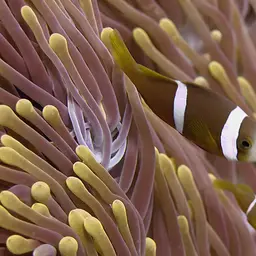
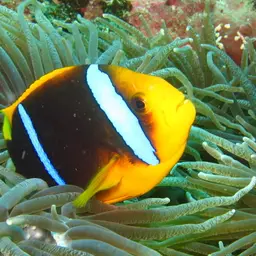
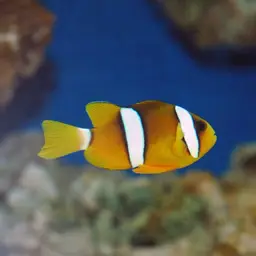
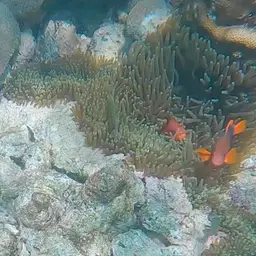
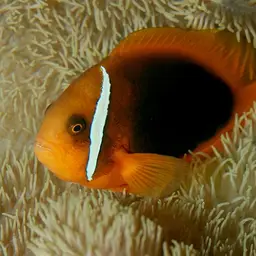
Ocellaris clownfish (Amphiprion ocellaris) are the ambassadors of the reef hobby, and almost certainly the fish that introduced more people to saltwater aquariums than any other species. Native to shallow lagoons and coral reefs across the Indo-West Pacific, from the Andaman Sea through Indonesia and the Philippines to Taiwan, these small, boldly patterned fish are instantly recognizable with their orange bodies crossed by white bands edged in black. In the wild, they spend their entire lives in close association with large sea anemones, weaving fearlessly among tentacles that would paralyze most other fish. They are protandrous hermaphrodites, meaning dominant individuals in a group can transition from male to female, and bonded pairs are monogamous and devoted parents. Males actively guard and fan the egg clutches. In the aquarium they do not require an anemone to do well, though when one is present you will see their full territorial personality on display. They can be kept singly, but a bonded pair is far more interesting to watch. Despite their reputation as a beginner fish, their saltwater requirements and territorial nature earn them an advanced care rating, so they are best paired with keepers who understand reef system management. Captive-bred specimens are widely available and are always the better choice over wild-caught fish.

Varieties & strains

16 recognized strains of Ocellaris Clownfish.

PicassoThe Picasso is defined by its wildly irregular white banding β€” instead of the three clean stripes of a normal Ocellaris, the white patches are smeared, lobed, and connected in unpredictable ways that genuinely look like brushwork. No two fish are identical. Grading matters a lot here: 'High Grade' Picassos show dramatic, extensive white coverage, while lower grades can look almost normal with just a slightly wavy stripe. When buying, look for bold pattern interruptions on at least two bands. A rock-solid captive-bred strain, completely hardy and reef-safe. One of the foundational designer clownfish morphs.SnowflakeSnowflakes carry heavily expanded white bands that blob outward into the orange body, creating irregular snowflake-like splotches of white across the flanks. The pattern variation between individuals is massive β€” some show mostly white bodies with orange islands, others have a more balanced split. Unlike Picasso, the Snowflake mutation tends to push white coverage more uniformly across all three band positions. Grading is just as important here; higher-grade fish are worth the premium for display tanks. Completely compatible with anemones and standard reef setups. A staple of the captive-bred designer trade.PlatinumPlatinum Ocellaris are almost entirely white with minimal to no orange pigmentation remaining, giving them an ethereal, ghost-like appearance. The best specimens are a clean, creamy white from nose to tail with only faint traces of orange, if any. Black markings in the fins remain, providing contrast against the white body. Platinums result from maximally expressing the white gene, essentially the 'full coverage' end of the Snowflake/Wyoming White spectrum. They're visually striking in reef tanks against colorful corals. Captive-bred and hardy β€” just make sure you're buying true Platinums and not pale Snowflakes marketed up.Wyoming WhiteWyoming Whites are a specific, genetically distinct all-white strain β€” not just a high-grade Snowflake. They show an almost completely white body with clear-to-translucent fins and very reduced black edging, giving them a softer, icier look than Platinums. The eyes are typically dark, which makes them pop against the pale body. This strain breeds true, which is an important distinction from simply color-grading Snowflakes. They're peaceful, captive-bred, and reef-safe. If you're comparing Wyoming White to Platinum side by side, Wyoming Whites often look cooler and cleaner in tone, with less creamy warmth.Fancy WhiteFancy Whites are essentially Wyoming Whites crossed back into other designer lines to introduce variable patterning while retaining extreme white coverage. They often show irregular patches of faint orange or unusual fin coloration alongside the predominantly white body. No two look quite the same. Think of them as white Ocellaris with a little artistic unpredictability thrown back in. They're not as 'clean' as Wyoming Whites or Platinums but offer more individual uniqueness. A solid captive-bred fish, fully reef-compatible. Great choice if you want a mostly white clownfish with some personality in the pattern.Black IceBlack Ice is what you get when you cross a Snowflake with a Midnight (or Black Ocellaris): the bold, irregular white patterning of a Snowflake mapped onto a fish with deep black body coloration instead of orange. The contrast is genuinely stunning β€” stark white splotches over a jet-black body with minimal orange remaining. Grading still applies; better specimens maximize both the black body tone and the white pattern complexity. These are visually one of the most dramatic designer Ocellaris available. Fully captive-bred, reef-safe, and hardy. They tend to command higher prices, but the visual payoff justifies it for most hobbyists.MidnightMidnight Ocellaris β€” also commonly called Black Ocellaris β€” display deep charcoal to jet-black body pigmentation where the orange normally appears, retaining the three white stripes with their characteristic black edging. The effect is dramatic and bold in a reef tank. True high-quality Midnights are very dark with minimal orange bleed, though quality varies between breeders. They're behaviorally identical to standard Ocellaris β€” same peaceful temperament, same hosting behavior, same tank requirements. Don't confuse these with the wild A. ocellaris from Darwin, Australia, which are also naturally black β€” captive Midnights are selectively bred from typical orange stock.MochaMocha Ocellaris sit in a warm middle ground between standard orange and full Midnight β€” their bodies are a rich, deep reddish-brown to chocolate tone, not quite black but nowhere near typical orange. The white stripes are usually clean and standard in width, which emphasizes the warm body color by contrast. They're a subtler designer fish compared to the flashier white-patterned variants, but that earthy, chocolatey coloration is genuinely attractive and distinctive in a display tank. Captive-bred, reef-safe, and easy keepers. A good choice if you want something different without the premium pricing of more complex morphs.GladiatorGladiators are characterized by clean, clearly defined white banding β€” but the middle band in particular tends to be straight, bold, and uninterrupted, making the fish look almost like a sharp, hyper-clean version of a standard Ocellaris. What sets them apart is the precision and uniformity of that striping combined with enhanced orange body coloration. Some show a fused or slightly expanded headband as well. They lack the wild splotchiness of Picasso or Snowflake but offer a refined, polished look. A captive-bred strain, peaceful and reef-compatible. Good entry point into designer Ocellaris if you prefer clean over chaotic patterning.StormStorm Ocellaris are a cross between Midnight (black body) and Snowflake lines, similar in concept to Black Ice but typically produced from different parent combinations and often showing a slightly different white patterning style β€” sometimes with more streaky or swirling white markings on the dark body rather than bold blotches. The visual result is a moody, dramatic fish that looks almost like lightning on a storm cloud. Line differences between producers mean Storm and Black Ice can look quite similar; buy from reputable captive breeders who maintain proper records. Reef-safe, captive-bred, and as hardy as any Ocellaris.FrostbiteFrostbite Ocellaris are a Wyoming White-based strain that incorporates additional pattern expression, typically showing irregular patches or spots of white that break up the otherwise pale body in a scattered, frost-like way. They're not as uniformly white as pure Wyoming Whites β€” instead, the patterning gives them a textured, mottled appearance reminiscent of ice crystals. The overall impression is cool-toned and intricate. Like all white-based designer Ocellaris, grading matters β€” look for distinct, high-contrast pattern expression. Captive-bred, reef-safe, and easy to keep. Pairs well visually with pastel or blue-toned coral arrangements.DaVinciDaVinci Ocellaris were named for their artistic, painterly banding β€” the white stripes break up and reconfigure in complex, almost geometrically interesting ways that sit somewhere between a Picasso and a Snowflake. They typically show substantial white coverage with pattern elements that look intentional and structured rather than random. The orange body color is usually retained more than in Snowflakes, giving a better color balance. It's a gorgeous designer morph that photographs beautifully. Captive-bred, reef-compatible, and no more demanding to keep than a standard Ocellaris. One of the more visually sophisticated of the patterned designer strains.NakedNaked Ocellaris completely lack all white banding β€” the stripes are entirely absent, leaving a plain, unbroken orange body with normal black fin edging. The result is surprisingly striking in its simplicity; that uninterrupted orange against coral is genuinely eye-catching. They're one of the most genetically distinct designer Ocellaris because the trait involves a different mutation pathway than the white-expansion morphs. No stripes also means no mistaking them for any other clownfish variant. Fully reef-safe and captive-bred, with the same peaceful temperament as any Ocellaris. An underrated choice for hobbyists who want something unusual without busy patterning.NinjaNinja Ocellaris are essentially Naked fish combined with the Midnight (black body) gene β€” producing a fish with no white stripes whatsoever and a deeply black body. The result is nearly a solid black fish, and a high-quality Ninja is one of the most minimalist, striking clownfish you can put in a reef tank. Black from head to tail with no patterning to speak of, they look almost like a black phantom among colorful corals. Their rarity makes them pricier. Captive-bred and reef-safe. If you want the most dramatically different Ocellaris possible, this is it.LightningLightning Ocellaris are defined by an extreme white pattern mutation where the white coverage is so extensive and irregular that it dominates the fish β€” often with jagged, lightning-bolt-shaped white extensions shooting through the orange, or nearly complete white coverage with only small orange islands remaining. They represent the upper extreme of the Snowflake/Picasso spectrum in terms of white expansion. Every individual is unique. Select for boldness and contrast; the most impressive specimens show that electric, high-voltage white-on-orange look their name implies. Captive-bred and reef-safe β€” same care as any Ocellaris. Premium pricing reflects the visual impact.Snowflake MidnightSnowflake Midnight β€” sometimes listed as Black Snowflake β€” layers the irregular, expanding white patterning of a Snowflake directly onto a Midnight's dark body, producing a fish with bold white splotches on charcoal-to-black rather than orange. This is closely related to Black Ice but specifically bred from Snowflake x Midnight crosses rather than other white-line combinations, and tends to preserve the characteristic blob-shaped white expansions of the Snowflake parent. The high-contrast black-and-white pattern is visually arresting. Captive-bred, reef-safe. One of the cleaner entries into the black-body designer category if you're drawn to the Snowflake patterning style specifically.

Frequently asked questions

How big does the Ocellaris Clownfish get?
The Ocellaris Clownfish reaches about 2.5–4.5" as an adult.
What size tank does the Ocellaris Clownfish need?
A minimum of 20 gallons is recommended for the Ocellaris Clownfish.
What water parameters does the Ocellaris Clownfish need?
The Ocellaris Clownfish does best with a temperature of 72–82Β°F, a pH of 8–8.4.
Is the Ocellaris Clownfish aggressive?
The Ocellaris Clownfish is aggressive and is best kept alone or with robust tankmates that can hold their own.
What does the Ocellaris Clownfish eat?
The Ocellaris Clownfish is an omnivore. It does well on a varied diet of quality flake or pellet plus occasional frozen or live foods.
How long does the Ocellaris Clownfish live?
With good care, the Ocellaris Clownfish typically lives 5-8 years.
Is the Ocellaris Clownfish reef safe?
The Ocellaris Clownfish is generally considered reef safe.