Clown wrasse
Coris gaimard
Also known as: African clown wrasse, African coris, African coris, Yellowtail coris, Gaimard's wrasse, Yellowtail coris
A wrasse that completely reinvents its look from juvenile to adult.

About
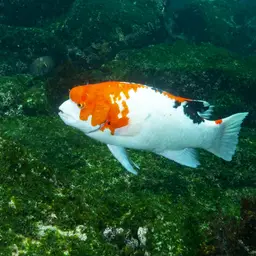
The yellowtail coris (Coris gaimard) is one of those species that can genuinely fool you into thinking you're looking at two different fish. Juveniles are a deep reddish-orange with white patches outlined in black, a pattern so bold and distinct it earns them the nickname clown wrasse. As they mature, that costume is traded in for something altogether different. Adults develop a rich greenish-blue body covered in small bright spots, with a vivid yellow tail that gives the species its most widely used common name. This transformation is one of the more dramatic in the wrasse family and always catches newcomers off guard. In the wild, yellowtail coris range across the Indo-Pacific and into the Western Indian Ocean, where they're typically found patrolling sandy reef flats and rubble zones in search of invertebrate prey. They're active, curious fish that spend most of their time moving, so a spacious tank with plenty of open swimming area suits them well. They're also dedicated diggers and will readily bury themselves in sand to sleep or escape a perceived threat, so a decent sand bed is worth having. Their care level sits at intermediate. They're not especially fragile, but their size, energy, and diet needs mean they're better suited to keepers with some saltwater experience already under their belt.
Similar species
Other fish you might consider
Frequently asked questions
- How big does the Clown wrasse get?
- The Clown wrasse reaches about 3–9" as an adult.
- What water parameters does the Clown wrasse need?
- The Clown wrasse does best with a temperature of 72–82°F, a pH of 8–8.4.
- Is the Clown wrasse aggressive?
- The Clown wrasse is semi-aggressive. It can work in a community with careful tankmate choices and enough space.
- What does the Clown wrasse eat?
- The Clown wrasse is a carnivore. It needs a meaty, protein-rich diet of frozen or live foods.
- Is the Clown wrasse reef safe?
- The Clown wrasse is not considered reliably reef safe and may harm corals or invertebrates.