Katvis
Pimelodus ornatus
Also known as: Ornate Pim, Ornate Pim, Ornate Pimelodus
A bold, predatory catfish with toxic spines and serious schooling instincts.

About
The ornate pim (Pimelodus ornatus) is a large, active catfish from the river systems of South America, ranging across the Amazon, Orinoco, Paraná, Essequibo, and Corantijn basins, as well as the major rivers of the Guianas. In the wild it occupies main river channels, rocky pool bottoms, and areas near downstream rapids, often among submerged timber. It is a dusk-active predator, and that hunting instinct carries directly into aquarium life. Any tankmate small enough to swallow will eventually become a meal. That said, it is not aggressive toward fish it cannot eat, and does well alongside robust medium to large companions like rainbowfish, sizeable characins, loricariid catfish, and doradids. Slower cichlids can find its constant movement and probing barbels irritating, particularly at night. Like most shoaling catfish, a lone specimen tends to stay hidden during daylight and only grows more confident and visible when kept with a few of its own kind. New arrivals deserve some careful attention. Imported fish often come in poor condition after transit, and as a scaleless species it is quite vulnerable to whitespot and sensitive to many standard medications, so half-doses are wise when treatment is unavoidable. The pectoral spines are another thing to respect: they lock rigid, tangle badly in nets, and deliver a genuinely painful toxic sting if they catch your skin. Use a container rather than a net whenever you need to move these fish.
Similar species
Other fish you might consider
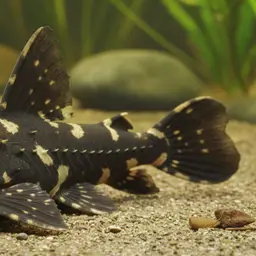
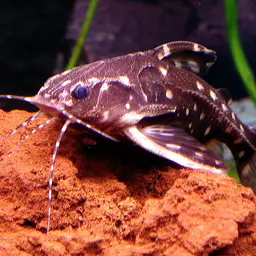
Good tank mates
Species that tend to coexist peacefully with Katvis
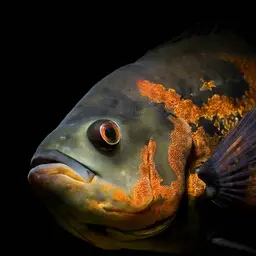
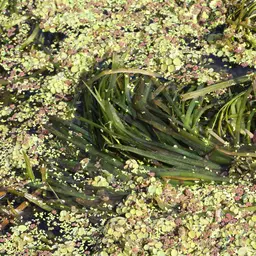
From the same region
Share the same natural habitat. Great for a biotope-themed tank
Frequently asked questions
- How big does the Katvis get?
- The Katvis reaches about 9–15" as an adult.
- What size tank does the Katvis need?
- A minimum of 143 gallons is recommended for the Katvis, with more room needed for a proper group.
- What water parameters does the Katvis need?
- The Katvis does best with a temperature of 72–82°F, a pH of 6–7.5, hardness around 2–20 dGH.
- Is the Katvis aggressive?
- The Katvis is semi-aggressive. It can work in a community with careful tankmate choices and enough space.
- What does the Katvis eat?
- The Katvis is a carnivore. It needs a meaty, protein-rich diet of frozen or live foods.
- How long does the Katvis live?
- With good care, the Katvis typically lives 5-8 years.