Flying Barb
Esomus danrica
A sociable Asian barb with famously long barbels and a feisty streak.

About
The flying barb (Esomus danrica) is a small, active cyprinid native to still and slow-moving waters across a broad sweep of South and Southeast Asia, from Pakistan and Afghanistan through India, Nepal, Bangladesh, and Sri Lanka into Myanmar. It turns up in weedy ponds, irrigation canals, and roadside ditches, habitats that hint at its toughness as an aquarium fish. Two physical features immediately set it apart: oversized pectoral fins and a pair of maxillary barbels so long they typically reach all the way back to the pectoral fins, giving the fish an almost whiskery look that's unlike most other small barbs. Temperament is where things get interesting. This species forms a social hierarchy rather than a tight school, so keeping a group of eight or more is genuinely important, not just a recommendation. Smaller groups tend to result in weaker fish being harassed relentlessly. Fin-nipping has been reported toward slow-moving or long-finned tankmates, though well-sized groups in suitable company seem to reduce that risk considerably. One health note worth flagging: hobbyists have documented a wasting condition in Esomus species that causes rapid weight loss beginning just behind the gills and often proves fatal within weeks, with no known treatment yet identified. Keep a close eye on body condition in newly acquired fish.
Similar species
Other fish you might consider
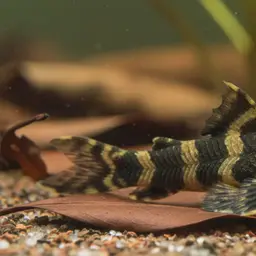
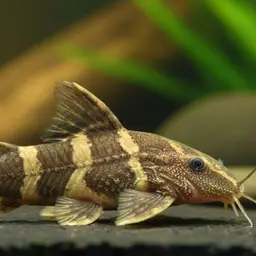
Good tank mates
Species that tend to coexist peacefully with Flying Barb
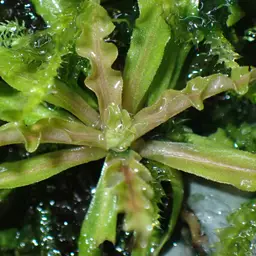
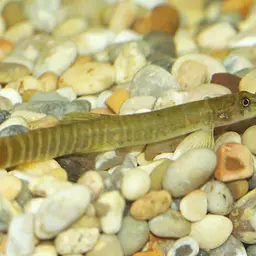
From the same region
Share the same natural habitat. Great for a biotope-themed tank
Frequently asked questions
- How big does the Flying Barb get?
- The Flying Barb reaches about 2.5–5" as an adult.
- What size tank does the Flying Barb need?
- A minimum of 29 gallons is recommended for the Flying Barb, with more room needed for a proper group.
- What water parameters does the Flying Barb need?
- The Flying Barb does best with a temperature of 68–79°F, a pH of 6–8, hardness around 1–12 dGH.
- Is the Flying Barb aggressive?
- The Flying Barb is semi-aggressive. It can work in a community with careful tankmate choices and enough space.
- How long does the Flying Barb live?
- With good care, the Flying Barb typically lives 3-5 years.