Rosy Barb
Pethia conchonius
Also known as: Puntius conchonius, Red Barb
Hardy, colorful schooling barb that thrives across a wide range of conditions.

About
The rosy barb (Pethia conchonius) originates from a broad swath of South Asia, Afghanistan, Pakistan, India, Nepal, and Bangladesh, where it inhabits everything from slow lakes to fast-moving hill streams. That adaptability to varied conditions carries right into the aquarium, making it one of the more forgiving cyprinids you can keep. Males put on a genuine show during breeding periods, shifting from a fairly understated silver-pink to a deep, warm claret red that intensifies as they compete with rival males. Females tend to run slightly larger and take on a softer luminosity at the same time. In the wild and in the tank, this is a schooling fish through and through. Keeping at least eight to ten together brings out their best behavior and color, and reduces the nervous edge that smaller groups can show. They mix well with a wide range of community fish: other small cyprinids, tetras, livebearers, rainbowfish, catfish, and loaches all make reasonable tankmates. Diet is straightforward for an omnivore. They'll eat worms, crustaceans, insects, and plant material without much fuss. Selective breeding has produced several ornamental forms, including long-finned, veil-tail, super red, neon, and golden variants, all fairly common in the hobby. Prolific spawners when in good condition, they scatter eggs without any parental involvement.
Similar species
Other fish you might consider
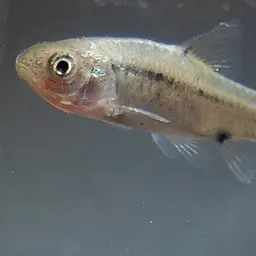
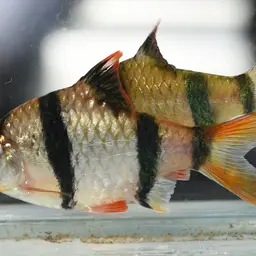
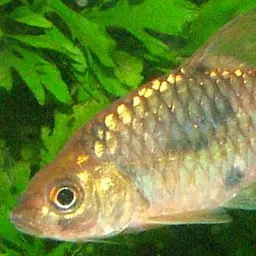
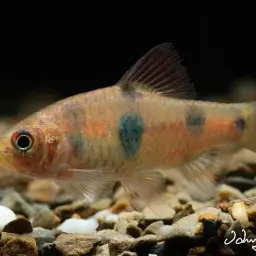
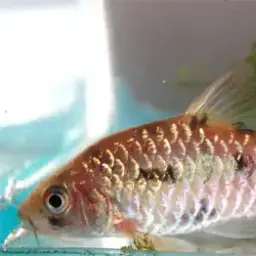
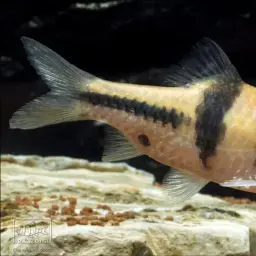
Good tank mates
Species that tend to coexist peacefully with Rosy Barb
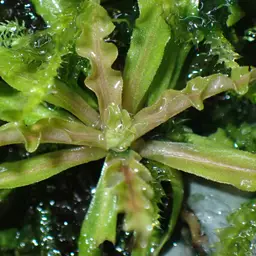
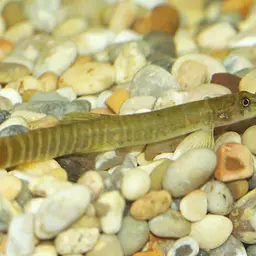
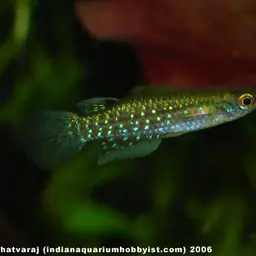
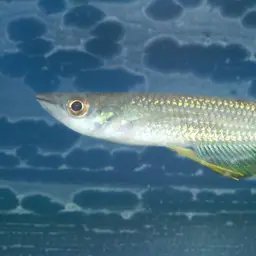
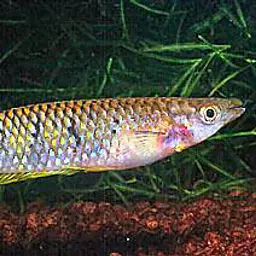
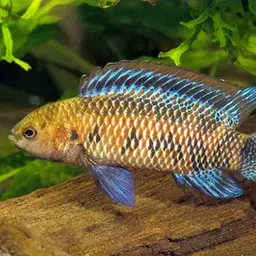
From the same region
Share the same natural habitat. Great for a biotope-themed tank
Frequently asked questions
- How big does the Rosy Barb get?
- The Rosy Barb reaches about 2.5–4.5" as an adult.
- What size tank does the Rosy Barb need?
- A minimum of 24 gallons is recommended for the Rosy Barb, with more room needed for a proper group.
- What water parameters does the Rosy Barb need?
- The Rosy Barb does best with a temperature of 64–82°F, a pH of 6–8, hardness around 4–20 dGH.
- Is the Rosy Barb aggressive?
- The Rosy Barb is semi-aggressive. It can work in a community with careful tankmate choices and enough space.
- What does the Rosy Barb eat?
- The Rosy Barb is an omnivore. It does well on a varied diet of quality flake or pellet plus occasional frozen or live foods.
- How long does the Rosy Barb live?
- With good care, the Rosy Barb typically lives 5 years.