Clown Barb
Barbodes dunckeri
A boldly patterned Malaysian barb that's been hiding behind its cousin's name for decades.

About
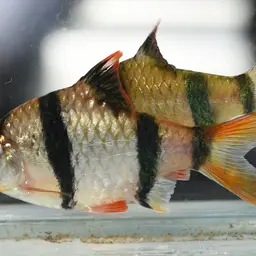
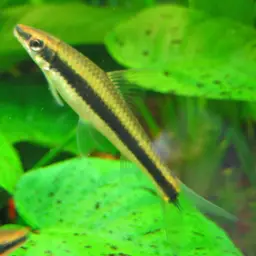
Found in acidic swamp habitats of Malaysia, Barbodes dunckeri is a mid-sized barb that most hobbyists have actually encountered without realizing it. The fish sold in the trade for years under the name 'clown barb' is almost always this species, not the closely related B. everetti it gets confused with. The two are straightforward to separate once you know what to look for: this fish carries noticeably larger dark body markings, lacks the dark blotch at the rear base of the dorsal fin, and has four and a half scales above the lateral line rather than three and a half. It's an active, schooling species and genuinely benefits from being kept in groups of six or more. A proper school not only looks better and settles the fish down, it also channels any minor aggression inward as individuals sort out their pecking order rather than directing it outward at tankmates. Good companions include similarly sized, active riverine species. Other barbs, rasboras, and botiid loaches are all sensible choices. For a schooling cyprinid of this size it's a reasonably forgiving fish, suitable for keepers who have moved past the basics and have a tank large enough to give a group of them room to move. Breeding follows the typical egg-scattering pattern of cyprinids, with no parental care and adults that will readily eat their own eggs.
Similar species
Other fish you might consider
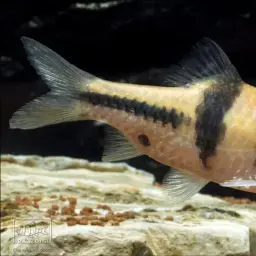
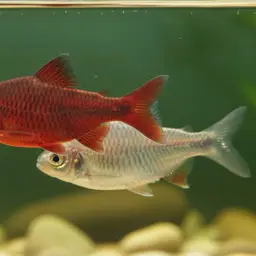
Good tank mates
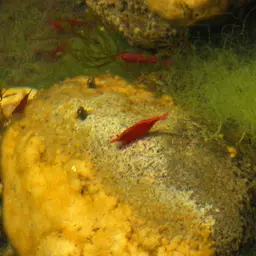
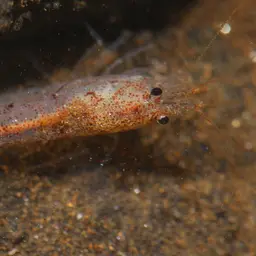
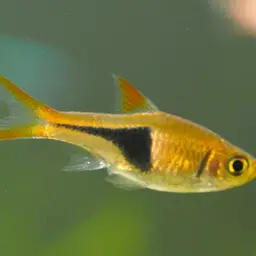
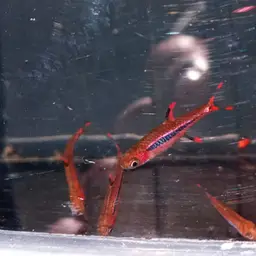
Species that tend to coexist peacefully with Clown Barb
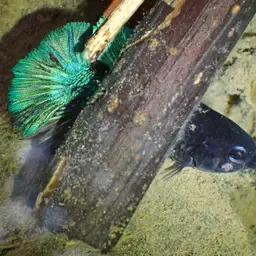
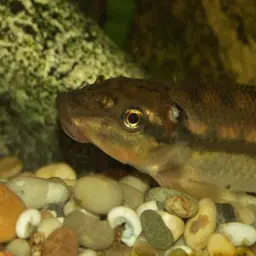
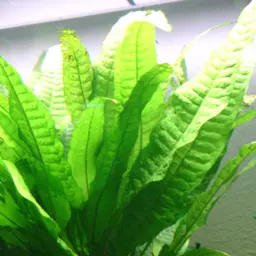
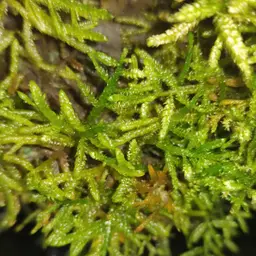
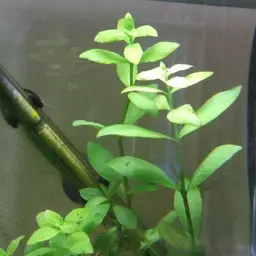
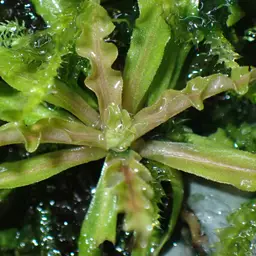
From the same region
Share the same natural habitat. Great for a biotope-themed tank
Frequently asked questions
- How big does the Clown Barb get?
- The Clown Barb reaches about 4–4.5" as an adult.
- What size tank does the Clown Barb need?
- A minimum of 43 gallons is recommended for the Clown Barb, with more room needed for a proper group.
- What water parameters does the Clown Barb need?
- The Clown Barb does best with a temperature of 68–82°F, a pH of 6–7.5, hardness around 2–12 dGH.
- Is the Clown Barb aggressive?
- The Clown Barb is semi-aggressive. It can work in a community with careful tankmate choices and enough space.
- What does the Clown Barb eat?
- The Clown Barb is an omnivore. It does well on a varied diet of quality flake or pellet plus occasional frozen or live foods.