Aquariumpro
πŸ”
← Back to species
FishFreshwaterBeginnerSemi aggressive

Betta

Betta splendens

Also known as: Siamese Fighting Fish

The world's most recognizable fighting fish, now bred in countless colors and fin shapes.

Betta
1 / 22
Β© (c) Albert Kang, some rights reserved (CC BY-NC) Β· CC-BY NC

About

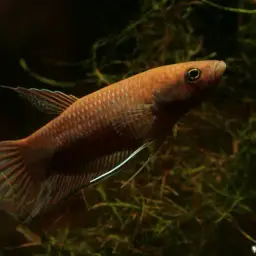
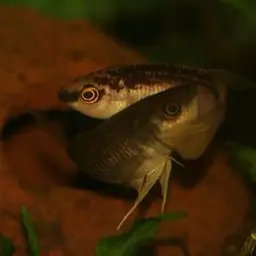
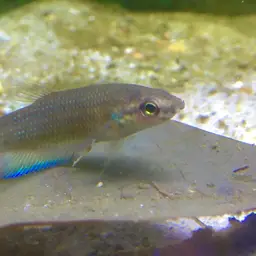
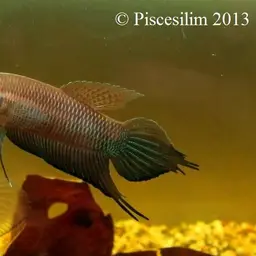
The betta (Betta splendens) is probably the single fish most people encounter before they ever set up a proper aquarium, often sold in tiny cups at chain pet stores. A practice that does the species no favors. Wild fish come from the Mekong basin of Southeast Asia, where they inhabit rice paddies, floodplains, and slow canals, feeding on insect larvae and zooplankton. Like all members of the anabantoid suborder, bettas possess a labyrinth organ that lets them breathe air directly from the surface, which partly explains their tolerance for low-oxygen conditions in the wild. The ornamental strains available today have been line-bred for generations and bear little resemblance to the drab wild form, coming in an enormous range of fin shapes and color patterns. Despite a reputation as a peaceful community fish, the reality is more complicated: males will attack each other on sight, and many males will also harass fish with flowing fins or similar body shapes. Keeping a single male alone, or with carefully chosen, fast-moving tankmates, is the safest approach. Females are more sociable but still need space and cover. For a beginner willing to keep just one fish and give it a proper setup, a betta is a genuinely rewarding and personable choice.

Varieties & strains

15 recognized strains of Betta.

VeiltailThe Veiltail is what most people picture when they think 'betta' β€” long, asymmetrical caudal fin that droops and flows downward in a sweeping arc, with similarly elongated dorsal and anal fins. Coloration varies wildly since this is the oldest and most commercially bred fin type. Easy to find and inexpensive, but quality varies enormously; avoid fish with clamped or frayed fins at the store. Males can be prone to fin-biting if kept in barren tanks. Despite being considered 'common,' a healthy, fully-opened Veiltail in peak color is genuinely striking. A great beginner betta.CrowntailCrowntails are unmistakable: the webbing between fin rays is reduced by 2/3 or more, leaving dramatic spiky extensions that radiate outward like a crown or starburst. The rays themselves can be single, double, or cross-ray β€” cross-ray being the most elaborate and prized. Fin edges should be crisp and symmetrical; ragged tips are a red flag for poor genetics or early fin rot. Crowntails are slower to develop full finnage than other types, so young fish can look underwhelming. Buy from a reputable breeder rather than big-box stores to get clean ray structure.HalfmoonThe gold standard of fancy bettas for many hobbyists β€” the caudal fin spreads a full 180 degrees when flared, forming a perfect D-shape or half-circle. Dorsal and anal fins should be large, stiff, and proportional. Look for clean, straight edges with no 'rounding' that drops the spread below 180Β°. Halfmoons are structurally demanding fish; the finnage can tear easily on sharp decor, and fin rot is a real risk. They're also prone to lethargy β€” that huge fin is heavy. Keep flow low, temp stable, and water pristine. A well-bred Halfmoon is a showstopper.PlakatShort-finned and built for action β€” the Plakat is the closest domestic betta to its wild fighting ancestors. Caudal fin is rounded and compact, typically no more than 180Β° of spread and often much less; anal and dorsal fins are proportionally smaller than other fancy types. What they lack in flowing finnage they make up for in vigor, faster swimming, and significantly better fin integrity. Plakats are less prone to fin rot and tail-biting, making them excellent for planted tanks with moderate flow. They're also more active and often more aggressive than long-finned varieties. Highly recommended for keepers who want a hardy, lively fish.Double TailThe Double Tail carries a genetic mutation that splits the caudal fin into two distinct lobes, giving the fish an almost symmetrical, butterfly-like profile from behind. The same mutation typically produces a broader, deeper body and a wider dorsal fin β€” often the widest of any betta type. This body shape is a double-edged sword: the expanded dorsal is gorgeous, but the short, wide body makes Double Tails prone to swim bladder issues and constipation. Feed sparingly, vary the diet, and avoid overfeeding. The Double Tail gene is also commonly used in breeding programs to widen finnage in other varieties.Rose TailA Rosetail is essentially an over-bred Halfmoon β€” the caudal fin has so many branching rays that the edges ruffle and overlap like rose petals, giving a lush, layered appearance. It sounds beautiful, and photographically it often is, but that excessive finnage frequently folds back on itself and is extremely prone to tearing and fin rot. Many serious breeders consider the Rosetail a fault rather than a feature because the structural integrity of the fin is compromised. If you keep one, pristine water quality and minimal sharp decor are non-negotiable. Best appreciated by hobbyists who understand the maintenance commitment.FeathertailThe Feathertail takes excessive ray branching even further than the Rosetail, with fins so heavily subdivided and frilled they resemble delicate feathers or lace. The visual effect is ethereal, but the fins are structurally fragile to the point of being almost impractical β€” even minor water quality lapses can trigger rapid fin deterioration. This variety requires an experienced keeper: pristine, stable water, very gentle filtration, and a near-bare or smooth-only decor setup. Not recommended as a first betta. If you're up for the challenge, a Feathertail in peak condition is one of the most visually unusual fish in the hobby.DeltaThe Delta Tail has a caudal fin that fans out in a triangular or wedge shape β€” wider at the trailing edge than at the base β€” but spreads less than 180Β°, typically between 120Β° and 160Β°. It's a step between a Veiltail and a Halfmoon in structural terms. Edges should be straight and clean, not rounded or jagged. Deltas are more structurally sound than Halfmoons, with a good balance between visual impact and fin durability. A nice mid-tier choice for hobbyists who want a showy fish without the extreme maintenance demands of a Halfmoon or Rosetail.Super DeltaA Super Delta spreads its caudal fin between 160Β° and just under 180Β°, putting it right on the doorstep of Halfmoon qualification. Edges should be crisp and straight, and the distinction from a true Halfmoon often comes down to judge's-eye or a degree or two of spread when fully flared. In practical terms, Super Deltas are slightly hardier than Halfmoons with similarly impressive finnage. For the home hobbyist, the difference is mostly academic β€” but if you're buying for show purposes, understand you may need to upgrade to a confirmed Halfmoon breeder line. Still a stunning fish by any measure.Halfmoon PlakatThe Halfmoon Plakat β€” HMPK in hobby shorthand β€” combines the short, compact body and fins of a Plakat with the 180Β° caudal spread of a Halfmoon. The result is a fish with full flare and striking symmetry, but without the fragile, trailing finnage of a standard Halfmoon. HMPKs are arguably the most well-rounded fancy betta: they're active, structurally sound, resistant to fin damage, and still achieve a dramatic flare display. They're the dominant variety in competitive betta showing in Thailand and increasingly popular worldwide. If you can only keep one betta, the HMPK is a strong contender.KoiKoi Bettas display patches of red, orange, black, and white arranged in irregular blotches reminiscent of Nishikigoi (ornamental koi carp). The patterning is bold and high-contrast β€” no subtle gradients, just chunky color fields that shift across the body and fins. Because Koi Bettas typically carry the marble gene, their coloration can change dramatically over their lifetime, which is either exciting or frustrating depending on your perspective. No two fish are identical, and a fish that looks mediocre at purchase may develop stunning pattern over 6–12 months β€” or vice versa. Buy a fish whose current pattern you love, and treat any future changes as a bonus.Dragon ScaleDragon Scale Bettas have an amplified iridescent scale layer that creates a thick, metallic, armor-like appearance β€” scales look raised, white to silver-metallic, and catch the light like hammered metal. The base color underneath is often vivid red or blue, creating intense contrast. The dragon gene is visually spectacular but comes with a significant health caveat: scale overgrowth can and does affect the eyes, and many Dragon Scale bettas develop partial or complete blindness as adults. Buy from breeders actively selecting against eye overgrowth. A blind betta can still live comfortably, but it should factor into your decision.GalaxyGalaxy Bettas β€” sometimes called 'Galaxy Koi' β€” feature fine iridescent scales scattered across a dark, often blue-black or purple base, resembling a star field. The effect is subtle compared to Dragon Scales: rather than full metallic coverage, it's a constellation of sparkling scales over a rich, dark background. Fins are typically translucent to lightly patterned, which keeps the body the visual focal point. They can be harder to find than Koi or Dragon variants, and quality varies. Look for even distribution of the iridescent scales and a deep, saturated base color rather than washed-out gray.MarbleMarble Bettas carry the famous 'marble gene' β€” a transposon that causes pigment cells to activate and deactivate unpredictably throughout the fish's life. Colors shift, blotches appear or fade, and a marble betta you bought last year may look almost unrecognizable today. Patterning is typically high-contrast: patches of opaque white, blue, red, or black in irregular, unpredictable arrangements. It's impossible to guarantee what a marble will look like at maturity, which makes them both a fascinating experiment and a poor choice if you want a specific look. Many modern color strains β€” Koi, Butterfly, and others β€” trace their patterning back to the marble gene.SamuraiSamurai Bettas are defined by a distinctive two-tone scaling pattern: the body scales have a metallic, often blue-green or copper iridescent center with a contrasting darker edge, creating a precise, tessellated look that evokes lacquered armor. Unlike the blotchy marble or the full-coverage dragon scale, the Samurai effect is structural and orderly β€” each scale is individually visible and distinctly outlined. Fin coloration is typically a contrasting solid or bi-color. This is a niche variety most commonly found through specialist Thai breeders; mass-market fish labeled 'Samurai' often don't meet the true pattern standard, so buy from a reputable source.

Frequently asked questions

How big does the Betta get?
The Betta reaches about 1.5–3.5" as an adult.
What size tank does the Betta need?
A minimum of 11 gallons is recommended for the Betta.
What water parameters does the Betta need?
The Betta does best with a temperature of 72–86Β°F, a pH of 5.5–8, hardness around 1–19 dGH.
Is the Betta aggressive?
The Betta is semi-aggressive. It can work in a community with careful tankmate choices and enough space.
What does the Betta eat?
The Betta is a carnivore. It needs a meaty, protein-rich diet of frozen or live foods.
How long does the Betta live?
With good care, the Betta typically lives 2-3 years.