Burmese Hill Trout
Opsarius dogarsinghi
Also known as: Striped Hill Trout
A bold hill stream speedster that needs friends its own size.

About
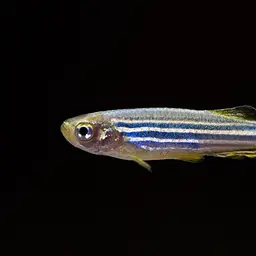
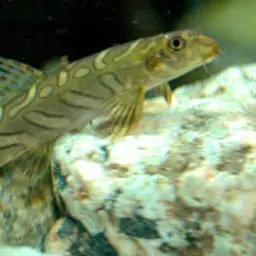
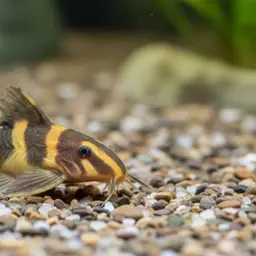
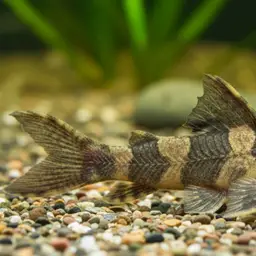
Sometimes sold under the trade names 'Burmese hill trout' or 'striped hill trout', this active cyprinid from the fast-flowing hill streams of Manipur, India is recognizable by its eight or nine dark blue vertical bars along the body, a prominent dark blotch at the base of the tail, and a single pair of short rostral barbels. In the wild it inhabits rocky and gravelly stream beds with clear, well-oxygenated, moderately cool water, and the aquarium setup should reflect that with good flow and plenty of open water for swimming. Despite the beginner care rating, this fish is not a straightforward community candidate. It is an exceptionally fast swimmer and an aggressive feeder that will easily outcompete more timid or slow-moving species, and very small fish risk being treated as food. The best approach is to pair it with robust, similarly-sized pelagic cyprinids and confident bottom-dwellers like Garra or Botia. Opsarius dogarsinghi is gregarious but forms a pecking order within the group, so keeping five or more individuals is important. Too few and the weaker fish can be harassed relentlessly. It has been bred in captivity, though detailed accounts are limited. Given the tank size needed and its specific social dynamics, a bit of planning goes a long way with this species.
Similar species
Other fish you might consider

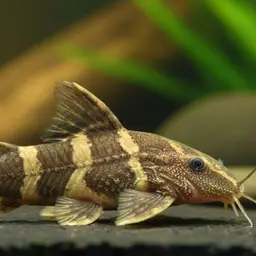
Good tank mates
Species that tend to coexist peacefully with Burmese Hill Trout
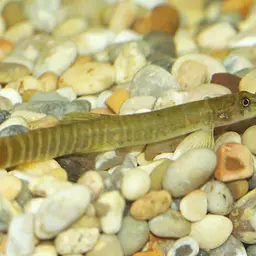
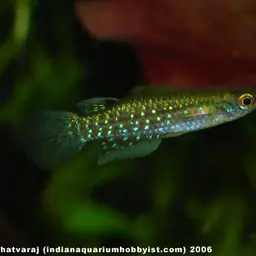

From the same region
Share the same natural habitat. Great for a biotope-themed tank


Frequently asked questions
- How big does the Burmese Hill Trout get?
- The Burmese Hill Trout reaches about 2–3.5" as an adult.
- What size tank does the Burmese Hill Trout need?
- A minimum of 71 gallons is recommended for the Burmese Hill Trout, with more room needed for a proper group.
- What water parameters does the Burmese Hill Trout need?
- The Burmese Hill Trout does best with a temperature of 64–75°F, a pH of 6–7.5, hardness around 2–12 dGH.
- Is the Burmese Hill Trout aggressive?
- The Burmese Hill Trout is semi-aggressive. It can work in a community with careful tankmate choices and enough space.
- What does the Burmese Hill Trout eat?
- The Burmese Hill Trout is an omnivore. It does well on a varied diet of quality flake or pellet plus occasional frozen or live foods.