Kenyi Cichlid
Pseudotropheus lombardoi
A notoriously aggressive mbuna with a dramatic reverse color scheme between sexes.

About
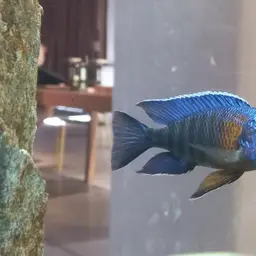
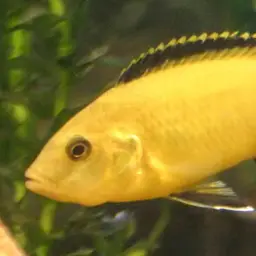
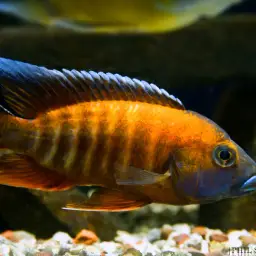
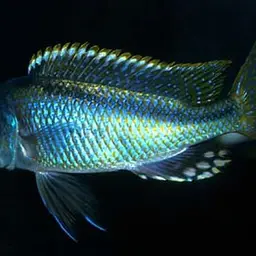
An island endemic from the rocky and sandy shallows around Mbenji Island in Lake Malawi, Pseudotropheus lombardoi is one of the most recognizable cichlids in the mbuna group. And one of the most demanding to keep successfully. What sets this species apart visually is a striking reversal of color between the sexes: males shift from a blue juvenile coloration to a warm golden-yellow as they mature, while females and juveniles retain the blue barred pattern more typical of mbuna. Males also carry a single eggspot on the anal fin, a detail that helps distinguish them from similar species. In the wild, these fish inhabit the transition zone between rocky outcrops and sandy substrate, grazing loose algae from rock surfaces and occasionally picking plankton from open water. In the aquarium, aggression is the defining challenge. This is not a fish for community tanks or gentle setups. Males are relentless in defending territory and can seriously harm or kill tankmates. Keeping one male with several females, combined with an intentionally crowded tank of similarly robust mbuna, is the standard approach to managing that aggression. A maternal mouthbrooder, it is entirely achievable to breed in captivity, though the species is genuinely better suited to hobbyists with some cichlid experience behind them. Taxonomy remains unsettled, with many sources placing it in Metriaclima rather than Pseudotropheus.
Similar species
Other fish you might consider
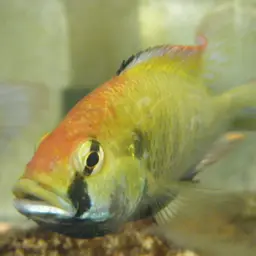
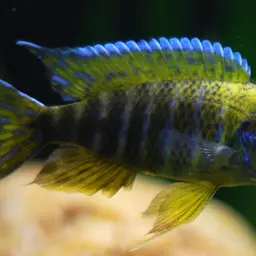
Good tank mates
Species that tend to coexist peacefully with Kenyi Cichlid
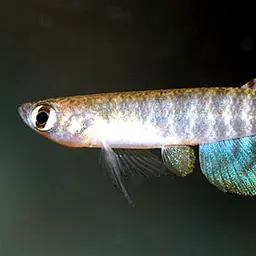
From the same region
Share the same natural habitat. Great for a biotope-themed tank
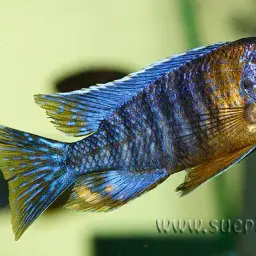
Frequently asked questions
- How big does the Kenyi Cichlid get?
- The Kenyi Cichlid reaches about 2–6" as an adult.
- What size tank does the Kenyi Cichlid need?
- A minimum of 53 gallons is recommended for the Kenyi Cichlid.
- What water parameters does the Kenyi Cichlid need?
- The Kenyi Cichlid does best with a temperature of 73–81°F, a pH of 7.5–8.8, hardness around 10–25 dGH.
- Is the Kenyi Cichlid aggressive?
- The Kenyi Cichlid is aggressive and is best kept alone or with robust tankmates that can hold their own.
- What does the Kenyi Cichlid eat?
- The Kenyi Cichlid is a herbivore. It needs a plant-based diet such as algae, blanched vegetables, or spirulina-based foods.
- How long does the Kenyi Cichlid live?
- With good care, the Kenyi Cichlid typically lives 8-12 years.