Vundu
Heterobranchus longifilis
Also known as: Sampa
One of Africa's largest freshwater fish, built for serious dedicated keepers only.

About
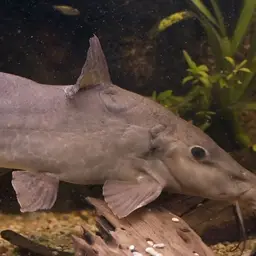
The vundu (Heterobranchus longifilis) is a genuinely massive African catfish that commands respect. And serious tank space. Native to major river systems across the continent, including the Nile, Congo, and Zambezi, it also turns up in deep lakes like Tanganyika and Edward. In the wild it favors large, deep rivers and pools, spending its days in slow or still water before becoming active after dark. Younger fish pick off invertebrates and insects, but as they grow they shift toward fish and other small vertebrates, and large adults are known to scavenge carcasses near riverside settlements. That feeding strategy carries directly into aquarium life: this species is highly predatory and will target anything it can fit in its mouth, often going after larger tankmates as well, so it really needs to be kept on its own. One useful identification marker is the unusually long adipose fin, which separates it from close relatives. Capable of breathing air when dissolved oxygen runs low, it is physiologically tough, but the sheer scale of this fish, one of the largest freshwater species in southern Africa, means it is realistically a species for public aquaria or the most committed private keepers with the space to house it responsibly.
Similar species
Other fish you might consider
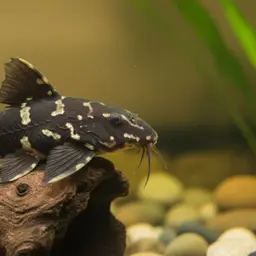
Chocolate Talking Catfish
FishAcanthodoras cataphractus
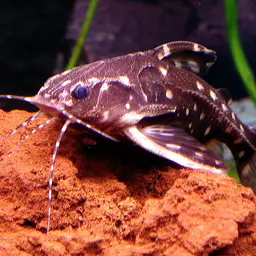
Spotted Raphael Catfish
FishAgamyxis pectinifrons
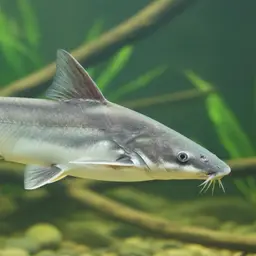
Manduba, Slopehead Catfish
FishAgeneiosus inermis
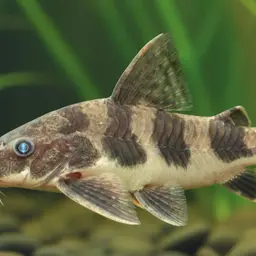
Blue-eyed Catfish
FishAmblydoras nauticus
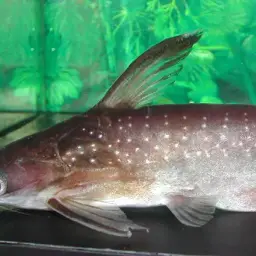
Zamora Woodcat
FishAuchenipterichthys coracoideus
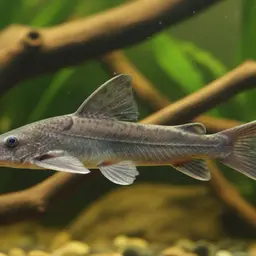
Driftwood Catfish
FishAuchenipterichthys longimanus
Good tank mates
Species that tend to coexist peacefully with Vundu
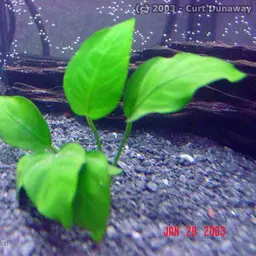
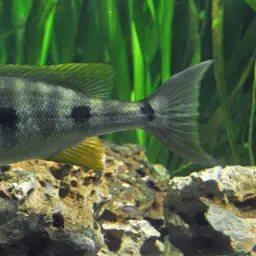
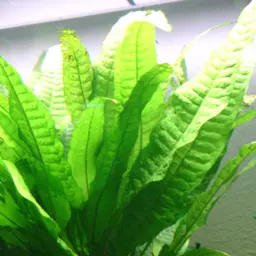
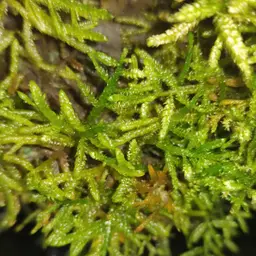
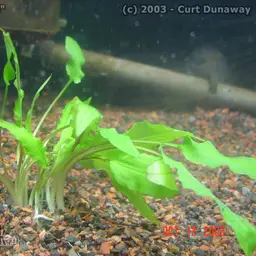
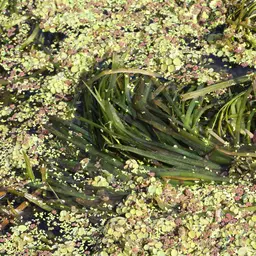
From the same region
Share the same natural habitat. Great for a biotope-themed tank
Frequently asked questions
- How big does the Vundu get?
- The Vundu reaches about 35.5–59" as an adult.
- What size tank does the Vundu need?
- A minimum of 180 gallons is recommended for the Vundu.
- What water parameters does the Vundu need?
- The Vundu does best with a temperature of 72–82°F, a pH of 5.5–7.5, hardness around 3–20 dGH.
- Is the Vundu aggressive?
- The Vundu is semi-aggressive. It can work in a community with careful tankmate choices and enough space.
- What does the Vundu eat?
- The Vundu is an omnivore. It does well on a varied diet of quality flake or pellet plus occasional frozen or live foods.