Kribensis
Pelvicachromis pulcher
Also known as: Bone Back, Common Krib, Pink Krib, Purple cichlid, rainbow krib
A beginner-friendly cichlid that breeds willingly and parents like a pro.

About
Kribensis (Pelvicachromis pulcher) has been a staple of the freshwater hobby since the 1950s, and for good reason. Native to the coastal river systems of southern Nigeria, eastern Benin, and western Cameroon, this small cichlid is one of the most approachable species in the group. Genuinely peaceful enough for a community tank and compact enough not to bulldoze the furniture. Males are slender with iridescent flanks, while females are noticeably rounder with a belly that flushes deep purple-violet when she's in breeding condition, which is arguably the most distinctive visual cue in the hobby. The vast majority of fish available today are captive-bred, making them far more tolerant of varying water conditions than their wild counterparts and generally less aggressive when spawning. That breeding behavior is what truly sets the krib apart. They form monogamous pairs, select or excavate a cave, and raise their fry with attentive, coordinated parenting that's genuinely entertaining to watch. Many fishkeepers breed cichlids for the first time with this species, often without even planning to. Keep them with small tetras, rasboras, Corydoras, or similar. Just avoid large or boisterous tankmates that might intimidate them, and expect the pair to become noticeably defensive around any spawning site.
Similar species
Other fish you might consider
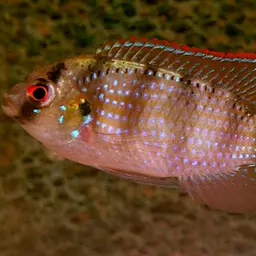
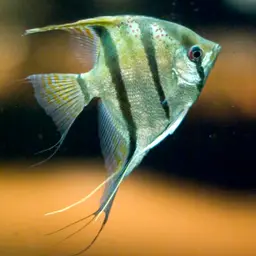
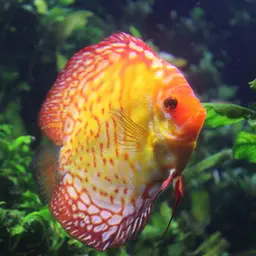
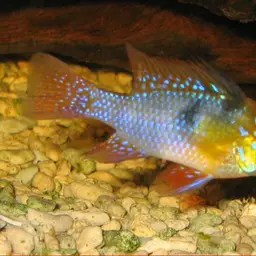
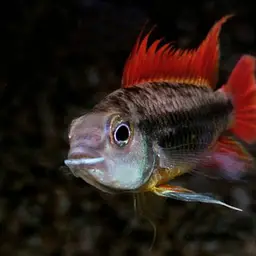
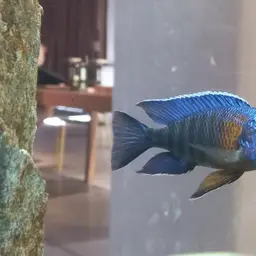
Good tank mates
Species that tend to coexist peacefully with Kribensis
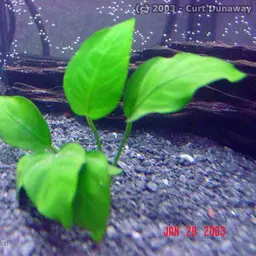
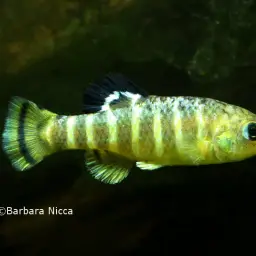
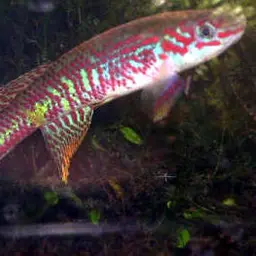
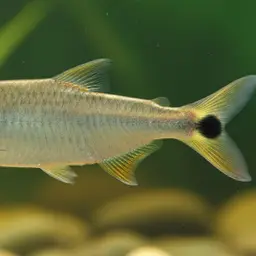
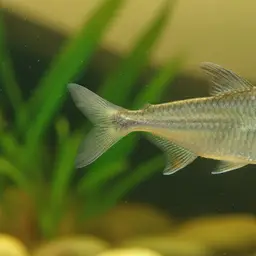
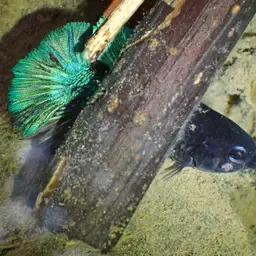
From the same region
Share the same natural habitat. Great for a biotope-themed tank
Frequently asked questions
- How big does the Kribensis get?
- The Kribensis reaches about 2.5–4.5" as an adult.
- What size tank does the Kribensis need?
- A minimum of 20 gallons is recommended for the Kribensis.
- What water parameters does the Kribensis need?
- The Kribensis does best with a temperature of 72–84°F, a pH of 5–8, hardness around 2–19 dGH.
- Is the Kribensis aggressive?
- The Kribensis is semi-aggressive. It can work in a community with careful tankmate choices and enough space.
- What does the Kribensis eat?
- The Kribensis is an omnivore. It does well on a varied diet of quality flake or pellet plus occasional frozen or live foods.
- How long does the Kribensis live?
- With good care, the Kribensis typically lives 5 years.