Aquariumpro
πŸ”
← Back to species
FishFreshwaterIntermediateSemi aggressive

Angelfish

Pterophyllum scalare

Also known as: Black Angelfish

The iconic cichlid that started countless freshwater fishkeeping journeys.

Angelfish
1 / 22
CC BY-SA 3.0

About

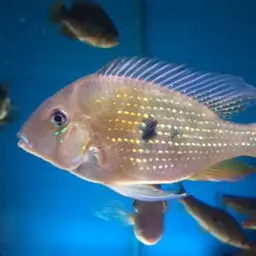
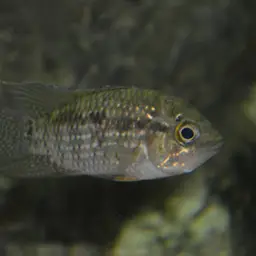
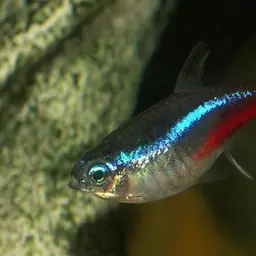
The angelfish (Pterophyllum scalare) is probably the most recognizable freshwater aquarium fish in the world, with its tall, laterally compressed body and long, trailing fins giving it a silhouette unlike anything else in the hobby. In the wild, these fish inhabit densely vegetated floodplains, swamps, and slow-moving rivers across a wide stretch of South America, from the Amazon basin through Guyana and French Guiana. Their natural coloration, silver with bold vertical black bars, tends to be more vivid in the clear-water habitats they favor. Captive breeding has produced a remarkable range of color forms, including solid black, gold, and koi-patterned variants, so you'll rarely be short of choice at a fish store. Despite belonging to the cichlid family, angels are generally well-mannered in a community setting, though they'll make short work of anything small enough to fit in their mouths. Neon tetras are a classic example. Fin-nipping species like tiger barbs are also a bad match, since angels' flowing fins are an obvious target. They do best kept in groups rather than pairs, which tends to reduce focused aggression between individuals. Breeding is achievable for intermediate keepers. Bonded pairs spawn on vertical surfaces and are attentive parents, though well-fed adults is a must if you want the fry to survive.

Varieties & strains

13 recognized strains of Angelfish.

SilverThe closest thing to a classic wild look in the hobby, Silver angels display a bright metallic silver body with three bold vertical black stripes β€” one through the eye, one mid-body, and one near the tail. The bars intensify under stress or during spawning, making mood-reading easy. Fins are clear to lightly tinted. This strain is the benchmark for body conformation; if you're evaluating whether a fish has good depth, roundness, and fin placement, start here. Excellent for beginners and breeders alike. Wild-caught coloration may vary, but tank-bred lines are reliably consistent.MarbleMarbles are immediately recognizable by their swirling, irregular black-and-white patterning β€” no two fish look exactly alike, which is a huge part of their appeal. The pattern results from the marble gene (M), a dominant mutation that disrupts normal stripe formation. Gold Marble variants add warm amber tones to the mix. When buying, look at the contrast and coverage; heavily marbled fish with crisp black patches on bright white tend to be the showstoppers. Pattern continues shifting slightly as the fish matures, so young marbles are always a little unpredictable.KoiKoi angels combine the orange-red blush of the blushing gene with a marbled black-and-white body pattern, evoking the look of a koi pond fish β€” hence the name. The orange is most vivid around the face and shoulders, and the best specimens have that splash of warm color against a cleanly marbled body. Color intensity varies considerably between breeders; fish from quality lines hold their orange into adulthood, while cheaper stock often fades. Diet high in carotenoids (quality color-enhancing foods, live/frozen) helps maintain the warm hues. A perennial bestseller at fish stores.ZebraWhere a Silver angel has three vertical bars, the Zebra has four or more β€” the extra bars fill in across the body, creating a densely striped pattern that earns the name. The body is silver-white and the bars are deep, high-contrast black. They're often confused with wild-caught fish but are a true selectively bred strain. Look for even bar width and consistent bar color when selecting; uneven or faded bars can indicate stress or poor genetics. A visually striking fish that photographs extremely well. Behavior and care are identical to other P. scalare strains.Black LaceBlack Lace angels are Silver or Zebra fish carrying one copy of the Dark gene (D/+), which overlays a fine black lacework pattern across the fins and body. The effect is subtle and elegant β€” silvery background with a dark, almost smoky web of pigment. A fish carrying two copies of the Dark gene becomes a Double-Dark or "Black" angel, which is near-solid black. Black Lace fish are robust and commonly available. They tend to darken in low-light conditions and show their best patterning in a well-planted tank with a dark substrate.Half-BlackHalf-Blacks have a sharp, almost painterly division: the front half of the body is silver or lightly colored, while the rear half transitions to deep, solid black. When the dividing line is crisp and the black is fully saturated, it's one of the most dramatic color patterns in freshwater fishkeeping. Quality varies enormously β€” the transition should be distinct, not a muddy gradient. The black coloration is caused by a separate genetic mechanism from the Dark gene. Fin development and body depth should still meet standard conformation expectations; don't let striking color distract from evaluating overall fish quality.BlushingBlushing angels carry two recessive copies of the stripeless gene (S/S), which eliminates the black vertical bars and removes much of the chromatophore coverage from the gill area β€” leaving the gill plates translucent and revealing the pinkish-red underlying tissue, the so-called "blush." The body is pale silver to white, sometimes with a faint golden or warm tint. They look almost angelic (appropriate). The blushing trait is a building block for Koi and other compound strains. Pure Blushing fish are a bit delicate compared to striped variants; they can stress more visibly and benefit from stable, clean water.AlbinoAlbino angels carry two copies of the recessive albino gene, resulting in white to pale gold bodies with absolutely no dark pigment and characteristic red or pink eyes. The eye color is the definitive identifier β€” no other white or pale angel has true red eyes. They're photosensitive, so avoid extremely bright, unshaded tanks; floating plants or tall stem plants that diffuse light will keep them more comfortable and less skittish. Albinos tend to be slightly more fragile than pigmented strains, and their immune response can be weaker, so pristine water quality matters more with these fish.GoldGold angels (sometimes called Golden) carry two copies of the gold gene (g/g), which suppresses black pigment production and shifts the base body color to a warm, buttery yellow-gold. Stripes may be faint, partial, or absent depending on additional genes in play. The best examples are a deep, even amber-gold across the entire body with clear fins. Color can wash out in heavily lit tanks or on white substrate β€” darker backgrounds and subdued lighting really make these fish pop. Widely bred in Southeast Asia; quality varies, so buy from sellers where you can see the adults, not just juveniles.PlatinumPlatinum angels take whiteness further than Blushing β€” the body is a brilliant, almost reflective silver-white with a metallic sheen that catches light beautifully. They're typically produced by combining the gold gene with the Philippine Blue gene or similar combinations, resulting in a fish that reads as near-iridescent white. Fins are clear to slightly white. High-grade Platinums with even coloration and no yellowish tinting command premium prices. Like other pale strains, they're best displayed against darker substrates and backgrounds. Not quite as common in chain stores, but a staple of serious angelfish breeders.Blue (Philippine Blue)Philippine Blue β€” often just called Blue β€” carries a gene that dramatically increases iridophore (reflective cell) coverage, giving the body a stunning steel-blue to turquoise sheen, especially visible along the flanks and into the fins. Combined with other genes it creates some of the most spectacular compound strains in the hobby (Blue Blushing, Blue Zebra, etc.). The blue coloration is most vivid in good light at the right angle β€” it has an almost metallic, shifting quality. The PB gene is autosomal dominant with dosage effect; fish homozygous for it (PB/PB) tend to be even more intensely colored.GhostGhost angels combine the stripeless gene with the gold gene, producing a pale, almost translucent-looking fish with a white-to-pale-gold body, no visible stripes, and a subtle, ethereal quality β€” hence the name. They're quieter in color than Platinum or Philippine Blue variants, but their understated elegance appeals to hobbyists who want something different from bold patterns. Ghost fish show up beautifully in dimly lit, heavily planted biotope-style setups where their pale form stands out against green and brown tones. Care is standard for angelfish, though like other pale varieties they appreciate stable conditions.VeiltailVeiltail is a fin-type mutation rather than a color strain, and it can be applied to virtually any color variety. Veiltail angels carry a dominant gene that dramatically elongates all fins β€” the dorsal, anal, and caudal fins trail in long, flowing ribbons that can extend well beyond the body length. The effect is spectacular but comes with trade-offs: long fins are fin-nip targets, and Veiltail angels should never be kept with nippy tankmates. They're also slightly slower swimmers. When shopping, inspect fin edges carefully for tears or pinhole damage. Best kept in species-specific or peaceful community setups.

Frequently asked questions

How big does the Angelfish get?
The Angelfish reaches about 2–6" as an adult.
What size tank does the Angelfish need?
A minimum of 16 gallons is recommended for the Angelfish.
What water parameters does the Angelfish need?
The Angelfish does best with a temperature of 72–86Β°F, a pH of 6–8, hardness around 3–16 dGH.
Is the Angelfish aggressive?
The Angelfish is semi-aggressive. It can work in a community with careful tankmate choices and enough space.
What does the Angelfish eat?
The Angelfish is an omnivore. It does well on a varied diet of quality flake or pellet plus occasional frozen or live foods.
How long does the Angelfish live?
With good care, the Angelfish typically lives 5-10 years.