Tanganyika Killifish
Lamprichthys tanganicanus
The only killifish native to Lake Tanganyika, and unlike any other in the family.

About
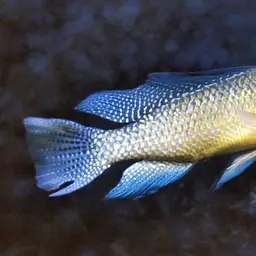
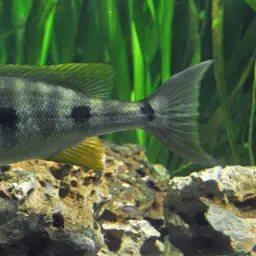
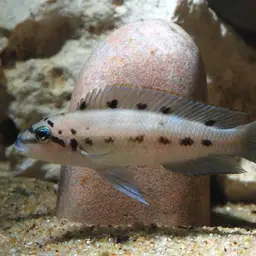
The Tanganyika killifish (Lamprichthys tanganicanus) is a genuinely unusual fish. It's the sole killifish species found in Lake Tanganyika, and it breaks several rules people associate with the group. Unlike the vast majority of killifish, it is not a seasonal species, meaning it doesn't follow the boom-and-bust annual lifecycle of its relatives from temporary pools and rainforest streams. Instead, it evolved in one of the world's oldest and most stable lakes, which shapes both its biology and its care requirements. In the wild it hugs the rocky shoreline, though it ventures into open water too. It's a slender, laterally compressed fish with a silvery sheen and a forked tail that marks it out clearly from the typical killifish silhouette. That Tanganyikan origin is the key detail for anyone thinking about keeping it. This is a hard, alkaline water species, and it won't tolerate the soft, acidic conditions many killifish keepers are used to working with. It's listed as an advanced species for good reason, partly because of those specific water chemistry demands and partly because it appreciates space to move. A rewarding fish for the serious keeper who already has some Rift Lake experience under their belt.
Similar species
Other fish you might consider
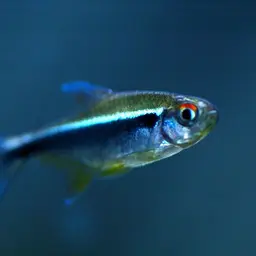
Good tank mates
Species that tend to coexist peacefully with Tanganyika Killifish
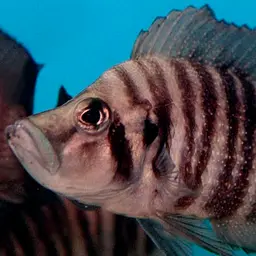
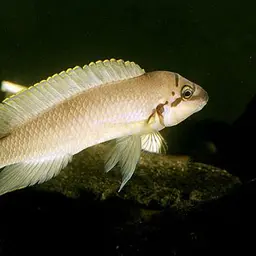
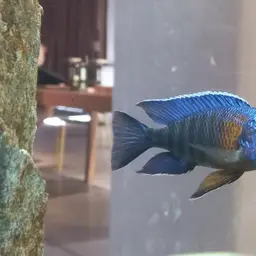
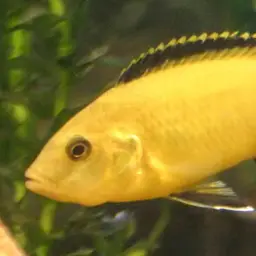
From the same region
Share the same natural habitat. Great for a biotope-themed tank
Frequently asked questions
- How big does the Tanganyika Killifish get?
- The Tanganyika Killifish reaches about 3.5–6" as an adult.
- What size tank does the Tanganyika Killifish need?
- A minimum of 30 gallons is recommended for the Tanganyika Killifish, with more room needed for a proper group.
- What water parameters does the Tanganyika Killifish need?
- The Tanganyika Killifish does best with a temperature of 72–82°F, a pH of 7.8–8.5, hardness around 8–25 dGH.
- Is the Tanganyika Killifish aggressive?
- The Tanganyika Killifish is semi-aggressive. It can work in a community with careful tankmate choices and enough space.
- What does the Tanganyika Killifish eat?
- The Tanganyika Killifish is an omnivore. It does well on a varied diet of quality flake or pellet plus occasional frozen or live foods.
- How long does the Tanganyika Killifish live?
- With good care, the Tanganyika Killifish typically lives 4-6 years.