Orange Cup Coral
Tubastraea grandidentata
Also known as: branching octopus coral, Branching Octopus Coral, daisy cup coral, orange polyp coral, orange sun coral
A non-photosynthetic branching coral that thrives in dim, current-swept reef spots.

About
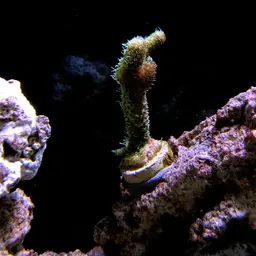
The branching octopus coral (Tubastraea grandidentata) is one of the more unusual corals you can keep, and that starts with its origins. This species is endemic to the Brazilian coast of the South Atlantic, giving it a geographic story quite different from most of the Indo-Pacific corals that dominate the hobby. Like its close relative the orange cup coral, it belongs to a group of azooxanthellate corals, meaning it carries no symbiotic algae and gets zero benefit from intense lighting. In fact, bright light will do it no favors at all. What this coral runs on entirely is food, which is the central challenge of keeping it. Without a consistent feeding regimen, meaty foods, target-fed directly to the polyps, it will slowly decline regardless of how good your water quality is. Get that part right, though, and you're rewarded with a coral that opens dramatic, large-tentacled polyps and forms branching colonies with real architectural presence. It suits shaded spots in the aquarium, under overhangs or in the lower rockwork where flow remains steady but light doesn't reach. Not the easiest coral for a newcomer, but for a keeper ready to commit to regular feeding, it's genuinely rewarding.
Similar species
Other coral you might consider
Good tank mates
Species that tend to coexist peacefully with Orange Cup Coral
From the same region
Share the same natural habitat. Great for a biotope-themed tank
Frequently asked questions
- What water parameters does the Orange Cup Coral need?
- The Orange Cup Coral does best with a temperature of 72–82°F, a pH of 8–8.4.
- What does the Orange Cup Coral eat?
- The Orange Cup Coral is a carnivore. It needs a meaty, protein-rich diet of frozen or live foods.
- Is the Orange Cup Coral reef safe?
- The Orange Cup Coral is generally considered reef safe.