Whitetail angelfish
Centropyge flavicauda
A small, deep-bodied dwarf angel with a ghostly white tail that stands out in any reef.

About
The whitetail angelfish (Centropyge flavicauda) is a dwarf angel from the Indian Ocean, found primarily within the waters of the Mauritian Exclusive Economic Zone. Like most members of the Centropyge genus, it is a compact, laterally flattened fish that spends its days picking through rubble and coral structure in search of algae and small invertebrates. The body is a deep, rich blue-purple to near-black, which makes the bright white caudal fin immediately obvious and useful for identification in the field or in a display tank. That white tail is the species' signature feature and what separates it at a glance from several similar-looking dwarf angels that share its general coloration. In the aquarium, the whitetail angel behaves much like its Centropyge relatives. It appreciates plenty of live rock to graze on and shelter within, and it can be territorial toward other dwarf angels, particularly fish of similar size or coloring. It is rated as an intermediate-level species, which means newer keepers should probably get comfortable with reef fish husbandry before taking one on. Like many Centropyge, it carries some risk to soft corals and clam mantles, so reef compatibility is worth considering carefully before purchase.
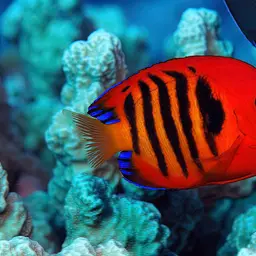
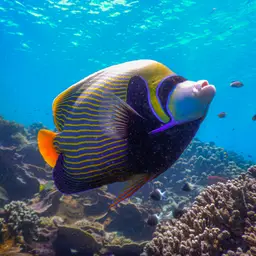
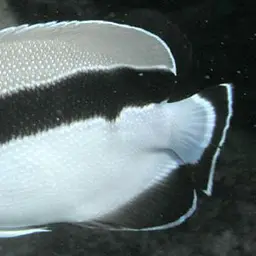
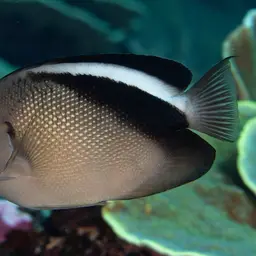
Similar species
Other fish you might consider
Frequently asked questions
- What water parameters does the Whitetail angelfish need?
- The Whitetail angelfish does best with a temperature of 72–82°F, a pH of 8–8.4.
- Is the Whitetail angelfish aggressive?
- The Whitetail angelfish is semi-aggressive. It can work in a community with careful tankmate choices and enough space.
- What does the Whitetail angelfish eat?
- The Whitetail angelfish is an omnivore. It does well on a varied diet of quality flake or pellet plus occasional frozen or live foods.
- Is the Whitetail angelfish reef safe?
- The Whitetail angelfish is not considered reliably reef safe and may harm corals or invertebrates.