Sucker Barb
Barbichthys laevis
A gentle giant barb that grazes its way through Southeast Asian rivers.

About
The sucker barb (Barbichthys laevis) is a sizeable cyprinid from the river systems of Southeast Asia, ranging across the Malay Peninsula, Sumatra, Borneo, Java, and into the Mekong and Chao Phraya drainages. In the wild it moves between habitats with the seasons. Spending dry months in main river channels and spreading into floodplain streams and canals when the rains arrive. That kind of environmental flexibility hints at a fish that is adaptable, though it does not fare well in heavily impounded or stagnant water. In the aquarium it behaves much as you would expect from its wild life: a calm, bottom-oriented grazer that causes little trouble with tankmates. The diet is primarily plant-based, algae and phytoplankton make up the bulk of what it eats in nature, so offering a varied herbivore diet in captivity is important to keep it healthy long-term. Given that adults can reach close to a foot in length, a spacious setup is non-negotiable, and this is probably not a fish for anyone just starting out. But for a keeper with a roomy, well-filtered tank and some experience managing larger cyprinids, the sucker barb is a peaceful and interesting resident that does not demand much beyond space and greens.
Similar species
Other fish you might consider
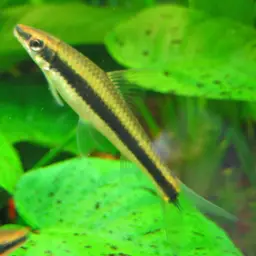
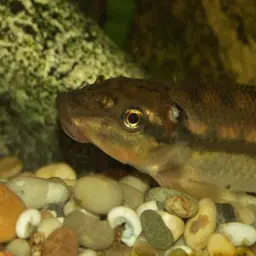
Good tank mates
Species that tend to coexist peacefully with Sucker Barb
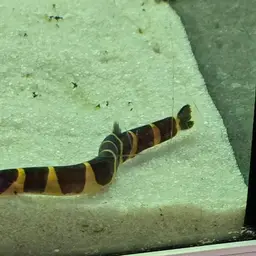
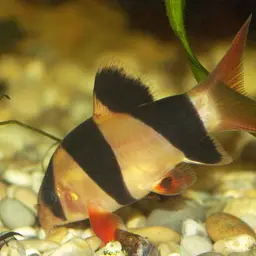
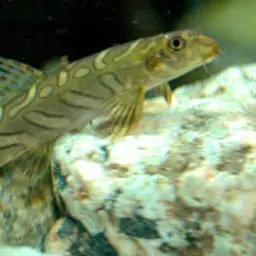
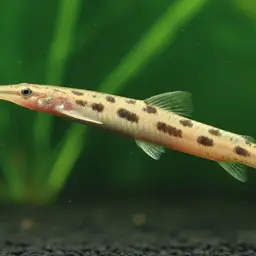
From the same region
Share the same natural habitat. Great for a biotope-themed tank
Frequently asked questions
- How big does the Sucker Barb get?
- The Sucker Barb reaches about 7.5–12" as an adult.
- What size tank does the Sucker Barb need?
- A minimum of 75 gallons is recommended for the Sucker Barb.
- What water parameters does the Sucker Barb need?
- The Sucker Barb does best with a temperature of 73–79°F, a pH of 6–7, hardness around 5–10 dGH.
- Is the Sucker Barb aggressive?
- The Sucker Barb is generally peaceful and suits a community tank with similarly calm tankmates.
- What does the Sucker Barb eat?
- The Sucker Barb is a herbivore. It needs a plant-based diet such as algae, blanched vegetables, or spirulina-based foods.
- How long does the Sucker Barb live?
- With good care, the Sucker Barb typically lives 5-8 years.