Santa cruz cory
Corydoras cruziensis
A tiny armored catfish from Bolivia with a gut that doubles as a lung.

About
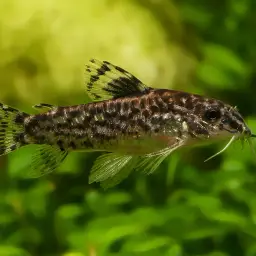
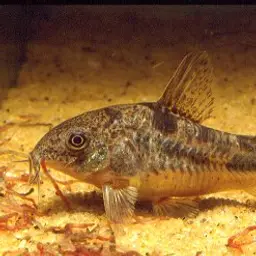
Found in the Madeira River basin of Bolivia, this small armored catfish, Corydoras cruziensis, belongs to one of the largest catfish genera in the world, with well over 150 recognized species and likely many more still awaiting formal description. It closely resembles Corydoras punctatus but is said to carry larger, bolder dark markings that can merge into a rough lateral stripe along the flanks, though documentation on this species remains frustratingly thin and definitive diagnostic traits are hard to pin down. Like all corydoras, it wears bony plates instead of scales, giving it that characteristic armored look. One genuinely fascinating trait is its ability to breathe air directly. It has a highly modified, vascularized section of intestine that pulls oxygen from gulped air at the surface, letting it cope with water that would stress most fish. You will see this in your tank regularly, and it is perfectly normal behavior. A word of caution: those stiffened pectoral spines can pierce skin, and some evidence suggests gland secretions near the spine base may carry mild venom, so handle carefully. Keep this species in a group of at least four to six. They are social fish that become visibly more active and confident with company. A rewarding, long-lived species for the patient keeper.
Similar species
Other fish you might consider
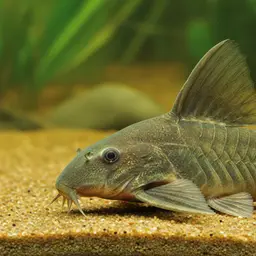
Good tank mates
Species that tend to coexist peacefully with Santa cruz cory
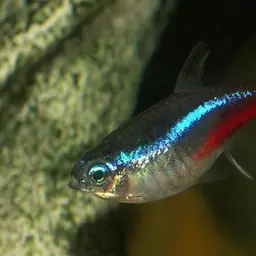
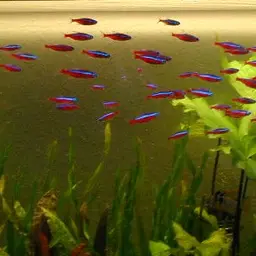
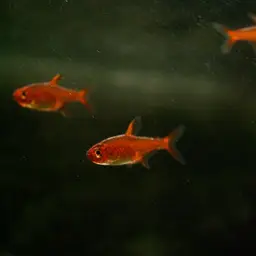
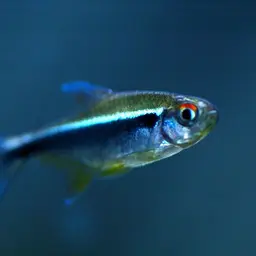
From the same region
Share the same natural habitat. Great for a biotope-themed tank

Frequently asked questions
- How big does the Santa cruz cory get?
- The Santa cruz cory reaches about 1–2" as an adult.
- What size tank does the Santa cruz cory need?
- A minimum of 19 gallons is recommended for the Santa cruz cory, with more room needed for a proper group.
- What water parameters does the Santa cruz cory need?
- The Santa cruz cory does best with a temperature of 68–82°F, a pH of 6–8.5, hardness around 2–12 dGH.
- Is the Santa cruz cory aggressive?
- The Santa cruz cory is generally peaceful and suits a community tank with similarly calm tankmates.
- What does the Santa cruz cory eat?
- The Santa cruz cory is an omnivore. It does well on a varied diet of quality flake or pellet plus occasional frozen or live foods.
- How long does the Santa cruz cory live?
- With good care, the Santa cruz cory typically lives 15-25 years.