Sands' cory
Corydoras davidsandsi
A rarely exported Rio Negro cory with a bold split dorsal bar and surprising longevity.

About
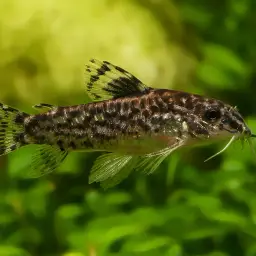
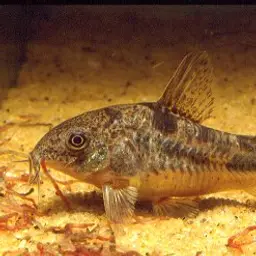
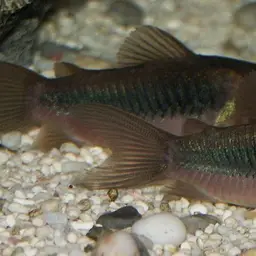
Found in the blackwater habitats of the Rio Negro basin in Brazil, this small armored catfish, Corydoras davidsandsi, belongs to an informal grouping of Corydoras species united by a distinctive oblique dark bar running along the upper body. What sets it apart from close relatives like C. melini is the way that bar splits into two branches above the caudal peduncle, combined with a subtle pale orange patch between the dark facial stripe and the dorsal markings. Like all callichthyid catfishes, it carries rows of bony plates instead of scales, and those stiffened pectoral spines are worth respecting. They can pierce skin and are thought to carry mild secretions from glands at their base. Keep a gap between the waterline and your tank lid, because this species is a facultative air breather, periodically darting to the surface to gulp atmospheric oxygen through a modified, highly vascularised section of intestine. That behavior is completely normal and not a sign of trouble. Peaceful and social by nature, it really should be kept in groups of at least five or six. You will see far more activity and natural behavior when individuals feel secure in numbers. With good care these fish can live well into their teens or beyond, which makes them a longer commitment than many hobbyists expect from a small catfish.
Similar species
Other fish you might consider
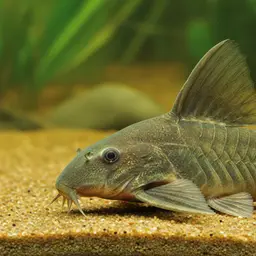
Good tank mates
Species that tend to coexist peacefully with Sands' cory
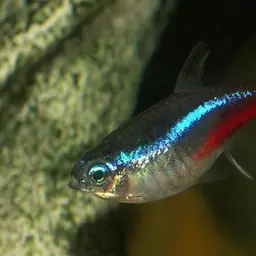
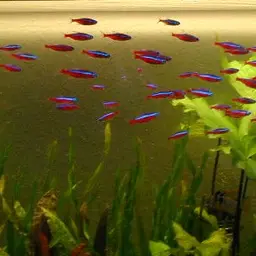
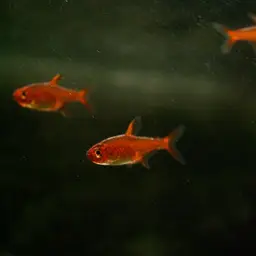
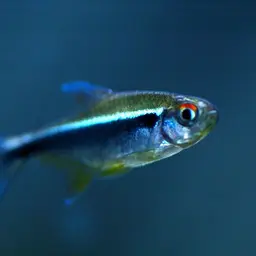
From the same region
Share the same natural habitat. Great for a biotope-themed tank
Frequently asked questions
- How big does the Sands' cory get?
- The Sands' cory reaches about 1–2.5" as an adult.
- What size tank does the Sands' cory need?
- A minimum of 21 gallons is recommended for the Sands' cory, with more room needed for a proper group.
- What water parameters does the Sands' cory need?
- The Sands' cory does best with a temperature of 68–82°F, a pH of 5–7.5, hardness around 1–12 dGH.
- Is the Sands' cory aggressive?
- The Sands' cory is generally peaceful and suits a community tank with similarly calm tankmates.
- What does the Sands' cory eat?
- The Sands' cory is an omnivore. It does well on a varied diet of quality flake or pellet plus occasional frozen or live foods.
- How long does the Sands' cory live?
- With good care, the Sands' cory typically lives 15-25 years.