Corydoras gladysae
A tiny rock-dwelling catfish from the Argentine Andes, rarely if ever seen in aquariums.

About
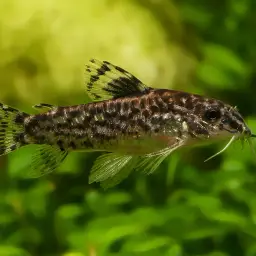
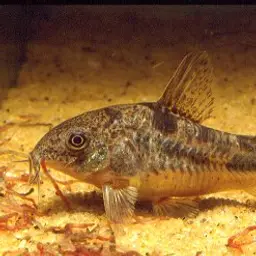
A diminutive armored catfish from a very narrow range, Corydoras gladysae was described from the Calchaquí River in the sub-Andean foothills of Salta Province, Argentina, where it lives among rocks in fast-flowing, cool water. It belongs to the family Callichthyidae, whose members carry rows of bony plates instead of scales. A trait that gives the group its common "armored catfish" nickname. What sets this species apart from its many relatives is a suite of physical adaptations to life in current: unusually short dorsal and pectoral fin spines, a flattened body profile, ventrally angled pectoral fins, and a subtly cryptic color pattern. Some of these traits echo features normally associated with the related genus Aspidoras, though the skull structure places it firmly within Corydoras. Like all members of the family, it can gulp atmospheric air using a specialized, highly vascularized section of intestine. A handy survival tool in oxygen-poor conditions, and something you'd notice in a home tank as occasional surface dashes. One practical note for anyone who handles corydoras: the stiffened pectoral spines can pierce skin and cause real pain, and glandular secretions at the spine base may have mild toxic properties. As things stand, this species is essentially absent from the hobby and is unlikely to appear in the trade given its remote and restricted habitat.
Similar species
Other fish you might consider
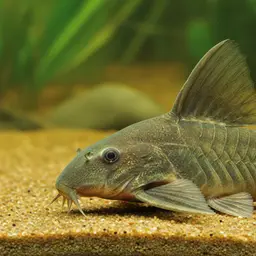
Good tank mates
Species that tend to coexist peacefully with Corydoras gladysae
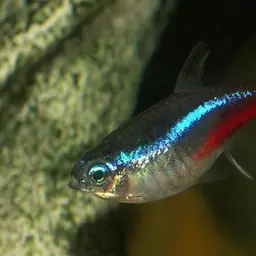
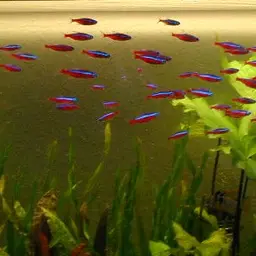
From the same region
Share the same natural habitat. Great for a biotope-themed tank
Frequently asked questions
- How big does the Corydoras gladysae get?
- The Corydoras gladysae reaches about 1–1.5" as an adult.
- What size tank does the Corydoras gladysae need?
- A minimum of 14 gallons is recommended for the Corydoras gladysae, with more room needed for a proper group.
- What water parameters does the Corydoras gladysae need?
- The Corydoras gladysae does best with a temperature of 68–82°F, a pH of 6–7.5, hardness around 2–12 dGH.
- Is the Corydoras gladysae aggressive?
- The Corydoras gladysae is generally peaceful and suits a community tank with similarly calm tankmates.
- What does the Corydoras gladysae eat?
- The Corydoras gladysae is an omnivore. It does well on a varied diet of quality flake or pellet plus occasional frozen or live foods.