Giant Ramshorn Snail
Marisa cornuarietis
Also known as: Columbian Ramshorn, Marisa
The boldly striped ramshorn that doubles as a natural plant trimmer.

About
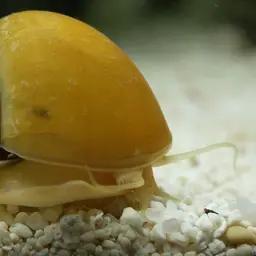
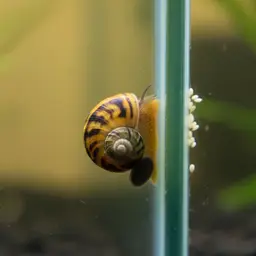
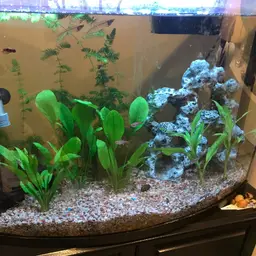
The giant ramshorn snail (Marisa cornuarietis) is one of the largest freshwater snails you'll regularly encounter in the hobby, and it earns its name. Unlike the common ramshorn snails that most keepers know, this species has a noticeably flattened, disc-shaped shell banded with dark brown stripes on a golden-yellow background, making it genuinely ornamental in a way that many utility snails are not. Native to slow-moving rivers, ponds, and drainage canals across Central and South America, it thrives in warm, vegetated freshwater environments where it grazes constantly. And that grazing habit is the thing you really need to know before adding one to your tank. Marisa has a healthy appetite for aquatic plants. Soft-leaved species are particularly vulnerable, so a planted display tank is usually not the right home for this snail. It genuinely shines in fish-only setups or dedicated snail tanks where its bold patterning can be appreciated without collateral damage to your greenery. On the upside, it will happily clean up decaying matter and algae, and it breeds readily in captivity. Care is straightforward, making it a reasonable choice for beginners who go in with realistic expectations about its plant-munching tendencies.
Similar species
Other invertebrate you might consider
Good tank mates
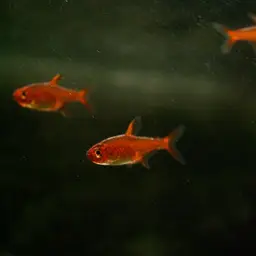
Species that tend to coexist peacefully with Giant Ramshorn Snail
From the same region
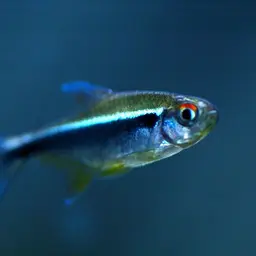
Share the same natural habitat. Great for a biotope-themed tank
Frequently asked questions
- What water parameters does the Giant Ramshorn Snail need?
- The Giant Ramshorn Snail does best with a temperature of 68–82°F, a pH of 6.5–8, hardness around ≥ 6 dGH.
- Is the Giant Ramshorn Snail aggressive?
- The Giant Ramshorn Snail is generally peaceful and suits a community tank with similarly calm tankmates.
- What does the Giant Ramshorn Snail eat?
- The Giant Ramshorn Snail is a herbivore. It needs a plant-based diet such as algae, blanched vegetables, or spirulina-based foods.