Aquariumpro
πŸ”
← Back to species
FishFreshwaterBrackishBeginnerPeaceful

Guppy

Poecilia reticulata

The world's most recognizable livebearer, and probably the easiest fish to breed.

Guppy
1 / 12
Β© (c) Aleksandr_Levon, some rights reserved (CC BY-NC) Β· CC-BY NC

About

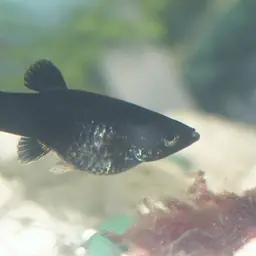
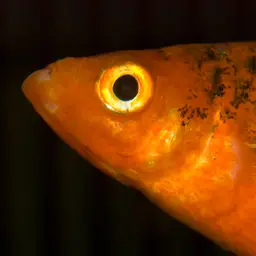
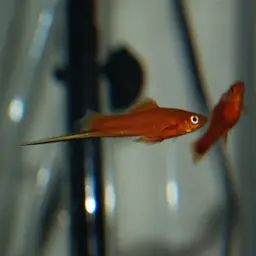
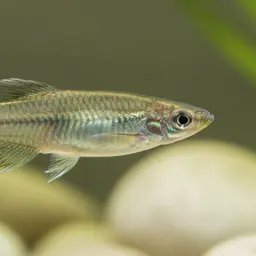
The guppy (Poecilia reticulata) is almost certainly the first fish millions of people ever kept, and for good reason. Males are small, colorful, and endlessly varied, with flowing tails and patterns that range from subtle to outlandish depending on the strain. Females are larger but much plainer, built for producing fry rather than showing off. In the wild, guppies come from Venezuela, Trinidad, Barbados, northern Brazil, and the Guianas, where they occupy an impressive range of habitats. Murky ditches and canals, weedy springs, and even clear mountain streams. That adaptability carries over into captivity, making this a genuinely forgiving choice for newer keepers. They're peaceful community fish that do well alongside other livebearers, rasboras, corydoras, and small tetras, though you'll want to avoid anything that nips fins. Breeding happens without any real effort on the keeper's part. Guppies are livebearers and famously prolific, with a single female capable of producing dozens of fry every few weeks. Keep more females than males so the males' persistent attention doesn't exhaust any individual female. One honest caveat worth knowing: mass-produced guppies from some importers can carry the effects of heavy inbreeding and may be less robust than their reputation suggests. Sourcing fish from a reputable breeder or a local club auction will almost always get you hardier stock.

Varieties & strains

22 recognized strains of Guppy.

TuxedoThe Tuxedo's signature is a clean, sharply defined black or dark-blue patch covering the rear half of the body, contrasting against a lighter front β€” like a fish wearing formal wear. The color division should be crisp, not faded or blotchy; select specimens where the boundary is well-defined. Tail color varies widely across breeders β€” red, blue, and yellow are all common. Hardy and widely available, Tuxedos are a great entry point into pattern-focused guppy keeping. Watch for line quality, as mass-produced Tuxedos often show muddled patterning.CobraCobras display a distinctive rosette or vertical bar pattern on the body β€” often described as snake-like scales or a chain-link texture β€” overlaid on a yellow, gold, or silver base. The pattern should be dense and well-organized across the flank, not sparse or irregular. Tails are typically large and can display lace or mosaic patterning that complements the body. Cobras are a competitive show strain and respond well to high-quality feeding to intensify pattern contrast. Avoid specimens with washed-out ground color, as it dulls the visual impact.King CobraAn enhanced version of the Cobra, the King Cobra layers the characteristic rosette body pattern onto a larger, more imposing fish with a full, heavily patterned tail β€” often a delta or fantail shape with lace or snakeskin detailing extending into the fins. The gold or yellow body with dense black scaling gives these fish a jeweled appearance. Show-quality King Cobras demand excellent water quality and consistent feeding; the pattern degrades noticeably under stress. They're stunning but require more commitment than standard Cobras to maintain peak condition.Moscow BlueMoscow Blues cover the entire body in a deep, iridescent blue that shifts toward teal or violet under different lighting β€” one of the most uniformly colored guppy strains available. The color extends into the dorsal and caudal fins, ideally with no breaks or patchy areas. Full body coverage is the benchmark; specimens with white or faded flanks are lower grade. Moscows generally carry large delta or fan tails that maximize the visual impact of their coloration. They can be more temperature-sensitive than other strains and do best in stable, slightly warmer water around 26–28Β°C.Moscow GreenSharing the full-body iridescent coverage of the Moscow Blue, the Moscow Green shifts the palette to a metallic grass-green that can appear almost neon under good lighting. Like its blue sibling, the standard demands unbroken color across body and fins. Full-coverage green is harder to maintain in breeding programs than blue, so truly clean Moscow Greens command respect from experienced keepers. They benefit from a dark substrate and background, which makes the iridescence pop dramatically. Strain integrity degrades quickly if kept with other Moscow variants β€” keep lines separate.Moscow PurpleThe rarest of the three classic Moscow variants, Moscow Purples display a deep violet to blue-purple iridescence across the body and fins. The purple hue is notoriously difficult to stabilize β€” many specimens drift toward blue under standard lighting and only show true purple under specific spectrum conditions. Selecting under both natural daylight and aquarium LEDs helps confirm authentic coloration. A genuinely purple Moscow is a trophy fish; most labeled as such lean blue-purple at best. Breeding true Purples demands strict culling and careful mate selection from established lines.Half-Black BlueThe Half-Black Blue splits the fish cleanly: the rear half of the body is solid black or very dark, while the forward half is lighter, with the tail displaying a rich blue β€” ideally matching the show standard of a deep, uniform blue caudal fin. The black body portion should be dense and not fade toward the mid-body. The clean two-toned body silhouette is what distinguishes HB strains from Tuxedos, which have a softer boundary. HB Blues are a classic show strain and remain highly competitive. Poor-quality specimens often show incomplete black coverage or pale, inconsistent tail color.Half-Black RedIdentical in body pattern to the HB Blue β€” solid black rear half, lighter front β€” but with a vivid red caudal fin that creates a striking traffic-light contrast against the black. The red should be saturated and even, without orange bleeding or white edging. As with all HB strains, the sharpness of the black-to-body transition matters. HB Reds tend to be slightly more robust than their blue counterparts and are popular among newer show hobbyists. Feed high-carotenoid foods like spirulina and quality frozen foods to maintain red intensity.SnakeskinSnakeskins carry an intricate chain-link or lace rosette pattern across both body and fins, resembling the cross-section scales of a python or boa. The patterning should be tight and continuous β€” spanning from the flank into the tail and dorsal β€” with good contrast between the pattern and the background color. Background colors vary from silver and gold to green, but the defining characteristic is always the pattern, not the base color. Snakeskin is also a recognized genetic locus, and crossing it into other strains creates the lace patterning seen in many modern fancy varieties.DragonDragon guppies are defined by heavily scaled, almost armor-plated body coverage β€” dense, large iridescent scales on the flank that catch light like chainmail. Colors range from gold to red to blue, but the scale texture is always the focal point. The effect is distinct from Cobras or Snakeskins: it's more about scale size and metallic sheen than fine patterning. Dragons often carry large fan or delta tails. Choose specimens where scaling is uniform and extends well onto the dorsal region. This is a newer strain and quality varies considerably across sources.MosaicMosaic guppies are defined by an irregular, multi-colored spot pattern in the caudal fin β€” red, blue, and black spots scattered like a stained-glass window, with no two fish looking exactly alike. The body typically carries basic guppy coloration, but the tail is the show. A quality Mosaic should have clearly distinct spots, good coverage across the fin without blanketing, and vibrant colors. Mosaic is partly a show category based on tail pattern rather than a single fixed genetic line, so considerable variation exists. They're one of the most visually complex guppies you can keep.GrassGrass guppies have a caudal fin peppered with tiny, evenly distributed spots β€” much smaller and more uniform than Mosaic β€” resembling blades of grass or a fine dot matrix. The spots should be consistent in size and density; sparse or coarse patterning is a sign of poor strain maintenance. Body coloration is typically plain or lightly colored to keep focus on the tail. Grass tails on a large delta or fantail are spectacular under light. They're a popular show variety and one of the more technically demanding patterns to breed true.Full RedFull Reds are exactly what the name promises: complete red saturation from body to fins, with no yellow, orange, or pale patches breaking the field of color. The red should be deep and even β€” think arterial red, not orange-red or brick. Achieving and maintaining true full-body red coverage requires consistent culling, high-carotenoid diet, and stable water conditions. Many commercially sold 'red' guppies are actually orange-red or have pale undersides; true Full Reds are noticeably more intense. They're one of the most competitive solid-color show categories.AlbinoAlbino guppies lack melanin, resulting in red or pink eyes and a body that expresses colors through xanthophores and iridophores alone β€” blues become muted, while reds and yellows become more vivid without dark pigment to overshadow them. Albino is a recessive genetic trait applied across many base strains: Albino Full Red, Albino Cobra, Albino Moscow, and others. The trait itself modifies how underlying colors appear rather than creating a single fixed look. Albinos are slightly more sensitive to bright light and stress; keep in well-planted tanks with moderate lighting for best health.LeopardLeopard guppies display irregular dark spots scattered across a light or yellow body β€” a more organic, less geometric pattern than Cobra or Snakeskin. The spots can appear on both body and fins and vary in size. The overall effect genuinely resembles a big-cat coat. It's a less rigidly defined show category than some others, so considerable variation exists commercially. Look for specimens where spots are clearly defined against the background color and distributed across the body rather than clustered in one area. They pair well with planted setups where the pattern reads naturally.Japan BlueJapan Blues carry a neon, electric-blue patch in the mid-body region β€” particularly vivid behind the pectoral fins β€” combined with a yellow or pastel tail. The blue is structural (iridophore-based), not pigment-based, so it shifts and glows under different light angles. This mid-body blue spot is the variety's calling card; the tail is typically a complementary but secondary feature. Japan Blues are a recognized genetic strain, not just a color morph, and cross readily to transfer the blue-body trait into other varieties. They're relatively peaceful and adaptable.PlatinumPlatinum guppies present an almost entirely silver-white body with a high-metallic, mirror-like sheen β€” the result of dense iridophore coverage replacing most other pigmentation. The body looks like polished metal rather than a painted fish. Tail colors can vary and are often used in combination labels like 'Platinum Red Tail' or 'Platinum Moscow Blue.' The key identifier is the clean, reflective body. Quality Platinums should show even metallic coverage without patchy or duller areas. They're stunning in groups under directional lighting where the metallic effect multiplies.PandaPanda guppies display a black-and-white body pattern β€” typically a white or pale-silver body with bold black markings on the flanks, head region, and sometimes into the fins. The contrast is stark and graphic, unlike the subtler patterns of Tuxedo or HB strains. Tail coloration is often clear or lightly colored to keep the monochrome body effect intact. Truly high-contrast Pandas with well-placed markings are harder to source than photos suggest; many commercially available specimens have grayish or muddy black rather than true dense black. A rewarding strain for breeders who enjoy working with pattern placement.NeonNeon guppies feature an electric, UV-reactive blue-green iridescent stripe or body sheen that reads almost fluorescent under aquarium lighting β€” particularly bright under blue or UV-enhanced LEDs. The effect comes from specialized iridophores and is distinctly more vivid than a typical metallic guppy. Tails vary by line but are often large to complement the body coloration. They're sometimes confused with Japan Blues but typically show broader, more extensive neon coverage rather than a concentrated mid-body spot. Keep under quality spectrum lighting to appreciate the full visual effect β€” under warm incandescent light they look unremarkable.Delta TailThe Delta Tail is a tail-shape standard rather than a color strain: the caudal fin fans out in a wide, equilateral triangle with a straight top edge, straight bottom edge, and a flat rear margin β€” ideally forming a 45-degree angle from spine to each corner. A well-formed Delta should show no drooping or uneven lobes and should represent roughly the same width as body length. Delta is the dominant tail shape in competitive guppy showing and serves as the base form for many color strains. When buying fancy guppies, Delta is the benchmark for tail quality even if not explicitly named.FantailThe Fantail is rounder and more flowing than the Delta β€” the caudal fin forms a semicircle or fan shape with a rounded rather than angled rear edge. It's one of the oldest ornamental tail forms in the hobby and gives guppies a softer, more flowing silhouette. Fantails are widely seen in pet-store stock and are generally more robust and easier to breed true than Delta or specialized fancy tails. The rounded form is particularly flattering on solid-colored varieties like Full Red or Platinum. Not typically a competitive show tail but remains extremely popular in the hobby.RoundtailThe Roundtail is similar to the Fantail but generally smaller and more symmetrically circular, with the fin forming a near-perfect oval or round shape. It's one of the original domestic tail forms and is associated with older, classic-style guppy breeding. Roundtails hold their shape well and are less prone to fin damage than larger fancy forms, making them a practical choice for community tanks. They don't carry the show prestige of Delta tails, but within certain association categories they are judged on their own standard β€” the circle should be clean and symmetrical with no points or lobes.

Frequently asked questions

How big does the Guppy get?
The Guppy reaches about 1–2.5" as an adult.
What size tank does the Guppy need?
A minimum of 11 gallons is recommended for the Guppy.
What water parameters does the Guppy need?
The Guppy does best with a temperature of 65–84Β°F, a pH of 7–8.5, hardness around 5–30 dGH.
Is the Guppy aggressive?
The Guppy is generally peaceful and suits a community tank with similarly calm tankmates.
What does the Guppy eat?
The Guppy is an omnivore. It does well on a varied diet of quality flake or pellet plus occasional frozen or live foods.
How long does the Guppy live?
With good care, the Guppy typically lives 2 years.