Happy
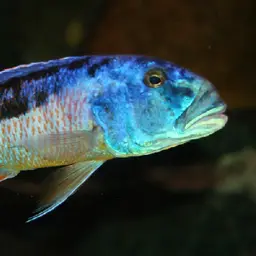
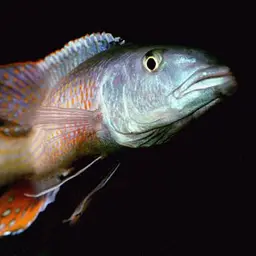
Copadichromis azureus
A peaceable Malawi cichlid that builds sand nests and dazzles with intense color.

About
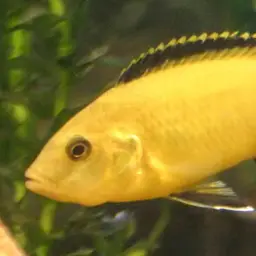
Found only in the southern reaches of Lake Malawi, this endemic cichlid belongs to a group of specialized planktivores known collectively as Utaka. Cichlids built around a pelagic lifestyle and a remarkably protrusible upper jaw that creates a split-second vacuum to snatch drifting prey. In the wild, males stake out territories at the sand-rock interface, excavating shallow bowl-shaped depressions as spawning sites. The species produces numerous color forms across its range, and fish sold in the hobby often carry a locality tag like "Maleri" or "Mbenji" that reflects where they were collected or line-bred from. Despite the aggressive label that gets applied to African cichlids as a category, this one is genuinely relaxed by Malawi standards. Provided you choose tankmates wisely. Mbuna are a poor match, as are similarly colored haplochromines, which can trigger territorial responses. Other Copadichromis should be avoided too, since hybridization is a real risk. Aulonocara species and calm haps like Cyrtocara moorii tend to coexist well. The classic approach is one male with three or more females, which distributes the male's breeding attention and keeps aggression manageable. A sandy bottom is essential for natural behavior, and open swimming room matters as much as rockwork. This is a maternal mouthbrooder that has been regularly bred in captivity since the late 1990s, making it a rewarding project for intermediate keepers.
Similar species
Other fish you might consider
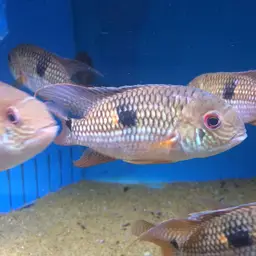
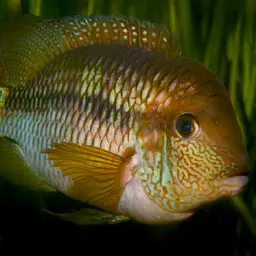
Good tank mates
Species that tend to coexist peacefully with Happy
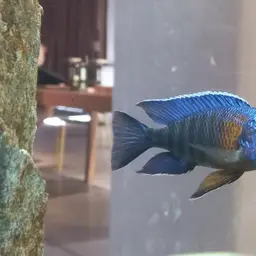
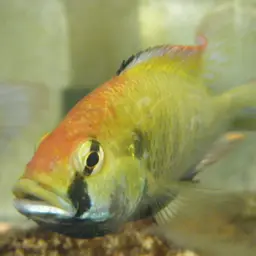
From the same region
Share the same natural habitat. Great for a biotope-themed tank
Frequently asked questions
- How big does the Happy get?
- The Happy reaches about 3.5–7" as an adult.
- What size tank does the Happy need?
- A minimum of 50 gallons is recommended for the Happy.
- What water parameters does the Happy need?
- The Happy does best with a temperature of 72–84°F, a pH of 7.5–8.8, hardness around 6–20 dGH.
- Is the Happy aggressive?
- The Happy is semi-aggressive. It can work in a community with careful tankmate choices and enough space.
- What does the Happy eat?
- The Happy is an omnivore. It does well on a varied diet of quality flake or pellet plus occasional frozen or live foods.
- How long does the Happy live?
- With good care, the Happy typically lives 5-8 years.