Pearly Ocellatus
Lamprologus stappersi
A tiny Lake Tanganyika shell-dweller with outsized territorial attitude and colony-forming charm.

About
Found only at the mouth of the Sambala River where it meets Lake Tanganyika in the Democratic Republic of the Congo, Lamprologus stappersi is one of the smaller shell-dwelling cichlids from Africa's great rift lakes. It belongs to a group of bottom-oriented cichlids that claim empty snail shells as both home and breeding site, and despite its compact size it defends its chosen shell and the immediate patch of substrate around it with real conviction. In a community setting it pairs well with species that use different areas of the tank. Rock-dwelling cichlids or mid-to-upper-water schoolers leave the bottom zone to stappersi and keep things relatively peaceful. Kept in a group, these fish form loose colonies, and providing a surplus of shells, classic escargot shells work well, helps distribute aggression and gives each fish genuine choices. Males can be pushy with one another, so running more females than males is the sensible approach. Breeding is entirely possible in the home aquarium. Pairs form temporary bonds, spawn inside shells, and both parents guard the fry in a small pit dug near the shell entrance. The striped juveniles are slow growers. This species was historically sold as "pearly ocellatus" and sometimes still surfaces under that name or the invalid label L. meleagris, so knowing its origin helps when sourcing stock.
Similar species
Other fish you might consider
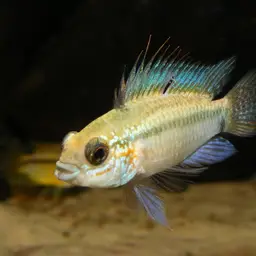
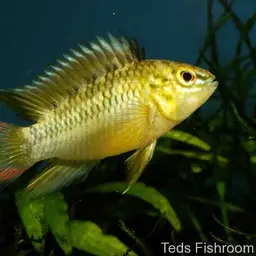
Good tank mates
Species that tend to coexist peacefully with Pearly Ocellatus
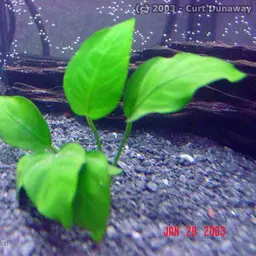
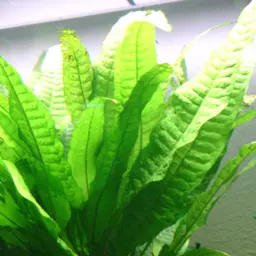
From the same region
Share the same natural habitat. Great for a biotope-themed tank
Frequently asked questions
- How big does the Pearly Ocellatus get?
- The Pearly Ocellatus reaches about 1–2.5" as an adult.
- What size tank does the Pearly Ocellatus need?
- A minimum of 11 gallons is recommended for the Pearly Ocellatus.
- What water parameters does the Pearly Ocellatus need?
- The Pearly Ocellatus does best with a temperature of 73–81°F, a pH of 7.5–9, hardness around 8–25 dGH.
- Is the Pearly Ocellatus aggressive?
- The Pearly Ocellatus is aggressive and is best kept alone or with robust tankmates that can hold their own.
- What does the Pearly Ocellatus eat?
- The Pearly Ocellatus is an omnivore. It does well on a varied diet of quality flake or pellet plus occasional frozen or live foods.
- How long does the Pearly Ocellatus live?
- With good care, the Pearly Ocellatus typically lives 8-12 years.