Lavender mbuna
Iodotropheus sprengerae
Also known as: Lavender Cichlid
A compact, easygoing mbuna that plays well with others in Malawi setups.

About
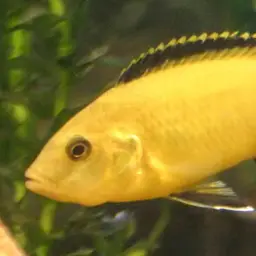
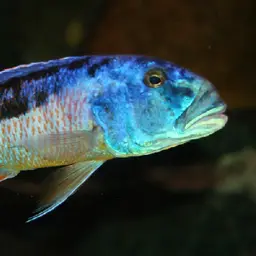
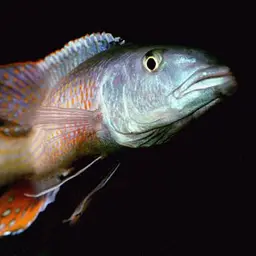
Found only at a handful of rocky island sites in the southeastern arm of Lake Malawi, Iodotropheus sprengerae holds the distinction of belonging to the only mbuna genus with such a genuinely restricted range. It is sometimes confused with certain populations of Labidochromis vellicans, but you can tell them apart by this fish's rounder head profile and the absence of blue coloration across the rear portion of the body. The color palette is muted compared to many of its mbuna relatives, but the tones are distinctive enough to be charming in their own right. Behaviorally, this is one of the gentler members of the mbuna group. Rival males do hold loose territories, but nowhere near the intensity you see in most other rock-dwelling cichlids from the lake. That said, it can easily be bullied by larger, more boisterous species, so tankmate selection matters. Quieter Lake Malawi cichlids like Aulonocara or Labidochromis caeruleus are solid companions, and some peaceful Tanganyikan species can work as well. Breeding is straightforward. Females are maternal mouthbrooders and can reach sexual maturity at a surprisingly small size, making this a reasonable gateway species for hobbyists new to African cichlids. Fry are robust from the start and develop quickly.
Similar species
Other fish you might consider
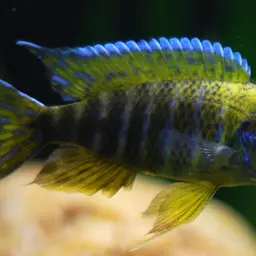
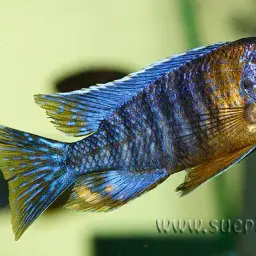
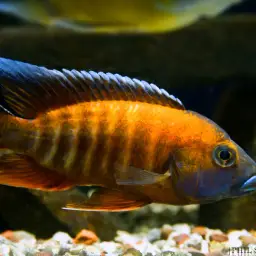
Good tank mates
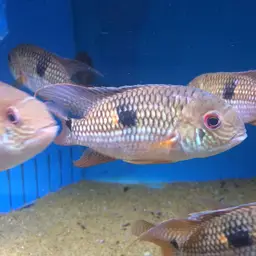
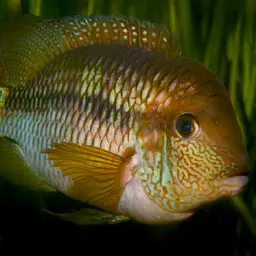
Species that tend to coexist peacefully with Lavender mbuna
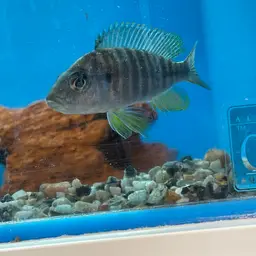
From the same region
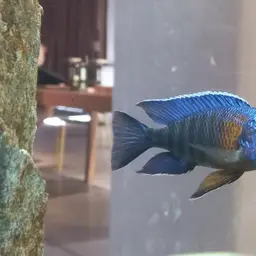
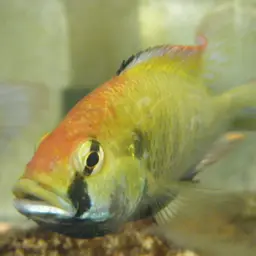
Share the same natural habitat. Great for a biotope-themed tank
Frequently asked questions
- How big does the Lavender mbuna get?
- The Lavender mbuna reaches about 2.5–5" as an adult.
- What size tank does the Lavender mbuna need?
- A minimum of 21 gallons is recommended for the Lavender mbuna.
- What water parameters does the Lavender mbuna need?
- The Lavender mbuna does best with a temperature of 72–82°F, a pH of 7–8.8, hardness around 8–25 dGH.
- Is the Lavender mbuna aggressive?
- The Lavender mbuna is semi-aggressive. It can work in a community with careful tankmate choices and enough space.
- What does the Lavender mbuna eat?
- The Lavender mbuna is an omnivore. It does well on a varied diet of quality flake or pellet plus occasional frozen or live foods.
- How long does the Lavender mbuna live?
- With good care, the Lavender mbuna typically lives 2-5 years.