Leopold's Tetra
Astyanax leopoldi
Also known as: Leopold’s tetra
A rarely seen South American tetra that rewards patient shoppers with active schooling behavior.

About
Leopold's Tetra (Astyanax leopoldi) is one of those species you're more likely to stumble across by accident than to track down intentionally. It originates from the Approuague and Oyapock River basins in South America, where it tends to hang out in the calmer pockets along rapids. The kind of slack water that offers shelter without being completely still. In the wild it turns up in large groups, which tells you something important about how to keep it: a school of at least eight to ten individuals is really the minimum if you want to see natural behavior. A lone specimen or a small group will be noticeably more skittish and subdued. In terms of temperament, Leopold's Tetra is thoroughly peaceful and slots well into a community setup alongside other small characins, dwarf cichlids, and placid catfish like cories or smaller loricariids. Avoid pairing it with anything that could intimidate or bully it. The genus Astyanax is genuinely huge within the family Characidae, yet very few species make it into the hobby with any regularity, and this one is no exception. You're most likely to find it as an incidental arrival mixed into a wild-caught shipment rather than as a labeled, intentional import. When you do find it, it's an active, lively schooling fish worth picking up.
Similar species
Other fish you might consider
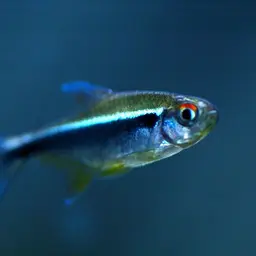
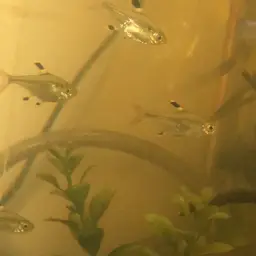
Good tank mates
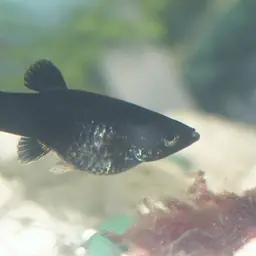
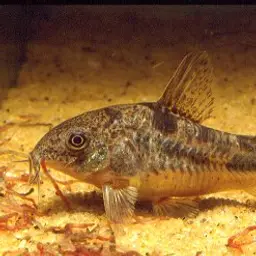
Species that tend to coexist peacefully with Leopold's Tetra
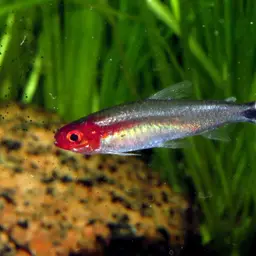
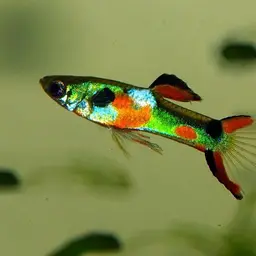
From the same region
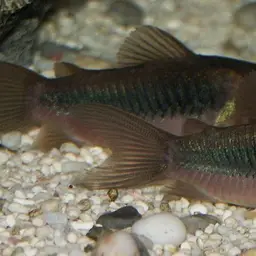
Share the same natural habitat. Great for a biotope-themed tank
Frequently asked questions
- How big does the Leopold's Tetra get?
- The Leopold's Tetra reaches about 1.5–2.5" as an adult.
- What size tank does the Leopold's Tetra need?
- A minimum of 14 gallons is recommended for the Leopold's Tetra, with more room needed for a proper group.
- What water parameters does the Leopold's Tetra need?
- The Leopold's Tetra does best with a temperature of 72–82°F, a pH of 5–7.5, hardness around 1–15 dGH.
- Is the Leopold's Tetra aggressive?
- The Leopold's Tetra is generally peaceful and suits a community tank with similarly calm tankmates.
- What does the Leopold's Tetra eat?
- The Leopold's Tetra is an omnivore. It does well on a varied diet of quality flake or pellet plus occasional frozen or live foods.
- How long does the Leopold's Tetra live?
- With good care, the Leopold's Tetra typically lives 5-12 years.