Northern longsnose cory
Corydoras septentrionalis
A long-lived Orinoco bottom-dweller that breathes air and blinks at you.

About
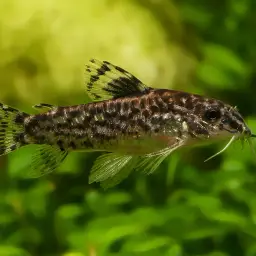
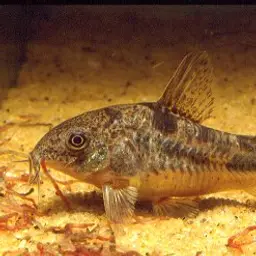
Found in the flowing spring waters of the Orinoco River basin in South America, Corydoras septentrionalis is one of those quietly fascinating catfish that rewards patient observation. It has a neat party trick shared across the cory family: it can gulp air at the surface and extract oxygen through the stomach lining, a handy adaptation for waters with variable oxygen levels. Make sure there's enough clearance under the lid so it can surface comfortably without knocking itself. If you want to tell this species apart from its two lookalikes, C. simulatus and C. amapaensis, check the caudal fin first. In septentrionalis it carries clear barring, while amapaensis has a plain transparent fin. It also has a third set of small barbels near the mouth that simulatus lacks. Like all corydoras, this is a thoroughly peaceful fish that does best in groups of at least six; a lone individual will be noticeably shyer and less active than one kept with companions. It mixes well with small characins, dwarf cichlids, and other calm community fish, but shouldn't share a tank with anything large or aggressive enough to harass it. Captive breeding is undocumented for this particular species, though general cory methods are likely applicable. With proper care, these little catfish can live remarkably long lives, sometimes well into their second decade.
Similar species
Other fish you might consider
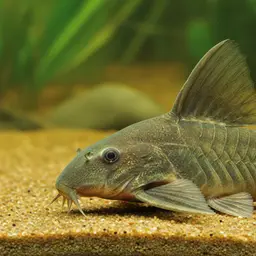
Good tank mates
Species that tend to coexist peacefully with Northern longsnose cory
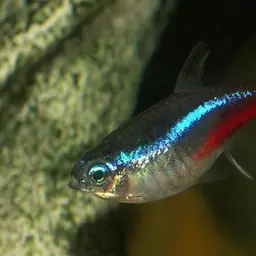
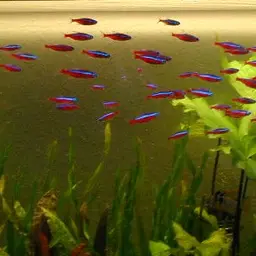
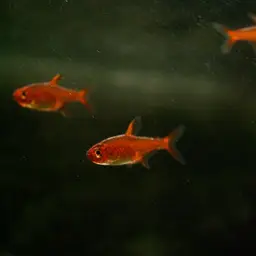
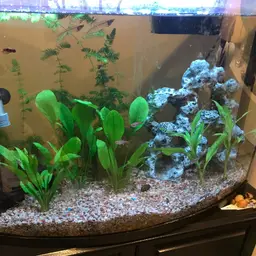
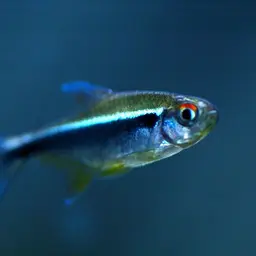
From the same region
Share the same natural habitat. Great for a biotope-themed tank
Frequently asked questions
- How big does the Northern longsnose cory get?
- The Northern longsnose cory reaches about 1–2.5" as an adult.
- What size tank does the Northern longsnose cory need?
- A minimum of 19 gallons is recommended for the Northern longsnose cory, with more room needed for a proper group.
- What water parameters does the Northern longsnose cory need?
- The Northern longsnose cory does best with a temperature of 68–79°F, a pH of 6–8, hardness around 2–25 dGH.
- Is the Northern longsnose cory aggressive?
- The Northern longsnose cory is generally peaceful and suits a community tank with similarly calm tankmates.
- What does the Northern longsnose cory eat?
- The Northern longsnose cory is an omnivore. It does well on a varied diet of quality flake or pellet plus occasional frozen or live foods.
- How long does the Northern longsnose cory live?
- With good care, the Northern longsnose cory typically lives 15-25 years.