Largespot River Stingray
Potamotrygon falkneri
Also known as: Paraná Freshwater Stingray
A venomous freshwater predator that can learn to recognize its keeper.

About
The largespot river stingray (Potamotrygon falkneri) is one of the more sought-after members of the Potamotrygonidae family, a group with the distinction of being the only cartilaginous fishes to have fully adapted to freshwater life. Native to the Paraná-Paraguay River basin in South America, ranging from the upper tributaries down to the La Plata, this species sports the large, boldly patterned spots that give it its common name and set it apart from many of its relatives. It does not appear in the trade with great regularity and tends to command a premium price when it does show up. In the aquarium, this ray occupies the bottom of the tank almost exclusively, so a wide footprint matters far more than raw volume. It is a top-level predator and will consume anything small enough to fit in its mouth, so tankmate selection demands real thought. Large, peaceful mid-to-upper water species tend to work best. Like all Potamotrygonids, it carries a venomous tail spine that should be taken seriously. Careless handling causes most injuries in the hobby, not unprovoked aggression. Given the right setup and diet, these rays can grow remarkably personable over time, often recognizing their keeper and actively approaching at feeding. This is a long-term commitment best suited to a keeper who has done their homework.
Similar species
Other fish you might consider
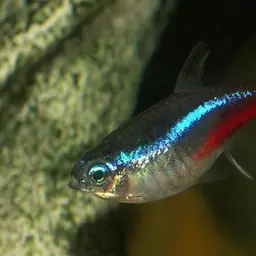


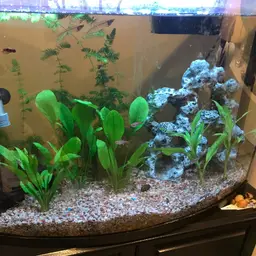
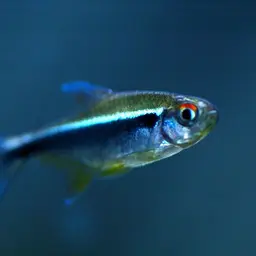

Good tank mates
Species that tend to coexist peacefully with Largespot River Stingray

From the same region
Share the same natural habitat. Great for a biotope-themed tank
Frequently asked questions
- How big does the Largespot River Stingray get?
- The Largespot River Stingray reaches about 14–23.5" as an adult.
- What size tank does the Largespot River Stingray need?
- A minimum of 257 gallons is recommended for the Largespot River Stingray.
- What water parameters does the Largespot River Stingray need?
- The Largespot River Stingray does best with a temperature of 66–73°F, a pH of 6–7.5, hardness around 8–18 dGH.
- Is the Largespot River Stingray aggressive?
- The Largespot River Stingray is aggressive and is best kept alone or with robust tankmates that can hold their own.
- What does the Largespot River Stingray eat?
- The Largespot River Stingray is a carnivore. It needs a meaty, protein-rich diet of frozen or live foods.
- How long does the Largespot River Stingray live?
- With good care, the Largespot River Stingray typically lives 8-15 years.