Virginia's Cory
Corydoras virginiae
Also known as: Virginia's Catfish
A long-lived armored catfish from Peru with a surprisingly personal quirk: it blinks.

About
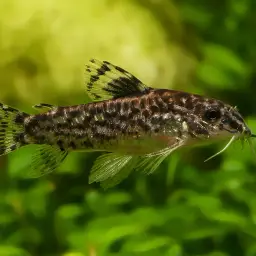
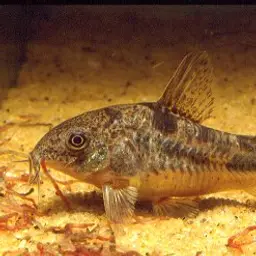
Found in the Ucayali River basin of Peru, Corydoras virginiae. Sometimes called Virginia's catfish or traded under the names C. sp. 'Sangama' or 'Zangama'. Is a small, armored catfish that went unrecognized as its own species for years, having been misidentified as both Corydoras bicolor and C. delphax before being formally described. Like all members of the family Callichthyidae, it wears rows of bony plates instead of scales, giving it that familiar tank-like look the group is known for. One of its more surprising traits is facultative air breathing. It has a specialized, highly vascularized section of intestine that can extract oxygen directly from the atmosphere, so you will periodically see it dart to the surface for a quick gulp of air. That behavior is completely normal, not a sign of poor water quality. It also has the endearing habit of tilting its eyes downward to examine the substrate, which gives the impression it is actually blinking. Handle with care, though. The stiffened pectoral spines can pierce skin and deliver a genuinely painful wound, possibly with mild venom from glands at their base. Keep this peaceful schooling species in groups of at least five or six, where it will be noticeably more active and confident. With good care it is remarkably long-lived for a fish this size.
Similar species
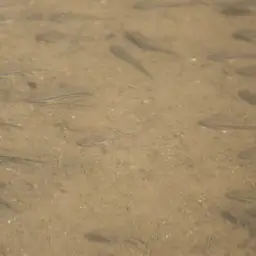
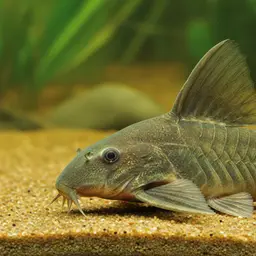
Other fish you might consider
Good tank mates
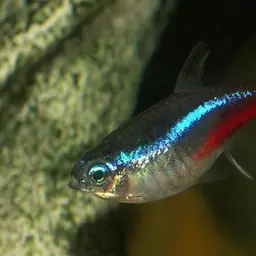
Species that tend to coexist peacefully with Virginia's Cory
From the same region
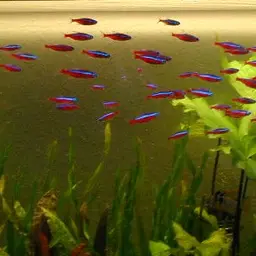
Share the same natural habitat. Great for a biotope-themed tank
Frequently asked questions
- How big does the Virginia's Cory get?
- The Virginia's Cory reaches about 1–2.5" as an adult.
- What size tank does the Virginia's Cory need?
- A minimum of 20 gallons is recommended for the Virginia's Cory, with more room needed for a proper group.
- What water parameters does the Virginia's Cory need?
- The Virginia's Cory does best with a temperature of 72–82°F, a pH of 6–8, hardness around 2–25 dGH.
- Is the Virginia's Cory aggressive?
- The Virginia's Cory is generally peaceful and suits a community tank with similarly calm tankmates.
- What does the Virginia's Cory eat?
- The Virginia's Cory is an omnivore. It does well on a varied diet of quality flake or pellet plus occasional frozen or live foods.
- How long does the Virginia's Cory live?
- With good care, the Virginia's Cory typically lives 15-25 years.