Blue-banded Pualu
Acanthurus blochii
Also known as: Dark Surgeon, Ringtail surgeonfish, Ringtail Surgeonfish, Tailring Surgeonfish, Whitetail Lancet
A long-lived, schooling surgeon with a mood-shifting palette and a blade to match.

About
The ringtail surgeonfish (Acanthurus blochii) is a large, wide-ranging species found across an enormous stretch of the Indo-Pacific, from the reefs off East Africa all the way out to Hawaii and the Society Islands. In the wild, adults patrol outer lagoon and seaward reef zones, often moving in small groups and occasionally forming larger schools in more oceanic settings. Their diet is unusually sand-centric for a surgeonfish. They graze the thin algal film that coats compacted sand, ingesting the sand itself in the process, which helps them break down food in their thick-walled stomachs. Diatoms and detritus round out their natural menu. In the aquarium, providing ample algae and appropriate substitute foods is key. One genuinely interesting quirk is their ability to shift color with their mood, something you will notice fairly quickly in a home system. They are active and diurnal, but they carry a real edge. Literally. Like all surgeonfish, they have a sharp, retractable spine at the caudal peduncle that can inflict a serious cut during handling, so use caution when netting or moving them. They also tend toward aggression with similar-looking surgeonfish species and their own kind. Given their potential size and long lifespan, this is a species that rewards patient, committed keepers with a suitably large setup.
Similar species
Other fish you might consider
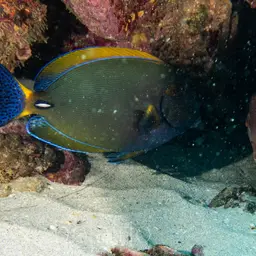
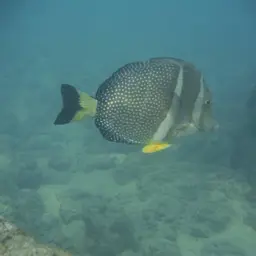
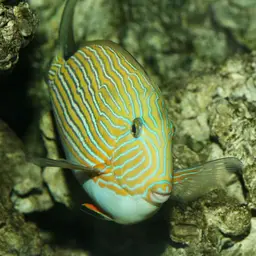
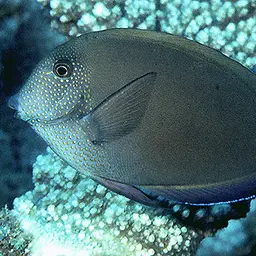
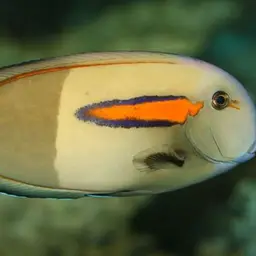
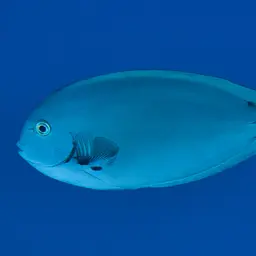
From the same region
Share the same natural habitat. Great for a biotope-themed tank
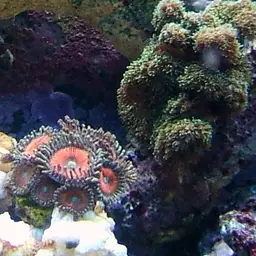
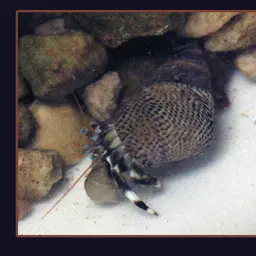
Frequently asked questions
- How big does the Blue-banded Pualu get?
- The Blue-banded Pualu reaches about 10.5–17.5" as an adult.
- What size tank does the Blue-banded Pualu need?
- A minimum of 250 gallons is recommended for the Blue-banded Pualu, with more room needed for a proper group.
- What water parameters does the Blue-banded Pualu need?
- The Blue-banded Pualu does best with a temperature of 72–82°F, a pH of 8–8.4.
- Is the Blue-banded Pualu aggressive?
- The Blue-banded Pualu is semi-aggressive. It can work in a community with careful tankmate choices and enough space.
- What does the Blue-banded Pualu eat?
- The Blue-banded Pualu is a herbivore. It needs a plant-based diet such as algae, blanched vegetables, or spirulina-based foods.
- How long does the Blue-banded Pualu live?
- With good care, the Blue-banded Pualu typically lives 20-35 years.
- Is the Blue-banded Pualu reef safe?
- The Blue-banded Pualu is generally considered reef safe.