Staghorn Coral
Acropora horrida
A branchy Indo-Pacific Acropora that thrives in turbid shallows and shows off pale blue polyps.

About
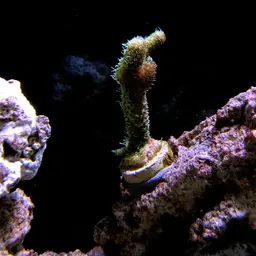
Found on shallow Indo-Pacific reef slopes, Acropora horrida is a branching hard coral that grows across a surprisingly wide range of conditions, from murky fringing reef environments to clear, sunlit shallows. Its appearance shifts noticeably depending on where it grows: colonies in turbid water tend to have irregular, loosely arranged branchlets along the main stems, while those in cleaner, brighter water develop tighter, more compact branching that gives the colony a bushier overall shape. The surface texture of the branches is notably rough, and the corallites themselves are irregularly arranged. Coloration is typically a soft pale blue, though photographs often render it pink or purple depending on the light. Less commonly, colonies appear dark blue, pale yellow, or brown. The polyps, pale blue to white, are often extended during daylight hours, which is a nice trait to observe in a display tank. In the aquarium, this is a coral best suited to experienced SPS keepers. It demands consistently high water quality, intense lighting, and strong, well-distributed flow to stay healthy long-term. Like most Acropora, it has little tolerance for the parameter swings that newer reef tanks are prone to, so a mature, stable system is really a prerequisite before taking one on.
Similar species
Other coral you might consider
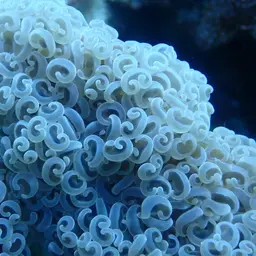
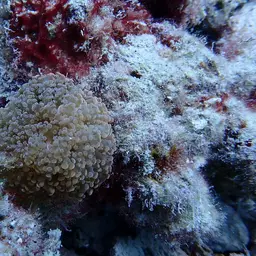
Good tank mates
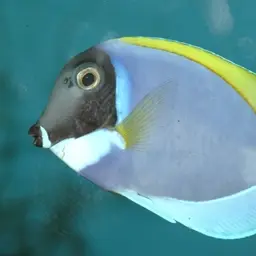
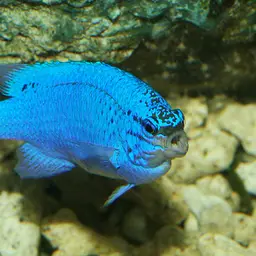
Species that tend to coexist peacefully with Staghorn Coral
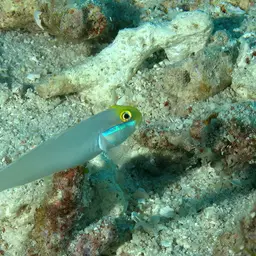
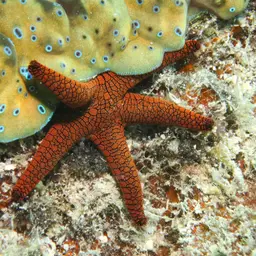
From the same region
Share the same natural habitat. Great for a biotope-themed tank
Frequently asked questions
- What water parameters does the Staghorn Coral need?
- The Staghorn Coral does best with a temperature of 72–82°F, a pH of 8–8.4.
- What does the Staghorn Coral eat?
- The Staghorn Coral is a filter feeder. It eats tiny particles suspended in the water and usually needs target feeding in a home tank.
- Is the Staghorn Coral reef safe?
- The Staghorn Coral is generally considered reef safe.