Namak
Aphanius arakensis
Also known as: Namak River
A rare Iranian killifish relative worth keeping for conservation as much as curiosity.

About
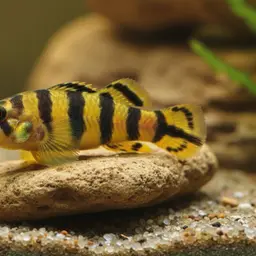
Found in the freshwater and brackish habitats of Iran and Iraq, Aphanius arakensis is a small toothcarp that circulated in the hobby under the informal name 'Namak' or 'Namak River' for several years before it was formally described. Males display a series of clearly defined vertical bars along the flanks, while females carry larger, irregular blotches. A fairly typical pattern within the genus. It belongs to a group of around 22 species and subspecies thought to share ancestry around the ancient Tethys Sea, and it sits closest genetically to A. farsicus and A. sophiae, though the three look remarkably similar despite their genetic distance. In the aquarium this is not a community fish. Males are assertive during spawning, defending temporary territories and intensifying their coloration when dominant, and the species does best when kept in a dedicated setup with more females than males. Eggs are deposited continuously through the warmer months and attached to plant material or algae, but adults will consume both eggs and fry if given the chance, so daily monitoring of the spawning medium is essential. Conservation is a genuine concern here, wild populations are fragmented and declining, so captive breeding efforts are genuinely meaningful. That sense of purpose, combined with the fish's constant activity and interesting social dynamics, makes it a rewarding project for a keeper willing to commit to it long term.
Similar species
Other fish you might consider
Good tank mates
Species that tend to coexist peacefully with Namak

Frequently asked questions
- How big does the Namak get?
- The Namak reaches about 1–2.5" as an adult.
- What size tank does the Namak need?
- A minimum of 29 gallons is recommended for the Namak.
- What water parameters does the Namak need?
- The Namak does best with a temperature of 50–86°F, a pH of 7–8.5, hardness around 10–30 dGH.
- Is the Namak aggressive?
- The Namak is semi-aggressive. It can work in a community with careful tankmate choices and enough space.
- What does the Namak eat?
- The Namak is a carnivore. It needs a meaty, protein-rich diet of frozen or live foods.