Inca
Apistogramma baenschi
Also known as: Inka
A beginner-friendly dwarf cichlid with big personality and bold crescent markings.

About
Found in Peru, this small but feisty dwarf cichlid, Apistogramma baenschi, goes by several trade names in the hobby, most commonly 'Inca' or 'Inka 50', and is one of the more accessible members of a notoriously complex genus. It's commercially bred in decent numbers, which means captive-raised fish are usually available and are the better choice for most setups, being hardier and less demanding than wild-caught individuals. Identification is fairly straightforward once you know what to look for: five dark vertical bars across the rear half of the body, most visible when the fish is excited or stressed, plus a distinctive rounded black spot right at the base of the tail. Very large males also develop small extensions on the upper and lower edges of the rounded caudal fin. Behaviorally, this species keeps things interesting. Both sexes will squabble over rank, and females can be surprisingly combative during these disputes, occasionally locking lips with rivals. Males are generally polygamous and territorial toward other males but tolerate females. Breeding follows the typical Apistogramma pattern. Eggs are laid in a hidden cavity, the female takes charge of guarding the clutch and wrangling the fry, and the male resumes patrol of his broader territory. For anyone curious about dwarf cichlids but not quite ready for the more demanding species, this one makes a solid starting point.
Similar species
Other fish you might consider
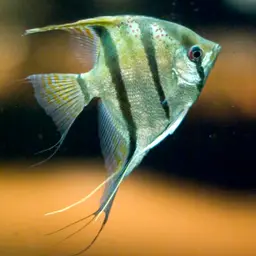
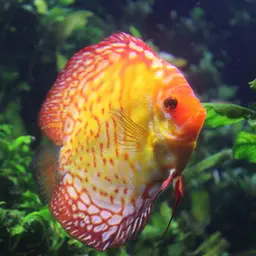
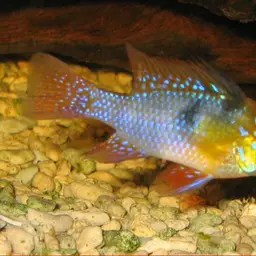
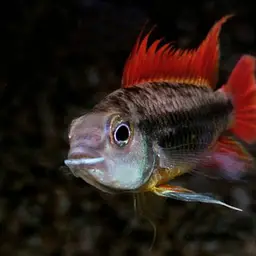
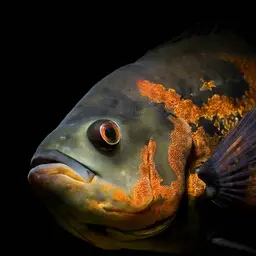
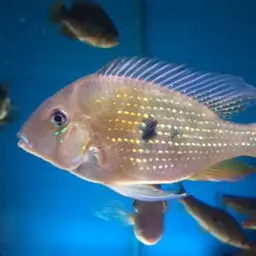
Good tank mates
Species that tend to coexist peacefully with Inca
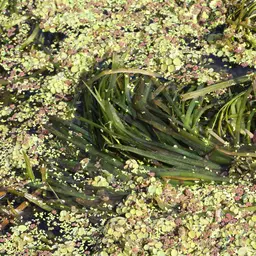
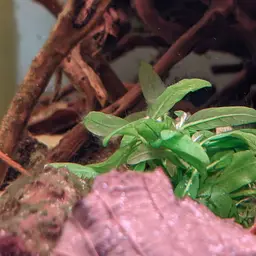
From the same region
Share the same natural habitat. Great for a biotope-themed tank

Frequently asked questions
- How big does the Inca get?
- The Inca reaches about 1.5–2" as an adult.
- What size tank does the Inca need?
- A minimum of 19 gallons is recommended for the Inca.
- What water parameters does the Inca need?
- The Inca does best with a temperature of 72–82°F, a pH of 4–7, hardness around 1–8 dGH.
- Is the Inca aggressive?
- The Inca is semi-aggressive. It can work in a community with careful tankmate choices and enough space.
- What does the Inca eat?
- The Inca is an omnivore. It does well on a varied diet of quality flake or pellet plus occasional frozen or live foods.
- How long does the Inca live?
- With good care, the Inca typically lives 3-5 years.