Elizabeth's Dwarf Cichlid
Apistogramma elizabethae
A tiny Amazonian cichlid with bold markings and fascinating cave-spawning behavior.

About
A rarely traded dwarf cichlid from the blackwater rivers of northwestern Brazil, Apistogramma elizabethae comes from the Uaupés River basin, where the water is intensely soft and acidic. It's a small fish even by Apistogramma standards, and what it lacks in size it makes up for in visual complexity. Males develop a lanceolate caudal fin with age, passing through rounded and lyrate shapes as juveniles and subadults, while both sexes carry two bold lateral spots and a deep lateral stripe. Several color forms exist, including a blue-headed variant from the Rio Içana and a reddish population sometimes traded as the 'super red' form. These forms should never be mixed in the aquarium, and the species should generally be kept on its own or alongside small, peaceful dither fish like pencilfish rather than with other Apistogramma. Spawning follows typical cave-spawning cichlid patterns. Eggs are placed on the ceiling of a cavity and guarded by the female, who can become intensely defensive toward tankmates and sometimes even the male. Raising fry through the first weeks is the real challenge, as young fish are sensitive to water chemistry swings. Small, frequent feedings and modest but regular water changes are the keys to success. Despite the breeding demands, the species itself is considered manageable for attentive beginners who can provide consistently soft, acidic water.
Similar species
Other fish you might consider
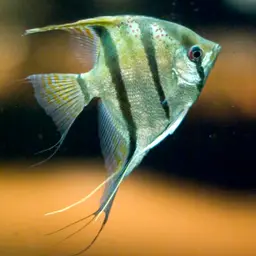
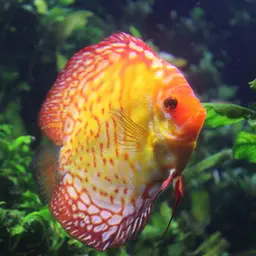
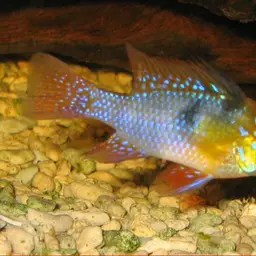
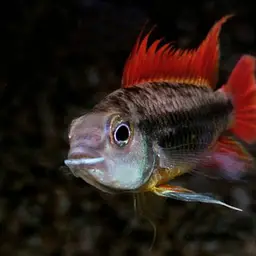
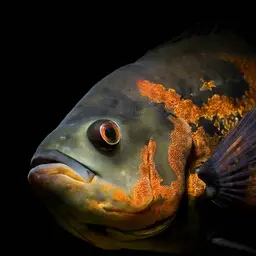
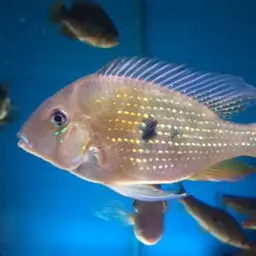
Good tank mates
Species that tend to coexist peacefully with Elizabeth's Dwarf Cichlid
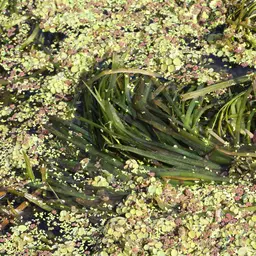
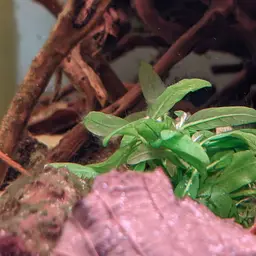
From the same region
Share the same natural habitat. Great for a biotope-themed tank
Frequently asked questions
- How big does the Elizabeth's Dwarf Cichlid get?
- The Elizabeth's Dwarf Cichlid reaches about 1–2" as an adult.
- What size tank does the Elizabeth's Dwarf Cichlid need?
- A minimum of 11 gallons is recommended for the Elizabeth's Dwarf Cichlid.
- What water parameters does the Elizabeth's Dwarf Cichlid need?
- The Elizabeth's Dwarf Cichlid does best with a temperature of 72–84°F, a pH of 4–6.5, hardness around 1–4 dGH.
- Is the Elizabeth's Dwarf Cichlid aggressive?
- The Elizabeth's Dwarf Cichlid is semi-aggressive. It can work in a community with careful tankmate choices and enough space.
- What does the Elizabeth's Dwarf Cichlid eat?
- The Elizabeth's Dwarf Cichlid is a carnivore. It needs a meaty, protein-rich diet of frozen or live foods.