L200
Baryancistrus demantoides
Also known as: L200 High-fin
A territorial Venezuelan pleco with vivid spots and a noticeably tall dorsal fin.

About
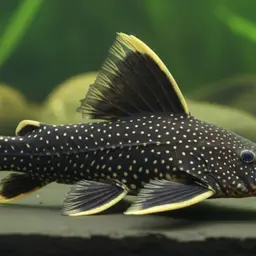
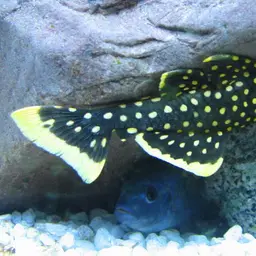
Found exclusively in fast-flowing water around granite rock formations in Venezuela's upper Rio Orinoco drainage, this species, Baryancistrus demantoides, is one of the more sought-after plecos in the L-number hobby. It circulates in the trade under the code L200, though it's worth knowing that Hemiancistrus subviridis shares that same number and looks very similar. The two even live together in the wild. You can tell them apart by B. demantoides' noticeably longer dorsal-fin spine and the enlarged membrane connecting the dorsal and adipose fins. It's sometimes marketed as 'L200 high-fin' for exactly that reason. The base body color runs olive to yellowish, overlaid with pale cream or white spots concentrated on the head and front half of the body. Juveniles are reasonably easy to get along with, but don't let that fool you into a long-term stocking plan without forethought. Males in particular grow increasingly combative as they mature, showing real intolerance toward tankmates they perceive as rivals. Keeping them with mid-to-large characids that occupy different water layers tends to work well. Breeding has been documented in captivity, the male guards a cave spawn and tends the eggs solo, but it demands a roomy, well-oxygenated setup and a high-quality diet to have any realistic shot at success.
Similar species
Other fish you might consider
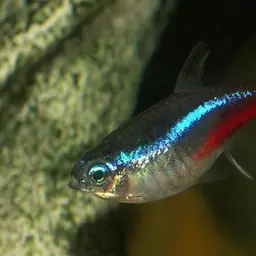
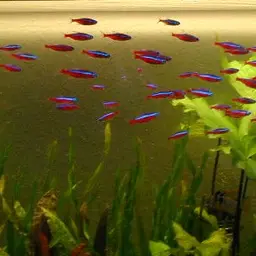
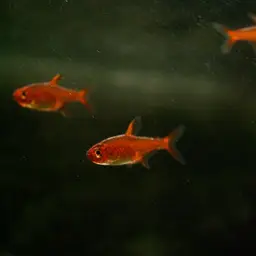
Good tank mates
Species that tend to coexist peacefully with L200

From the same region
Share the same natural habitat. Great for a biotope-themed tank
Frequently asked questions
- How big does the L200 get?
- The L200 reaches about 3.5–6" as an adult.
- What size tank does the L200 need?
- A minimum of 43 gallons is recommended for the L200.
- What water parameters does the L200 need?
- The L200 does best with a temperature of 73–86°F, a pH of 5–7.8, hardness around 1–18 dGH.
- Is the L200 aggressive?
- The L200 is aggressive and is best kept alone or with robust tankmates that can hold their own.
- What does the L200 eat?
- The L200 is an omnivore. It does well on a varied diet of quality flake or pellet plus occasional frozen or live foods.
- How long does the L200 live?
- With good care, the L200 typically lives 5-8 years.