Phantom Headstander
Charax condei
A secretive little predator that sneaks into shipments of other characins.

About
Occasionally found in the wild Negro River basin of Brazil, this small but predatory characin, Charax condei, is one of those species that turns up in the hobby almost by accident. Hitchhiking into stores as a contaminant among shipments of more commonly traded fish. If you come across it, it is worth picking up, though you should know what you are getting into. Despite its modest adult size, it is a fish-eater in the wild, which puts any very small tankmates at genuine risk. Pair it with species of comparable size and you will avoid problems. Other mid-sized characins, Corydoras, smaller Loricariids, and peaceful cichlids all tend to work well as companions. Like most characins, it is a shoaling fish at heart, and keeping fewer than six together will leave it visibly unsettled. A group of ten or more is genuinely worth the effort, both for the fish's wellbeing and because a proper shoal is a far more rewarding thing to observe. Breeding in captivity has not been reliably documented, though it is likely feasible using techniques that work for other characins of similar size. Older references sometimes list this species under the name Asiphonichthys condei, so keep that in mind when researching it.
Similar species
Other fish you might consider
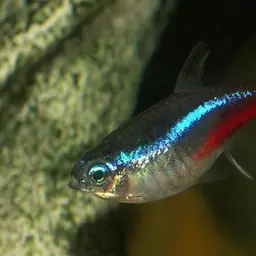

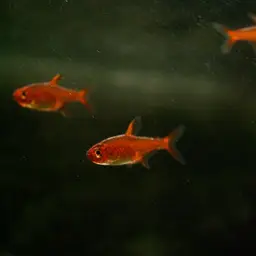
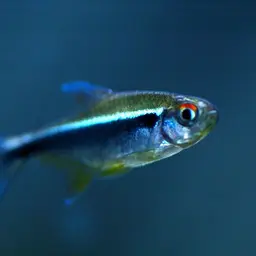
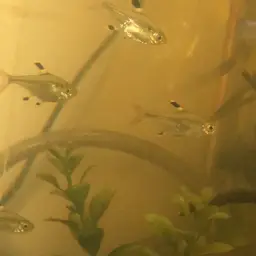
Good tank mates
Species that tend to coexist peacefully with Phantom Headstander
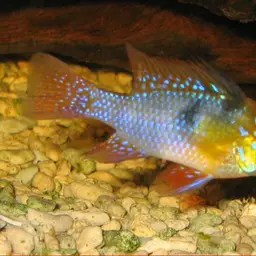
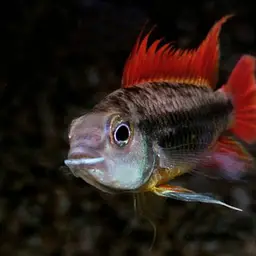

From the same region
Share the same natural habitat. Great for a biotope-themed tank
Frequently asked questions
- How big does the Phantom Headstander get?
- The Phantom Headstander reaches about 1.5–2" as an adult.
- What size tank does the Phantom Headstander need?
- A minimum of 18 gallons is recommended for the Phantom Headstander, with more room needed for a proper group.
- What water parameters does the Phantom Headstander need?
- The Phantom Headstander does best with a temperature of 72–82°F, a pH of 5.5–7.5, hardness around 4–20 dGH.
- Is the Phantom Headstander aggressive?
- The Phantom Headstander is semi-aggressive. It can work in a community with careful tankmate choices and enough space.
- What does the Phantom Headstander eat?
- The Phantom Headstander is an omnivore. It does well on a varied diet of quality flake or pellet plus occasional frozen or live foods.
- How long does the Phantom Headstander live?
- With good care, the Phantom Headstander typically lives 5-10 years.