Aquariumpro
πŸ”
← Back to species
FishFreshwaterIntermediateSemi aggressive

Discus

Symphysodon aequifasciatus

Also known as: green discus, Green Discus

The regal centerpiece fish that rewards patient, attentive fishkeepers.

Discus
1 / 30
CC BY-SA 3.0

About

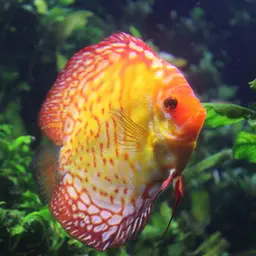
The green discus (Symphysodon aequifasciatus) is one of those fish that genuinely earns its reputation as an aquarium centerpiece. Found in the eastern Amazon basin, it inhabits deep, slow-moving waters where it shelters among submerged roots and rocky crevices, typically moving in schools. The flattened, disc-shaped body is where the common name comes from, and the green discus displays earthy base tones overlaid with iridescent patterning that shifts depending on light and mood. In the wild, these fish feed on insect larvae, small insects, and planktonic invertebrates, so a varied diet keeps them in good condition in captivity. Social dynamics are one of the most important things to understand before keeping discus. Groups smaller than five tend to produce a single dominant individual that harasses the rest. Sometimes relentlessly. Keeping six or more spreads that social pressure around considerably. They are generally peaceful toward tankmates they cannot swallow, which makes them workable in a community of similarly sized, calm fish. Discus are not a first-fish choice, they have specific needs around water quality and diet that demand consistency, but for a keeper ready to put in that effort, they are deeply rewarding and can live a decade or more.

Varieties & strains

19 recognized strains of Discus.

Blue DiamondA solid, uniform electric blue covers the entire body β€” no vertical bars, no patterning, just clean unbroken color from nose to tail. The best specimens look almost metallic under bright lighting. This is one of the most popular discus in the hobby for a reason: it photographs beautifully and reads well in any aquascape. When selecting, reject fish with patchy blue or visible ghost barring, which indicates incomplete line-breeding. Pairs tend to be reliable parents. Water quality demands are typical discus β€” soft, warm, and pristine β€” but Blues are considered among the hardier fancy strains.Red TurquoiseBrilliant turquoise-blue horizontal stripes run across a warm red-orange base, creating one of the most striking contrast patterns in the discus hobby. The red ground color should be deep and saturated, not washed out, and the turquoise lines should be tight, well-defined, and numerous. Fish with broad, broken, or sparse striping are lower-grade specimens. The caudal and dorsal fins often carry strong red pigmentation that extends the base color nicely. Red Turquoise are a benchmark strain β€” if you see a discus in a tank photo and can't stop staring, it's probably this variety.Blue TurquoiseSimilar in pattern to Red Turquoise but built on a cooler blue-grey to steel-blue base rather than a red one. The horizontal turquoise striping is the same hallmark, but the overall palette reads calm and oceanic rather than fiery. Quality specimens show dense, fine striping across the full body disc including the forehead, with minimal brown or grey showing through between lines. Many hobbyists prefer this variety in Dutch-style planted tanks where the cooler tones complement green foliage. It's a classic strain and widely available, making it a good entry point into patterned discus.Pigeon BloodBold yellow-orange to deep orange-red base with dark, irregular black speckling or peppering scattered across the body β€” this is the 'dirt' that beginners sometimes mistake for disease. The pepper pattern is genetic and normal; fish with no pepper at all are often the result of hormone treatment and best avoided. Eyes are typically red. The Pigeon Blood gene has been crossed into dozens of other strains, but pure Pigeon Bloods remain popular for their warm, saturated warmth. Fins tend to be clear to lightly pigmented. Robust and relatively forgiving compared to some fancy strains.Marlboro RedAn intensely uniform red to red-orange fish with minimal patterning β€” think of a cleaner, more saturated version of a red discus that holds its color edge-to-edge. Top specimens have a rich, deep red over the entire disc with clear to faintly yellow fins. The challenge with Marlboro Reds is that color can fade significantly with poor diet or substandard water; this is a strain where feeding high-quality color-enhancing foods (astaxanthin-based) makes a visible difference. Avoid fish showing patchy color or brownish undertones, which indicate stress or weak genetics.SnakeskinOne of the most complex-looking discus varieties: fine, squiggly, closely packed lines or dots cover the body in a pattern that genuinely resembles snake or reptile scales. The base color can range from tan to brown to orange depending on the line, but the intricate overprint pattern is what defines this variety. High-grade Snakeskins have dense, continuous patterning without large unbroken patches of base color showing through. The pattern takes time to fully develop β€” juveniles often look muddy until about 8–10 cm. A truly well-marked specimen is one of the most visually complex fish in freshwater.LeopardDiscrete, rounded spots scattered over a contrasting base give this variety its name β€” it reads like a leopard or dalmatian pattern rather than the continuous lines of Snakeskin. Spot size, density, and regularity vary considerably across lines; the best specimens have uniform, well-separated spots over a clean background. Base color is commonly orange, yellow, or cream. The Leopard pattern is actually a variant expression within the broader snakeskin gene family, and quality varies more than in some other strains β€” be selective when purchasing. Grows out well and color pattern stabilizes by adult size.Cobalt BlueA deep, rich blue that's darker and more saturated than Blue Diamond β€” closer to a true cobalt or navy in the best specimens. Unlike Blue Diamond's uniform coverage, Cobalt Blues sometimes retain subtle darker vertical banding that adds depth rather than detracting from appearance. The blue tends to have less of a metallic sheen and more of a flat-rich quality. This is an older strain in the hobby and one of the foundational patterned-to-solid blue varieties. Select fish with even color distribution and no obvious brown or grey patches; those indicate stress coloration rather than true cobalt pigmentation.Red MelonA warm, glowing red-orange to melon-orange fish with largely solid coloration and a clean, unfussy appearance. The color is softer and more orange-leaning than Marlboro Red, with less patterning β€” think of the flesh of a ripe cantaloupe rendered in fish form. Better specimens are consistent in color from center to margins with no significant paling at the edges. Like most red-toned discus, diet matters enormously for maintaining color intensity. Red Melons are widely available and relatively affordable, making them a popular starting point for hobbyists wanting a warm-colored discus.Yellow DiamondThe yellow counterpart to Blue Diamond: a fully solid, even canary-yellow to lemon-yellow disc with no visible pattern or bars. Clean, bright specimens have an almost luminous quality. Yellow Diamond is considerably rarer and harder to breed to consistent quality than Blue Diamond β€” many fish sold under this name are actually pale orange or have visible ghost barring. True high-grade specimens command premium prices. Look for depth and evenness of yellow across the entire body including the forehead area, which is often the last region to color up. A showstopper when done right.GhostPale, washed-out, and intentionally so β€” Ghost discus are bred for a near-white to pale grey or very light blue body with faint, ghost-like patterning barely visible beneath. The effect is ethereal and unusual in the discus world, which skews heavily toward saturation. Some lines show extremely faint turquoise tracery; others are nearly monochrome. Because the coloration is so subtle, water quality and stress show up dramatically on this variety β€” a frightened Ghost turns blotchy almost immediately. They look best in calm, well-established tanks with dark substrate. An acquired taste but genuinely stunning in the right setup.CheckerboardA distinctive pattern of alternating light and dark patches creates a rough checkerboard or grid effect across the body. The contrast between the light cream-to-white areas and darker red-brown or blue patches is what defines this variety. It's a genuinely unusual look compared to the striped or solid discus that dominate the hobby. Pattern regularity and contrast are the selection criteria β€” fish with blurry, unresolved patches are poorly bred. This strain is less commonly seen than turquoise or solid varieties, which can make quality specimens harder to source. Worth tracking down if you want something visually distinct.Red MapRich red base coloration overlaid with irregular, map-like patches or reticulated markings in a contrasting darker tone. The pattern looks like an aerial map or topographical chart β€” organic, asymmetrical, and complex. No two fish are patterned identically, which adds to the appeal for collectors. Deep red pigmentation in the base is essential; fish with orange-leaning or faded bases significantly underperform visually. The map pattern should have clear edges rather than smudged gradients. These are show-quality fish when bred well and are most impressive in a species tank where the patterning can be appreciated up close.GoldenA warm, metallic golden-yellow to amber-gold fish with solid to near-solid coloration and a subtle shimmer that sets it apart from the flatter Yellow Diamond. The golden tone often has a slightly more orange or brassy character than pure yellow, and quality specimens show consistent color with no patchy fading. Fins are typically clear to lightly golden. Golden discus can be sensitive to water quality changes that express as color shifts, so stable chemistry is important. One of the older established yellow-spectrum strains and more reliably bred to consistent coloration than some newer yellow variants.White ButterflyOne of the most dramatic-looking discus available: a nearly white to pale silver base with contrasting dark vertical bars or markings creating a bold, high-contrast appearance reminiscent of butterfly wing patterns. The stark contrast between white body and dark markings is the defining visual signature. Quality varies considerably β€” the best specimens have clean, true white without yellow or brown tints, and crisp, well-defined dark markings. These fish can be prone to showing stress coloration intensely, so they need a calm, mature tank environment. Not the easiest variety to keep at peak appearance, but genuinely eye-catching.TangerineA bright, clean orange to tangerine color across the entire disc β€” more vibrant and sharper in tone than the softer Red Melon, without veering into the deeper red territory of Marlboro Red. The best specimens are uniformly saturated from edge to edge with clear to lightly orange-tinted fins. Tangerine discus require consistent feeding of carotenoid-rich foods to maintain peak color; diet is probably more important for this variety's appearance than for most. Well-bred Tangerines in good condition are genuinely striking under warm LED lighting. Widely available commercially, though quality varies significantly between suppliers.Red AlenquerNamed after the Alenquer River region in Brazil, a historically important collection locality. This strain features a deep, brownish-red base with bold blue-green iridescent striping concentrated on the head and upper body β€” a more 'natural' look compared to fully domesticated strains, with the iridescent markings sitting on top of rich earthy red rather than an artificially saturated base. It bridges the gap between wild-type appearance and captive selectivity. Highly regarded by discus purists for its connection to wild lineage. Select fish with well-saturated red body color and clearly defined iridescent head patterning.Brilliant TurquoiseA high-intensity version of the classic turquoise stripe pattern where the iridescent lines are unusually bright, dense, and cover near the full body surface β€” 'brilliant' refers to the coverage and shine rather than a distinct base color. On the best specimens the turquoise striping is so packed that individual lines blur slightly, giving a shimmering, metallic full-body effect under light. Base color is typically dark grey to black, which maximizes the contrast. This strain requires careful selection: pass on any fish where the dark base shows through too heavily or the lines appear dull and flat rather than actively iridescent.Red CoverAn intensely red discus with pigmentation that extends fully to the body margins, dorsal, and anal fins β€” the 'cover' name implies complete red coverage rather than a red center fading to other tones at the edges. The effect is a bold, uninterrupted red presentation. High-quality specimens are impressive; lower-grade fish often show orange rather than true red, or have significant pale areas near the fin edges. Like all deep-red strains, feeding astaxanthin and canthaxanthin-containing foods is essential for color maintenance. One of the more premium red strains commercially, and prices reflect that when well-bred specimens are available.

Frequently asked questions

How big does the Discus get?
The Discus reaches about 3–8" as an adult.
What size tank does the Discus need?
A minimum of 67 gallons is recommended for the Discus.
What water parameters does the Discus need?
The Discus does best with a temperature of 75–86Β°F, a pH of 5–7.5, hardness around 1–13 dGH.
Is the Discus aggressive?
The Discus is semi-aggressive. It can work in a community with careful tankmate choices and enough space.
What does the Discus eat?
The Discus is an omnivore. It does well on a varied diet of quality flake or pellet plus occasional frozen or live foods.
How long does the Discus live?
With good care, the Discus typically lives 6-10 years.