Payara
Hydrolycus scomberoides
Vampire-fanged characin that's surprisingly peaceful with fish too big to eat.

About
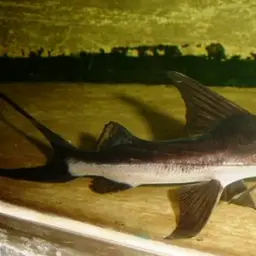
The payara (Hydrolycus scomberoides) is one of those fish that turns heads the moment someone sees it, mainly because of those elongated canine teeth on the lower jaw, which slot into dedicated openings in the upper jaw so the mouth can actually close fully. It belongs to the dogtooth characin family Cynodontidae and comes from the Amazon River basin in South America, where adults roam open water as fully pelagic hunters. Juveniles behave quite differently, tending to hang at an oblique, head-down angle among cover. A posture thought to help them blend in. As adults, they shift to open swimming and need plenty of room to move. Despite the fearsome dentition, payara are actually peaceable toward tankmates large enough not to register as prey. They can even be kept in groups if the aquarium is big enough, though going with at least three at a time tends to work out better socially than keeping just a pair. A strict carnivore and almost certainly a fish-eater in the wild, so diet planning matters. Worth noting: this species is frequently mixed up with the much larger H. armatus, which gets too big for virtually any home aquarium. So double-check what you're buying before bringing one home.
Similar species
Other fish you might consider
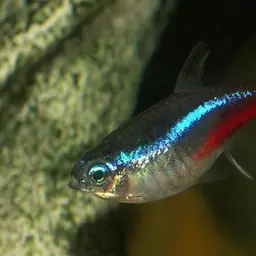
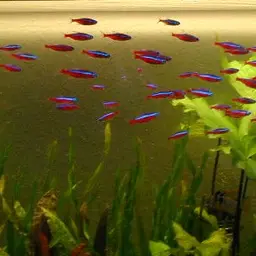
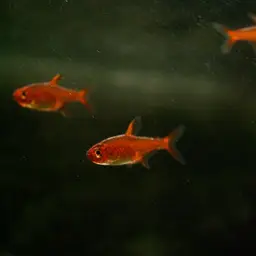

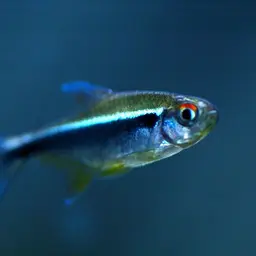
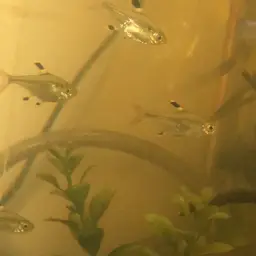
Good tank mates
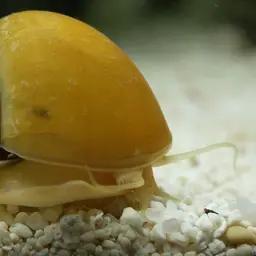
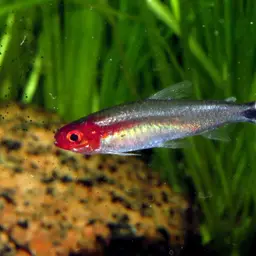
Species that tend to coexist peacefully with Payara

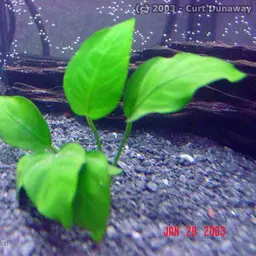
From the same region
Share the same natural habitat. Great for a biotope-themed tank
Frequently asked questions
- How big does the Payara get?
- The Payara reaches about 10–46" as an adult.
- What size tank does the Payara need?
- A minimum of 125 gallons is recommended for the Payara.
- What water parameters does the Payara need?
- The Payara does best with a temperature of 75–82°F, a pH of 6–8, hardness around 2–15 dGH.
- Is the Payara aggressive?
- The Payara is aggressive and is best kept alone or with robust tankmates that can hold their own.
- What does the Payara eat?
- The Payara is a carnivore. It needs a meaty, protein-rich diet of frozen or live foods.
- How long does the Payara live?
- With good care, the Payara typically lives 5-12 years.