Perruno
Perrunichthys perruno
Also known as: Leopard catfish
A little-known giant catfish from Venezuela's Lake Maracaibo basin.

About
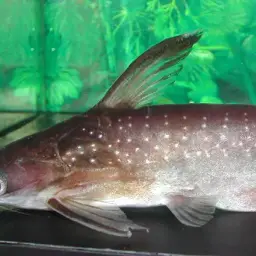
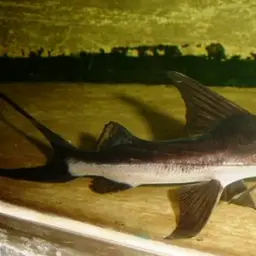
Native to the Lake Maracaibo basin in northwestern Venezuela, this large South American catfish, Perrunichthys perruno, is a genuinely uncommon sight both in the wild and in the hobby. It belongs to the family Pimelodidae, the long-whiskered catfishes, and shares the characteristic long barbels and streamlined, scaleless body typical of that group. In the wild it is primarily a predator of other fish, so tankmates need to be chosen with care. Anything small enough to fit in its mouth is essentially a meal waiting to happen. Given that adults can reach close to two feet in length, that rules out a surprisingly wide range of companions. This is a fish that demands serious space and serious planning. A large, well-filtered aquarium with plenty of hiding spots and subdued lighting will suit it well, as pimelodid catfish tend to be most active after dark and appreciate shelter during daylight hours. Despite its predatory streak, it is not an aggressive fish in the conventional sense. It is simply an opportunistic hunter doing what large catfish do. Intermediate-level experience is a reasonable baseline here, mostly because the tank size commitment and dietary management are not trivial responsibilities.
Similar species
Other fish you might consider
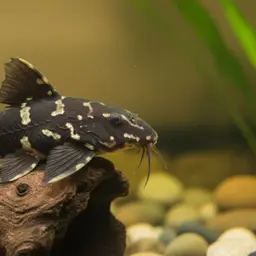
Chocolate Talking Catfish
FishAcanthodoras cataphractus
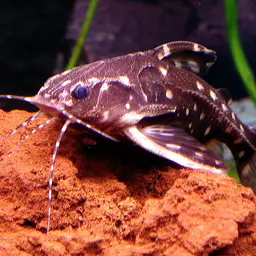
Spotted Raphael Catfish
FishAgamyxis pectinifrons
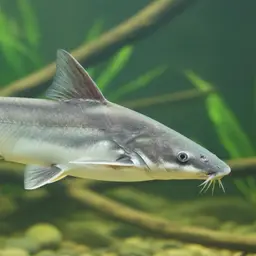
Manduba, Slopehead Catfish
FishAgeneiosus inermis
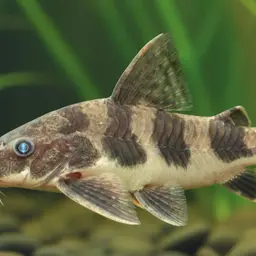
Blue-eyed Catfish
FishAmblydoras nauticus
Zamora Woodcat
FishAuchenipterichthys coracoideus
Driftwood Catfish
FishAuchenipterichthys longimanus
Good tank mates
Species that tend to coexist peacefully with Perruno
From the same region
Share the same natural habitat. Great for a biotope-themed tank
Frequently asked questions
- How big does the Perruno get?
- The Perruno reaches about 14–23.5" as an adult.
- What size tank does the Perruno need?
- A minimum of 150 gallons is recommended for the Perruno.
- What water parameters does the Perruno need?
- The Perruno does best with a temperature of 75–78°F, a pH of 6–7.5, hardness around 6–10 dGH.
- Is the Perruno aggressive?
- The Perruno is aggressive and is best kept alone or with robust tankmates that can hold their own.
- What does the Perruno eat?
- The Perruno is an omnivore. It does well on a varied diet of quality flake or pellet plus occasional frozen or live foods.
- How long does the Perruno live?
- With good care, the Perruno typically lives 5-10 years.