Honey Blue-eye
Pseudomugil mellis
A tiny Australian rainbowfish from tannin-dark coastal wallum country.

About
The Honey Blue-eye (Pseudomugil mellis) is a small, delicate rainbowfish native to a narrow coastal strip of southeastern Queensland, ranging from the Brisbane area north to around Bundaberg. In the wild it occupies a very specific habitat type known locally as wallum. Slow-moving, tannin-stained creeks and coastal dune lakes where the water runs dark as tea over sandy or muddy bottoms. You'll find them drifting along grassy banks, sheltering among reeds and water lilies, in water that's naturally quite acidic and soft. This makes the species a close cousin to the better-known Pseudomugil signifer, and the family resemblance is clear in the males' ornate finnage and bright, jewel-like eyes. Despite their specialized wild habitat, Honey Blue-eyes are reasonably adaptable in a well-maintained aquarium, though some experience with softwater species will serve you well here. They're a peaceful, sociable fish that does best in a group, and a planted tank with some dark substrate and perhaps a handful of dried leaves to mimic their natural environment will really bring out their best colors and behavior. Given their small adult size, a modest tank is perfectly adequate, making them a rewarding choice for the hobbyist who wants something a little out of the ordinary from the Australian rainbowfish family.
Similar species
Other fish you might consider
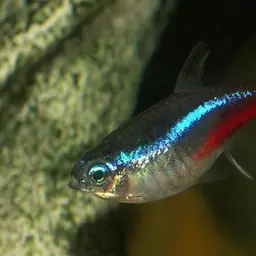
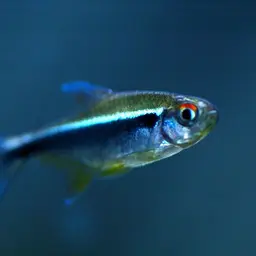
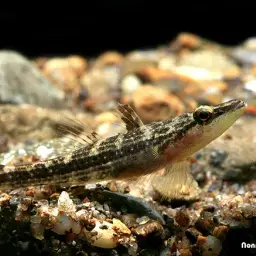
Good tank mates
Species that tend to coexist peacefully with Honey Blue-eye
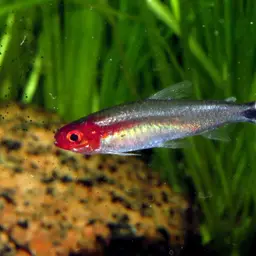
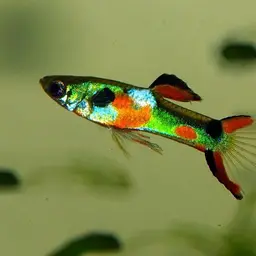
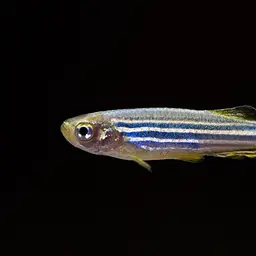
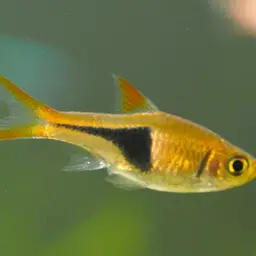
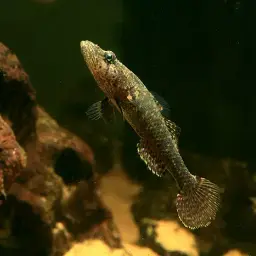
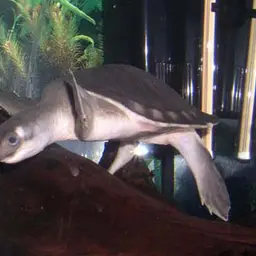
From the same region
Share the same natural habitat. Great for a biotope-themed tank
Frequently asked questions
- How big does the Honey Blue-eye get?
- The Honey Blue-eye reaches about 1–1.5" as an adult.
- What size tank does the Honey Blue-eye need?
- A minimum of 15 gallons is recommended for the Honey Blue-eye, with more room needed for a proper group.
- What water parameters does the Honey Blue-eye need?
- The Honey Blue-eye does best with a temperature of 72–82°F, a pH of 6–8, hardness around 4–12 dGH.
- Is the Honey Blue-eye aggressive?
- The Honey Blue-eye is generally peaceful and suits a community tank with similarly calm tankmates.
- What does the Honey Blue-eye eat?
- The Honey Blue-eye is an omnivore. It does well on a varied diet of quality flake or pellet plus occasional frozen or live foods.
- How long does the Honey Blue-eye live?
- With good care, the Honey Blue-eye typically lives 3-6 years.