Spotted Hampala Barb
Hampala dispar
A fast-moving Mekong predator that stays manageable enough for a large community tank.

About
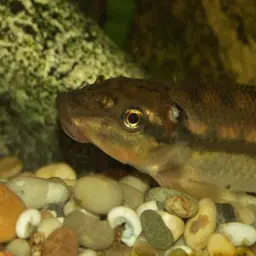
Found across the Mekong basin, Hampala dispar is a cyprinid that occupies a surprisingly wide range of habitats in the wild, from slow-moving lowland waters and reservoirs to the rapid mountain streams of the middle Mekong. Compared to its larger relative H. macrolepidota, it is the more practical aquarium option, reaching a more modest adult size while sharing much of the same character. Identification is reasonably straightforward: adults carry a single dark blotch on the body rather than a full vertical band, and the dark edging on the caudal-fin lobes is present but less sharply defined. Juveniles can look quite similar to young H. macrolepidota, with the body blotch more vertically extended and banding across the caudal peduncle that softens with age. In the aquarium, this species feeds on crustaceans and insect larvae primarily, using suction to take prey rather than lunging bites, and is generally peaceful toward anything it cannot fit in its mouth. That said, it is a powerful, fast fish, and timid or slow companions tend to lose out at feeding time. Keeping a group of five or more is important, as smaller groups tend to produce either a stressed subordinate or an unsettled lone fish. Robust, similarly-sized cyprinids, catfishes, and larger loaches make the most sensible companions. Breeding in captivity has not been documented.
Similar species
Other fish you might consider
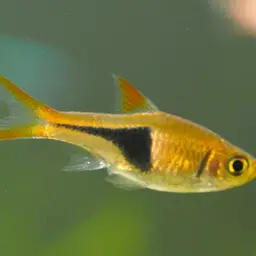
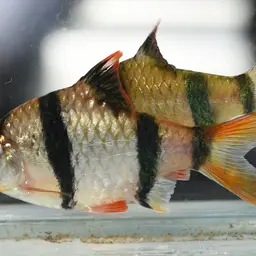
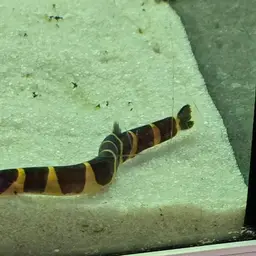
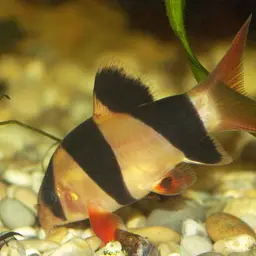
Good tank mates
Species that tend to coexist peacefully with Spotted Hampala Barb
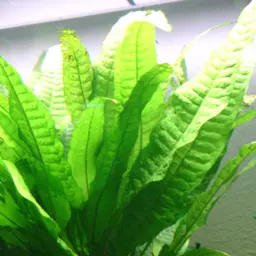
From the same region
Share the same natural habitat. Great for a biotope-themed tank
Frequently asked questions
- How big does the Spotted Hampala Barb get?
- The Spotted Hampala Barb reaches about 8.5–14" as an adult.
- What size tank does the Spotted Hampala Barb need?
- A minimum of 114 gallons is recommended for the Spotted Hampala Barb, with more room needed for a proper group.
- What water parameters does the Spotted Hampala Barb need?
- The Spotted Hampala Barb does best with a temperature of 68–77°F, a pH of 6–8, hardness around 2–20 dGH.
- Is the Spotted Hampala Barb aggressive?
- The Spotted Hampala Barb is semi-aggressive. It can work in a community with careful tankmate choices and enough space.
- What does the Spotted Hampala Barb eat?
- The Spotted Hampala Barb is a carnivore. It needs a meaty, protein-rich diet of frozen or live foods.