Super Red
Dawkinsia assimilis
Also known as: Assimilis Barb, Neon Red
A lively Indian barb with bold caudal markings and a real taste for open-water schooling.

About
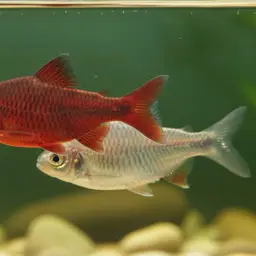
The Assimilis Barb (Dawkinsia assimilis) is a medium-sized cyprinid native to Kerala in southern India, where it turns up across a surprisingly wide range of conditions. From slow, muddy-banked stretches to clearer, faster-moving rocky streams. Adults are recognizable by a dark blotch on the caudal peduncle and black transverse bands tipping each lobe of the tail fin, a combination that sets it apart from close relatives like D. filamentosa and D. rohani. In some populations, adult males develop extended filamentous rays along the dorsal fin, adding a nice bit of visual interest. A trade color form with extra red pigmentation is sold under names like 'super red' or 'neon red' and is worth keeping an eye out for. In the aquarium this is an active, schooling fish and it genuinely benefits from being kept in groups of eight or more. Smaller groups tend to produce skittish fish, while larger numbers keep any internal squabbling between males focused within the group rather than directed outward. It fits well into a community of other riverine species from South or Southeast Asia, including similarly sized barbs and the various loach families, provided tankmates are confident enough not to be unnerved by its energetic movement. Beginner-friendly and forgiving of a range of conditions, it rewards anyone willing to give it the space and company it needs.
Similar species
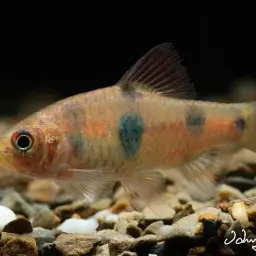
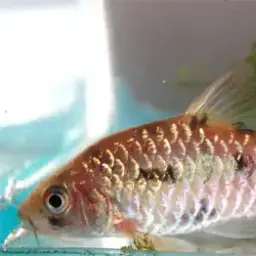
Other fish you might consider
Good tank mates
Species that tend to coexist peacefully with Super Red
From the same region
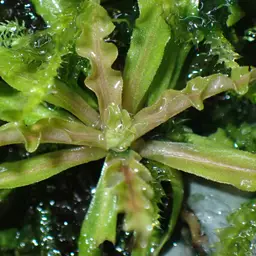
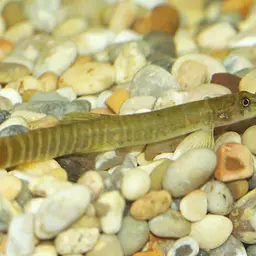
Share the same natural habitat. Great for a biotope-themed tank
Frequently asked questions
- How big does the Super Red get?
- The Super Red reaches about 2.5–4.5" as an adult.
- What size tank does the Super Red need?
- A minimum of 43 gallons is recommended for the Super Red, with more room needed for a proper group.
- What water parameters does the Super Red need?
- The Super Red does best with a temperature of 68–82°F, a pH of 6–7.5, hardness around 4–18 dGH.
- Is the Super Red aggressive?
- The Super Red is semi-aggressive. It can work in a community with careful tankmate choices and enough space.
- What does the Super Red eat?
- The Super Red is an omnivore. It does well on a varied diet of quality flake or pellet plus occasional frozen or live foods.