Eartheater
Geophagus taeniopareius
A rare Orinoco eartheater that bucks the mouthbrooding norm of its kin.

About
Found in the rivers of the Orinoco basin, including the lower Caura River and stretches of the middle and upper Orinoco, Geophagus taeniopareius is an eartheater cichlid that stands apart from most of its relatives in a couple of notable ways. Visually, it can be identified by a dark stripe running from the eye to the edge of the gill cover, faint horizontal banding along the flanks, a scaly sheath along the dorsal fin base, and only faint, sparse spotting on the tail. Features that separate it from closely related species like G. gottwaldi, which shares the same river system but grows considerably larger. In the aquarium, this species is noticeably more assertive than the typical eartheater, so tankmates should be chosen carefully. Other cichlids are best left out of the picture, though schools of small characins generally coexist without problems. Keep a group of at least five to eight individuals to spread out any aggression, and give them a roomy setup with space to establish their own patches of territory. Unlike the majority of its genus, this species spawns on surfaces rather than brooding eggs in its mouth, with both parents guarding the clutch and later the free-swimming fry. It remains uncommon in the hobby but surfaces occasionally through specialist dealers and private breeders.
Similar species
Other fish you might consider
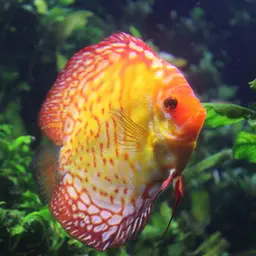
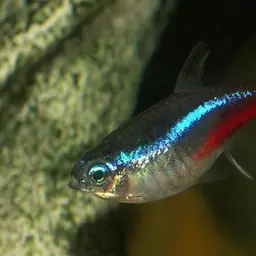




Good tank mates
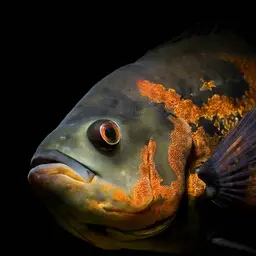
Species that tend to coexist peacefully with Eartheater
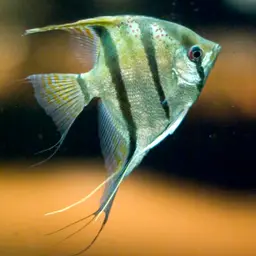
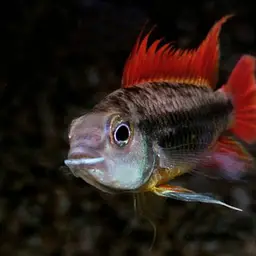


From the same region
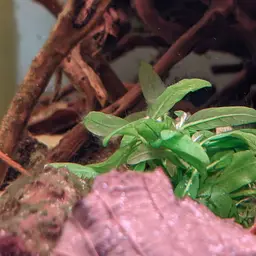
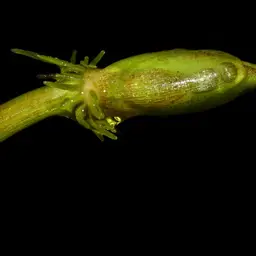
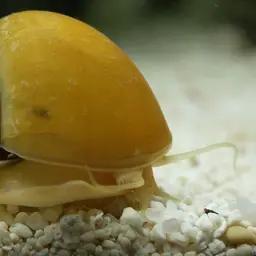
Share the same natural habitat. Great for a biotope-themed tank


Frequently asked questions
- How big does the Eartheater get?
- The Eartheater reaches about 3.5–6" as an adult.
- What size tank does the Eartheater need?
- A minimum of 53 gallons is recommended for the Eartheater, with more room needed for a proper group.
- What water parameters does the Eartheater need?
- The Eartheater does best with a temperature of 72–86°F, a pH of 5.5–7.2, hardness around 1–12 dGH.
- Is the Eartheater aggressive?
- The Eartheater is semi-aggressive. It can work in a community with careful tankmate choices and enough space.