Japanese Angelfish
Centropyge interruptus
A rare Japanese deepwater dwarf angel that pairs for life on rocky reefs.

About
The Japanese Angelfish (Centropyge interruptus) is one of the more sought-after dwarf angels in the marine hobby, and for good reason. Its coloration is genuinely unlike anything else in the genus. The body is a warm orange that fades into deep blue-violet toward the rear, a gradient that looks almost airbrushed. In the wild, this species turns up on rocky and coral reefs around southern and central Japan and at remote northwestern Hawaiian outposts like Midway and Kure Atolls, typically at depths that make it uncommon in the trade and, when available, usually expensive. What's ecologically interesting about this fish is its social structure: adults form stable, monogamous pairs that share a home range rather than aggressively defending a fixed territory the way some angelfishes do. That relatively calm pair-bonding behavior is a useful thing to know when planning tankmates. Like other Centropyge, it's a herbivore that needs regular access to algae-based foods, and while it isn't the hardest dwarf angel to keep, its cool preferred temperature range and the depth it comes from in the wild mean it rewards keepers who pay close attention to water quality and conditions. Treat it as an intermediate-level commitment and plan accordingly.
Similar species
Other fish you might consider
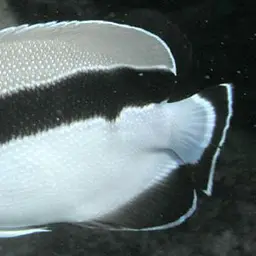
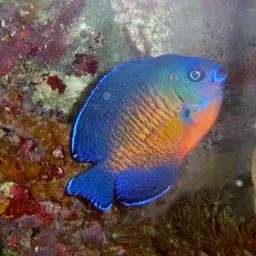
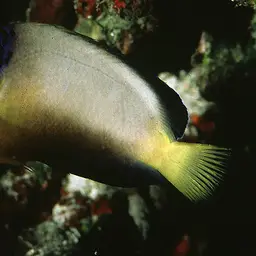
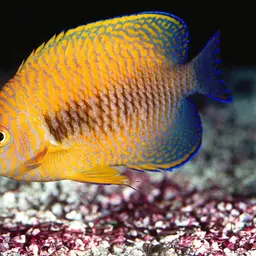
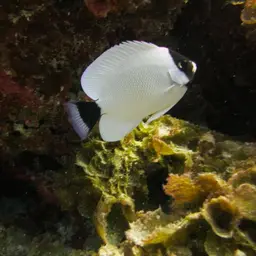
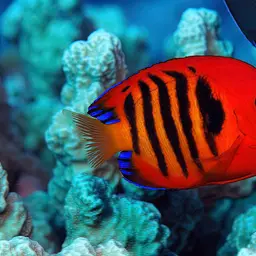
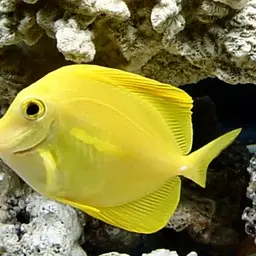
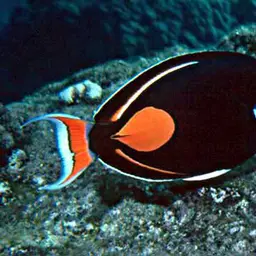
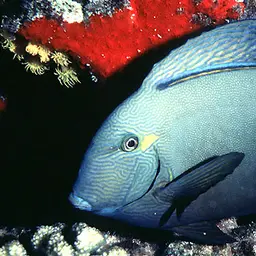
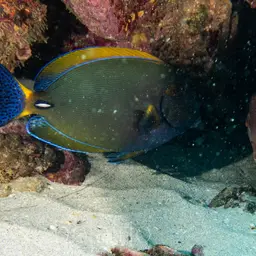
From the same region
Share the same natural habitat. Great for a biotope-themed tank
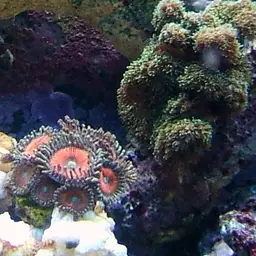
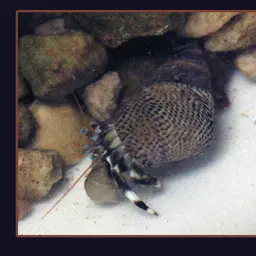
Frequently asked questions
- How big does the Japanese Angelfish get?
- The Japanese Angelfish reaches about 3.5–6" as an adult.
- What size tank does the Japanese Angelfish need?
- A minimum of 70 gallons is recommended for the Japanese Angelfish.
- What water parameters does the Japanese Angelfish need?
- The Japanese Angelfish does best with a temperature of 72–82°F, a pH of 8–8.4.
- Is the Japanese Angelfish aggressive?
- The Japanese Angelfish is semi-aggressive. It can work in a community with careful tankmate choices and enough space.
- What does the Japanese Angelfish eat?
- The Japanese Angelfish is a herbivore. It needs a plant-based diet such as algae, blanched vegetables, or spirulina-based foods.
- How long does the Japanese Angelfish live?
- With good care, the Japanese Angelfish typically lives 2-5 years.
- Is the Japanese Angelfish reef safe?
- The Japanese Angelfish is not considered reliably reef safe and may harm corals or invertebrates.