Kabili Bumblebee Goby
Brachygobius kabiliensis
Tiny bumblebee-patterned goby from Borneo's mangroves, surprisingly manageable for new keepers.

About
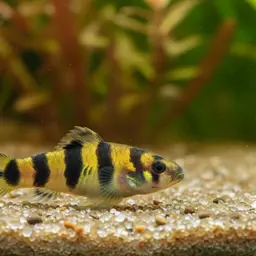
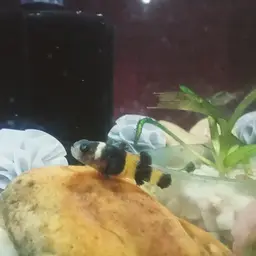
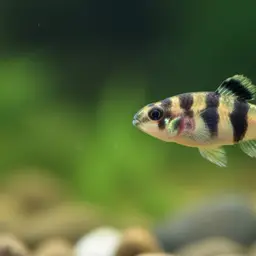
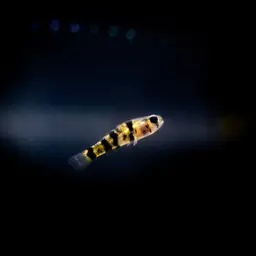
The Kabili bumblebee goby (Brachygobius kabiliensis) is a pint-sized fish from the brackish and freshwater habitats of northeastern Borneo and the Mekong delta, where it weaves through aquatic vegetation and the tangled roots of mangrove forests. Adults rarely exceed three-quarters of an inch, making this one of the smaller gobies you'll encounter in the hobby. Like other bumblebee gobies, it carries bold banded patterning that gives the group their common name, and its compact, bottom-hugging body shape is typical of the Brachygobius genus. In the wild it picks zooplankton from the water, so in the aquarium you'll want to offer small live or frozen invertebrates to keep it in good condition. Despite being classified as a beginner-friendly species, it does best in a setup that reflects its natural habitat. Think dense planting, plenty of caves or crevices, and at least a modest brackish component to the water. It's not a fish you'll often find at your local fish store, as it rarely enters the commercial trade, which makes it something of a find for goby enthusiasts. Its small footprint means a modest tank can house a comfortable group.
Similar species
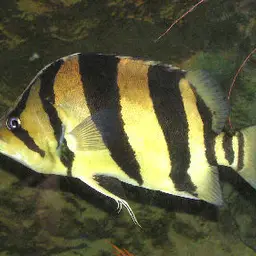
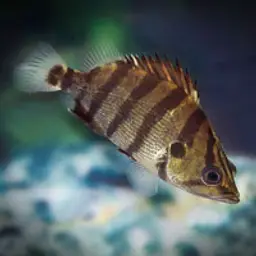
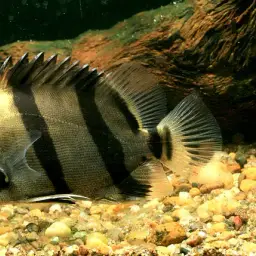
Other fish you might consider
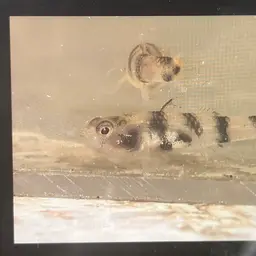
Good tank mates
Species that tend to coexist peacefully with Kabili Bumblebee Goby
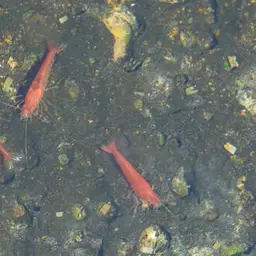
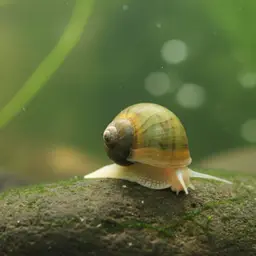
From the same region
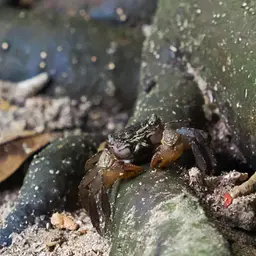
Share the same natural habitat. Great for a biotope-themed tank
Frequently asked questions
- How big does the Kabili Bumblebee Goby get?
- The Kabili Bumblebee Goby reaches about ~0.5" as an adult.
- What water parameters does the Kabili Bumblebee Goby need?
- The Kabili Bumblebee Goby does best with a temperature of 72–82°F, a pH of 7–8.
- Is the Kabili Bumblebee Goby aggressive?
- The Kabili Bumblebee Goby is generally peaceful and suits a community tank with similarly calm tankmates.
- What does the Kabili Bumblebee Goby eat?
- The Kabili Bumblebee Goby is a carnivore. It needs a meaty, protein-rich diet of frozen or live foods.