Head And Tail Light Rasbora
Kottelatia brittani
A rare, monotypic rasbora relative with vivid caudal markings and a gentle nature.

About
Found across the Malay Peninsula and Indonesia, this small schooling cyprinid, Kottelatia brittani, holds the distinction of being the sole member of its own genus. A position it earned through phylogenetic work that reshuffled much of the old Rasbora family tree. It was formerly known as Rasbora brittani and occasionally turns up in the trade under the name 'head and tail light rasbora', though sightings at fish stores are genuinely uncommon. It can be confused with Rasbora kalbarensis, but K. brittani tends to run larger, carries a more pointed head, and shows vivid orange to red blotches on the caudal peduncle that are hard to miss once you know what you are looking at. This is a peaceful, softwater species that does best in a calm, well-planted community. Boisterous or large tankmates will stress it out, but it thrives alongside other gentle Southeast Asian fish. Quiet anabantoids and smaller rasboras make particularly good companions. Like most schooling fish, it genuinely needs numbers to feel secure and behave naturally; a group of eight to ten is a sensible minimum. Males in larger groups will compete for females and show their best coloration as a result. An intermediate-level fish, not difficult but not a beginner's first choice either.
Similar species
Other fish you might consider
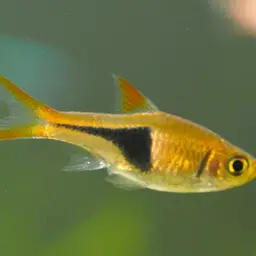
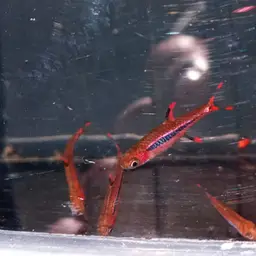
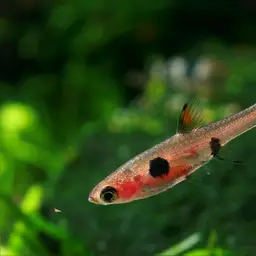
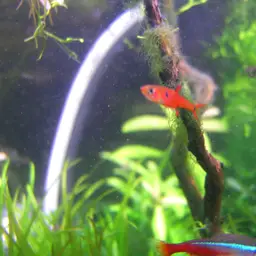
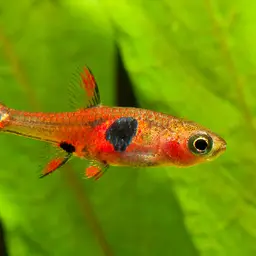
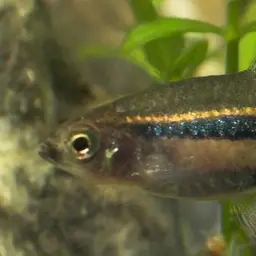
Good tank mates
Species that tend to coexist peacefully with Head And Tail Light Rasbora
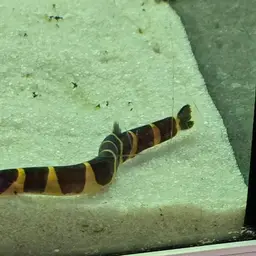
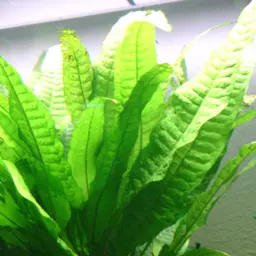
From the same region
Share the same natural habitat. Great for a biotope-themed tank
Frequently asked questions
- How big does the Head And Tail Light Rasbora get?
- The Head And Tail Light Rasbora reaches about 1–2" as an adult.
- What size tank does the Head And Tail Light Rasbora need?
- A minimum of 18 gallons is recommended for the Head And Tail Light Rasbora, with more room needed for a proper group.
- What water parameters does the Head And Tail Light Rasbora need?
- The Head And Tail Light Rasbora does best with a temperature of 68–82°F, a pH of 6–7.5, hardness around 1–15 dGH.
- Is the Head And Tail Light Rasbora aggressive?
- The Head And Tail Light Rasbora is generally peaceful and suits a community tank with similarly calm tankmates.
- What does the Head And Tail Light Rasbora eat?
- The Head And Tail Light Rasbora is an omnivore. It does well on a varied diet of quality flake or pellet plus occasional frozen or live foods.
- How long does the Head And Tail Light Rasbora live?
- With good care, the Head And Tail Light Rasbora typically lives 3-8 years.